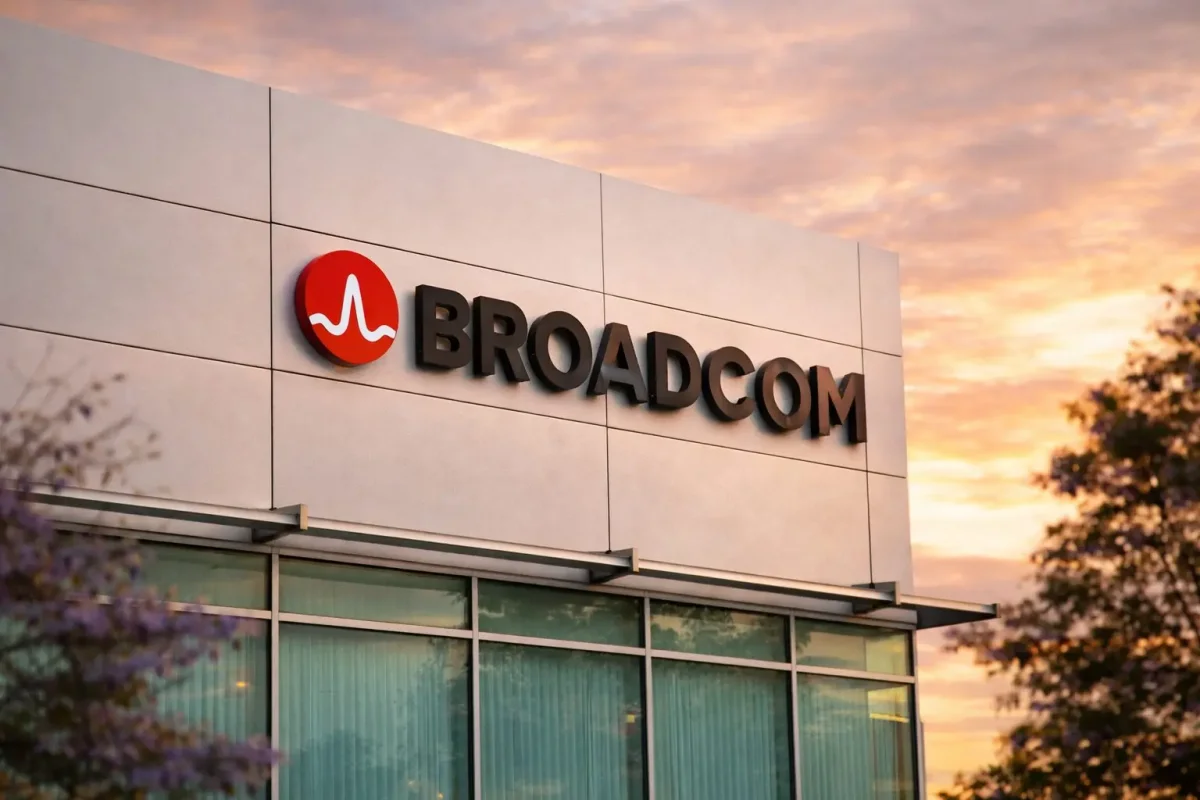
Broadcom Inc. is scheduled to announce its fiscal first-quarter financial results after the market closes on Wednesday, March 4, 2026. The semiconductor and infrastructure software giant will host a conference call at 2 p.m. Pacific Time to discuss the performance. As the earnings date approaches, Wall Street analysts are largely optimistic about the company's prospects, particularly highlighting its positioning within the artificial intelligence hardware ecosystem.
Analyst Sentiment Remains Positive
Investment firm Robert W. Baird has reaffirmed its Buy rating on Broadcom shares, maintaining a price target of $420. The firm's confidence stems from what it views as robust demand for Broadcom's custom semiconductor solutions that power advanced AI systems. Separately, Oppenheimer analyst Rick Schafer also sustained his Outperform rating and a more aggressive $450 price target. Schafer anticipates the company will surpass Wall Street's consensus estimates for the quarter, which currently stand at $19.2 billion in revenue and earnings of $2.02 per share.
Schafer's bullish thesis centers on AI-related demand potentially offsetting some softness in the wireless segment, a market facing headwinds as Apple continues its shift toward in-house chip design. He also noted Broadcom's potential competitive edge over rivals like Qorvo in upcoming iPhone refreshes. "AVGO boasts the No. 2 AI franchise (after NVDA)," Schafer remarked, adding, "We remain long-term buyers."
Market Context and Business Mix
Broadcom's stock was last trading at $319.55, representing a slight decline of 0.7% in pre-market activity. The broader chip sector has experienced volatility following recent results from industry leader Nvidia, leaving investors keenly watching for signals on whether the massive AI infrastructure build-out is translating into sustained orders and pricing power for hardware suppliers.
The company's diverse business model adds complexity to earnings analysis. Broadcom operates across both semiconductor and software segments. Its chip portfolio serves markets from smartphones to data centers, while its substantial software division, bolstered by acquisitions like VMware, provides a recurring revenue stream. This software arm can cushion against cyclical semiconductor downturns but also complicates margin analysis for investors.
Options Market Signals Elevated Expectations
Ahead of the earnings release, options market activity indicates heightened investor anticipation. Analysts have observed a notable trend of put-selling, where investors collect premiums by selling the right to sell shares at a set price, betting the stock will not fall below that level. This activity, coupled with a declining put-call ratio and elevated implied volatility, is driving option premiums higher.
Envision Research's Lucas Ma, writing for Seeking Alpha, suggested this environment might present an opportunity for investors considering a position, noting Broadcom's potential valuation at approximately 30 times earnings with a price-to-earnings-to-growth (PEG) ratio of 0.95. However, this strategy carries risk, as sellers of put options could be obligated to purchase shares if the stock price declines significantly post-earnings.
AI Technology Adoption and Risks
Beyond its established chip business, Broadcom is advancing its technology in AI-adjacent areas. Company Vice President Harish Bharadwaj recently told Reuters that clients are widely adopting Broadcom's stacked-chip (3D) packaging technology, which enhances performance while improving energy efficiency. "Now, pretty much all of our customers are adopting this technology," Bharadwaj stated, underscoring the broad-based demand for these advanced solutions.
Despite the optimistic analyst commentary, risks remain. An analysis highlighted by Investing.com warned that even if Broadcom exceeds top- and bottom-line estimates, its shares could still face a post-earnings decline. Factors that could spook investors include margins that fall short of expectations or cautious commentary from management regarding the durability of the AI demand cycle. Investors will be closely monitoring three key areas: the trajectory of AI chip sales and future order outlooks, potential margin pressure from custom chip projects, and the resilience of software demand as enterprises adjust budgets and integrate more AI-driven automation.
The coming report will serve as a critical barometer for Broadcom's ability to capitalize on the AI megatrend while navigating challenges in its broader end markets. The company's performance and guidance will be dissected for implications across the semiconductor and enterprise software sectors.