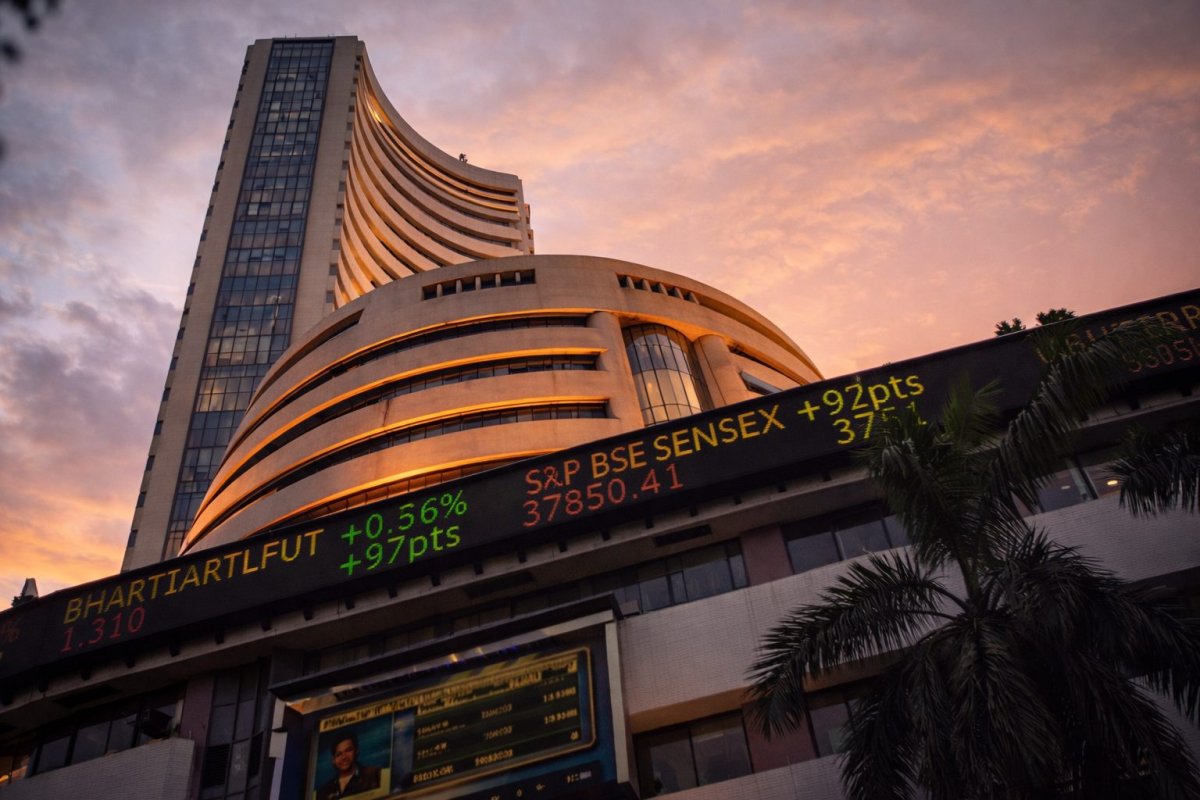
Shares of BSE Ltd, operator of the Bombay Stock Exchange, edged lower in Friday's trading session, closing down 0.1% at ₹2,739.50. The decline came amid a broader market advance, with the benchmark Sensex index rising 0.38% to 82,814.71 and the Nifty 50 gaining 0.5% to 25,571.25. Trading volume for BSE shares reached approximately 3.45 million shares for the session, with the stock moving between an intraday low of ₹2,713.30 and a high of ₹2,781.80.
Market Share Erosion in Key Segment
Recent data highlighted by Haitong Securities and reported by Business Standard indicates a concerning trend for the exchange operator. BSE's market share in the derivatives segment fell to 30% in February, down from 33% the previous month. This contraction was accompanied by a significant 21% month-on-month decline in average daily turnover (ADTO), a key metric representing the total value of trades executed daily. Within this, futures ADTO specifically dropped by 20% over the same period. Consequently, rival National Stock Exchange (NSE) now commands approximately 70% of the derivatives market.
The derivatives business is a critical profit center for exchange operators like BSE. Revenue from transaction fees and associated treasury income is directly tied to trading volumes. "Derivatives drive exchange profitability through transaction charges and treasury income," noted Harshal Dasani, business head at INVAsset PMS, in comments to Business Standard. He emphasized that "the sustainability of volumes" represents the primary challenge for BSE moving forward. The publication noted it could not independently verify the turnover report and that BSE had not issued any official statement on the matter.
Broader Context and Weekly Performance
While Friday's loss was marginal, it extends a more pronounced downtrend for the stock. Over the past week, BSE shares have declined roughly 9.45%, a stark contrast to the slight daily drop and significantly underperforming the broader equity indices. This underperformance underscores investor concern regarding the exchange's competitive position and revenue trajectory in its most lucrative segment.
The dynamics of the derivatives market are complex and can shift rapidly due to factors such as pricing adjustments, liquidity flows, and even contract specifications. Market share figures themselves can be volatile within a month and are sensitive to the specific timing and definitions used in their calculation. This means a recovery in trading activity or a stabilization of flows could alleviate pressure on the stock relatively quickly.
Focus Shifts to February Expiry
Market participants are now closely watching BSE's performance in the final days leading up to a key monthly expiry. The Sensex index futures contract is set to expire on February 26. Expiry periods typically attract heightened hedging activity and increased trading volumes as participants roll over or close out positions. This event will provide the next significant data point for assessing liquidity depth and order flow trends on the exchange, offering a clearer read on whether the February weakness was an anomaly or the beginning of a more sustained trend.
The coming sessions will be crucial for BSE to demonstrate its ability to retain and attract liquidity in a highly competitive duopoly market. Investors will be monitoring whether the exchange can implement strategies to recapture lost market share or if the structural advantages of its larger competitor, NSE, continue to prevail. The health of the derivatives segment remains paramount for BSE's financial performance and, by extension, its stock price valuation.
