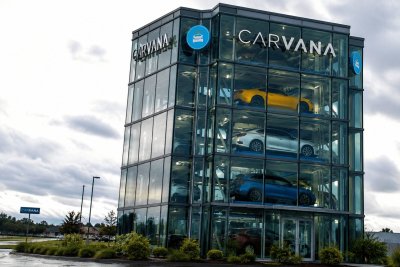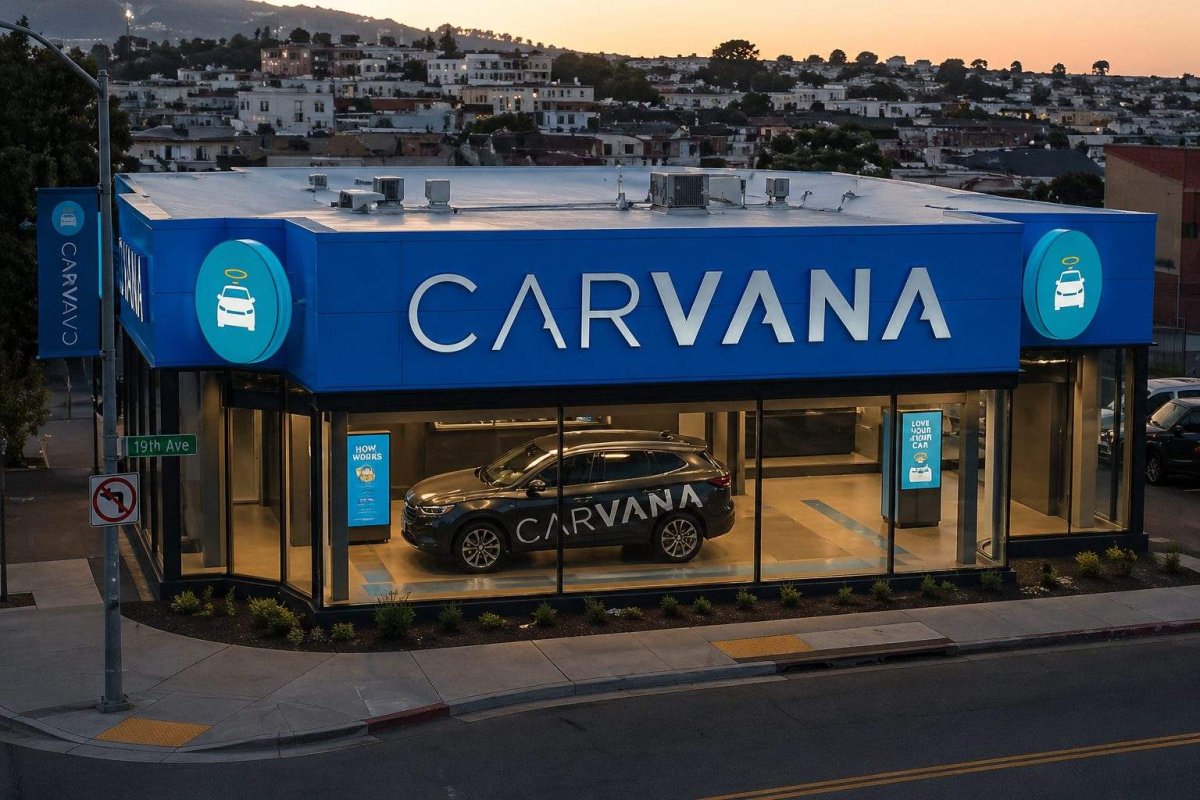
Carvana Co. shares declined Thursday afternoon, erasing earlier gains, after the online used-car retailer reported record first-quarter sales and profit but faced renewed margin pressure. The stock fell 1.8% to $389.39 by 1:40 p.m. EDT, down from its opening price of $412 and an intraday high of $439.53. The drop brought the company's market capitalization to approximately $57.7 billion, with shares trading at roughly 45 times earnings.
The company sold 187,393 retail vehicles in the quarter ended March 31, a 40% increase from the same period last year. Revenue surged 52% to $6.432 billion, while net income reached $405 million. Adjusted EBITDA, which excludes certain items, came in at $672 million, according to the company.
Founder and CEO Ernie Garcia highlighted that this marked Carvana's sixth consecutive quarter of retail unit growth of 40% or higher. For the second quarter, the company projects both retail units sold and adjusted EBITDA to increase sequentially, assuming stable market conditions.
However, the sticking point for investors was unit economics. Carvana's total gross profit per retail unit slipped to $6,783, compared with $6,938 in the year-ago period. On a non-GAAP basis, that metric fell to $6,911 from $7,140. Chief Financial Officer Mark Jenkins told analysts that non-GAAP retail gross profit per unit declined by $58, driven by higher non-vehicle expenses and lower shipping fees. He added that wholesale price increases had not yet been reflected in retail prices, compressing the spread between dealer acquisition costs and selling prices.
Carvana has been working to resolve a reconditioning bottleneck that pushed up costs late last year. Garcia pointed to new staffing tools, improved paint-line flow, and tighter productivity tracking as contributing factors. He said labor efficiency in April was just shy of the company's historical high across its network.
Wall Street analysts remained bullish despite the margin pressure. JPMorgan raised its price target on Carvana to $465 from $455 and maintained an overweight rating, while also increasing EBITDA projections for 2026 and 2027. UBS lifted its target to $520 from $485, citing stronger retail gross profit per unit and improved unit trends. BTIG set a new target of $485, noting that retail gross profit per unit exceeded both its estimate and consensus.
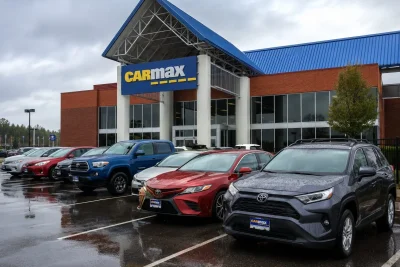
The results highlighted a sharp contrast with CarMax, the larger used-car chain. Earlier this month, CarMax reported a quarterly loss, blaming a goodwill charge and softer demand. According to Reuters, CarMax's retail gross profit per used vehicle dropped to $2,115 from $2,322 a year earlier.
Risks remain, however. Carvana's filings note continued exposure to reconditioning constraints, vehicle price swings, financing costs, and related-party transactions, including DriveTime service and warranty contracts. As of March 31, the company owed $35 million to related parties and had a tax receivable agreement liability of $2.2 billion.
Additionally, Carvana's board has approved a 5-for-1 forward stock split, pending a shareholder vote on May 5. If approved, shares will begin trading on a split-adjusted basis under the ticker CVNA on May 7.