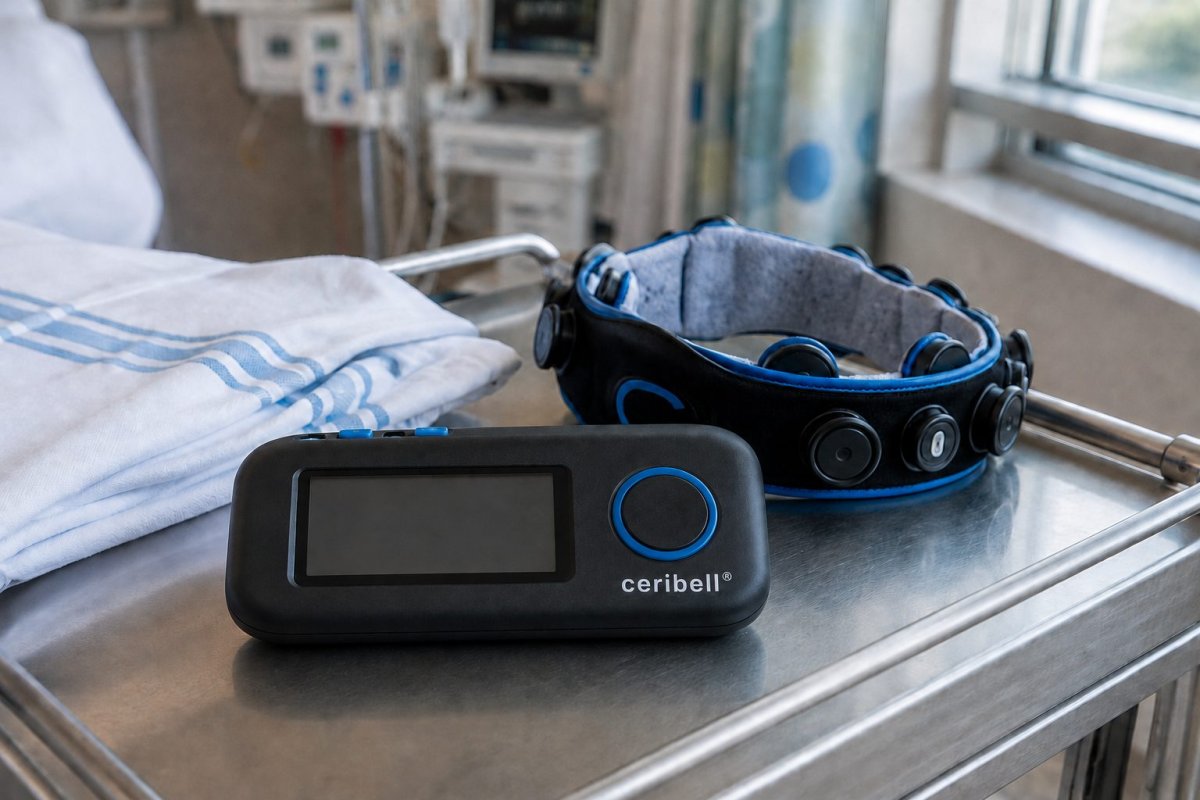
CeriBell (NASDAQ: CBLL) has raised its full-year 2026 revenue guidance to a range of $114 million to $117 million, reflecting robust demand for its AI-powered electroencephalogram (EEG) technology. The upward revision follows a 33% year-over-year surge in second-quarter sales, which reached $28.1 million, fueled by new hospital onboarding and increased utilization at existing accounts.
The company's active hospital accounts grew to 712 by the end of June, up from 680 at the end of March, a sequential increase of 4.7%. This expansion underscores the accelerating adoption of CeriBell's seizure monitoring platform across both new and established healthcare institutions. Co-founder and CEO Jane Chao attributed the performance to "adoption accelerating across both new and existing accounts."
Despite the top-line momentum, profitability remains elusive. Operating expenses climbed 37% to $45.9 million, outpacing revenue growth, which pushed the GAAP net loss up 41% to $19.3 million. On an adjusted basis, the EBITDA loss narrowed 2% to $9.8 million, showing some operational improvement. Sequentially, revenue rose 6% from the first quarter, and the adjusted EBITDA loss shrank by $1.3 million.
Gross margin reached 92% in the quarter, a five-percentage-point improvement sequentially. However, management noted that this figure was flattered by a one-time tariff refund under the International Emergency Economic Powers Act, masking the underlying margin trend. Excluding that benefit, gross margin would have been lower, though still supported by manufacturing cost reductions and the company's Vietnam operations.
Product revenue, which accounts for about three-quarters of total sales, grew 33% to $21.2 million, while subscription revenue rose 30% to $6.9 million. The latter provides a more recurring revenue stream as the installed base expands, which investors view favorably for long-term stability.
Cash and marketable securities declined to $129.3 million from $141.2 million in the prior quarter, a decrease of $11.9 million. To bolster its balance sheet, CeriBell secured a $60 million committed credit facility in August, comprising a $30 million term loan and a $30 million revolving credit line, with an additional $25 million available at the lender's option.
Looking ahead, a key catalyst is the Centers for Medicare & Medicaid Services (CMS) approval of a New Technology Add-On Payment for CeriBell's delirium monitor, effective October 1. This reimbursement milestone could significantly enhance adoption. Recent FDA clearances for new algorithms and an updated hardware platform also support growth prospects.
Wall Street remains cautiously optimistic, with analyst price targets ranging from $17 to $30. The consensus among eight analysts polled by S&P Global is a Strong Buy with an average target of $26.86. However, some targets predate the latest quarter and may be revised.
Investors will closely watch for operating leverage in coming quarters. The tariff-inflated gross margin is not a reliable indicator of ongoing profitability, and sustained account growth alongside narrowing losses will be more telling than another guidance hike. Management is scheduled to present at Canaccord's growth conference on August 12, where further clarity on margins and delirium uptake is anticipated.