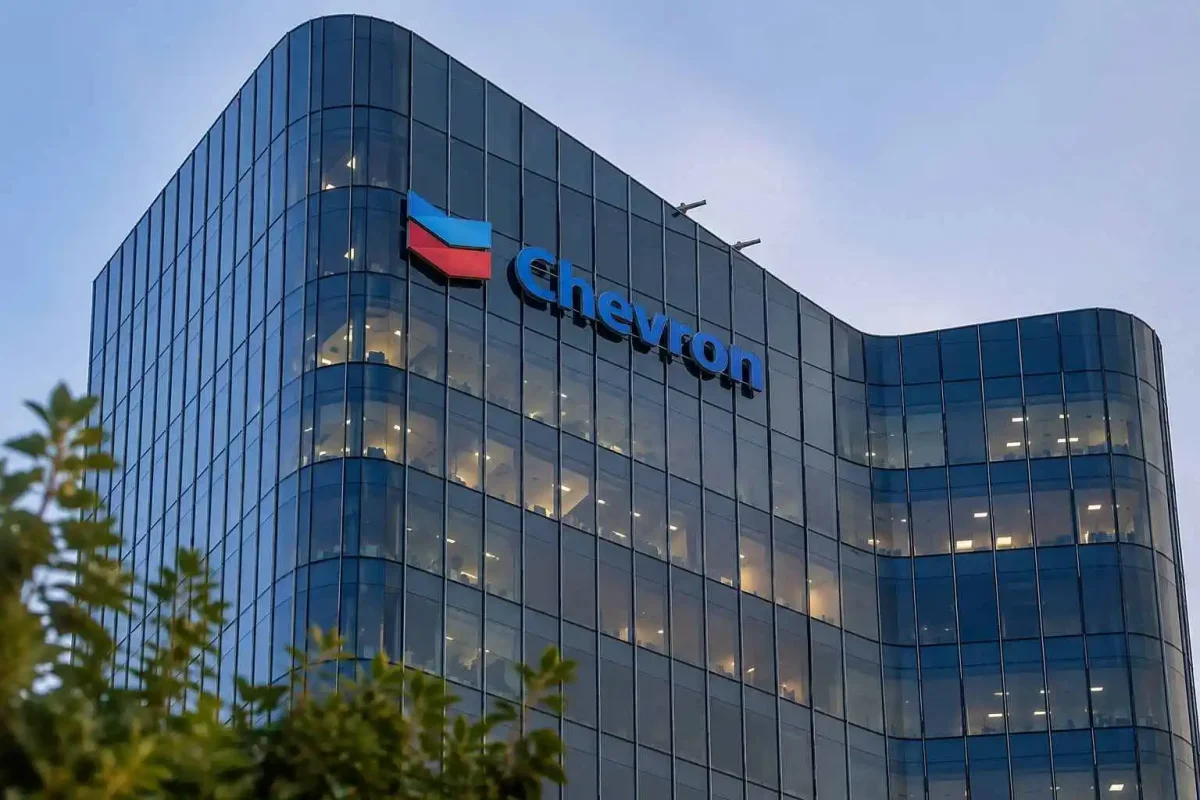
Chevron (NYSE: CVX) delivered a standout second-quarter performance, posting a 9% earnings beat that was largely fueled by its refining operations. The company navigated a volatile oil market shock with strategic agility, reporting adjusted earnings per share of $6.06, well above the LSEG consensus estimate of $5.56. This marks the highest quarterly profit for the energy giant in over six years, with adjusted earnings totaling $12.0 billion.
The company's production rose by 5.5% sequentially to 4.070 million barrels of oil equivalent per day (boepd), a stark contrast to the 1.7% decline seen at larger rival ExxonMobil (NYSE: XOM). This output growth, coupled with robust refining margins, allowed Chevron to generate significant cash flow. Quarterly free cash flow reached $18.1 billion, representing 4.7% of its premarket market value of $381.9 billion—nearly double the ratio of its peers.
Refining: The Key Driver
The downstream segment was the primary catalyst for the earnings surprise, turning a previous quarter loss into a $4.87 billion profit. This figure accounts for 41% of Chevron's adjusted earnings. U.S. refinery throughput hit an all-time high of 1.07 million barrels per day, capitalizing on higher crack spreads. RBC Capital Markets analyst Biraj Borkhataria noted that downstream was the main factor behind the beat, describing the quarter as one of "robust operational performance and strategic consistency."
Outperforming ExxonMobil
Chevron's performance stood in sharp contrast to ExxonMobil's, which faced significant supply disruptions in the Middle East, including 450,000 boepd taken offline in Qatar and 50,000 bpd in the UAE. Exxon's adjusted EPS of $3.52 missed consensus by 2.2%, and its production fell 1.7% sequentially. Chevron's limited Middle East presence helped minimize operational challenges, allowing it to deliver a clearer outperformance on earnings and cash flow.
Cash Flow and Balance Sheet Strength
Chevron's cash generation was particularly notable. Despite having only 54% of Exxon's market capitalization, Chevron produced slightly higher quarterly free cash flow. The company maintained its shareholder returns, buying back $3.0 billion in stock and paying $3.5 billion in dividends. CFO Eimear Bonner emphasized discipline, stating, "We're not changing our plan around a single quarter." This approach supported a significant balance-sheet improvement, with debt reduced by $8.4 billion, an unprecedented amount for the company.
Efficiency Gains and Strategic Moves
Chevron also made progress on cost synergies and structural efficiencies. Synergies related to the Hess acquisition reached an annual run-rate of $1.5 billion, half a year ahead of schedule. Structural cost reductions hit $3 billion, also ahead of expectations. These gains provide a buffer against potential market volatility.
In a strategic move, Chevron signed a 20-year electricity supply agreement with Microsoft (NASDAQ: MSFT) for a proposed West Texas plant that will deliver 2.67 gigawatts to a data center, diversifying its revenue streams beyond traditional oil and gas.
Market Outlook and Risks
Despite the strong quarter, challenges lie ahead. Brent crude averaged $104 per barrel in Q2, but current prices around $90.04 suggest a more difficult sequential earnings comparison. Geopolitical risks remain, including potential disruptions to shipping lanes and refining margins. Additionally, U.S. government scrutiny following allegations of price-gouging could pose regulatory risks.
Chevron's ability to leverage its refining strength and operational discipline has positioned it as a resilient player in the volatile energy market. Investors seeking exposure to energy may find Chevron a more reliable option than its larger competitor, given its superior cash conversion and strategic execution.