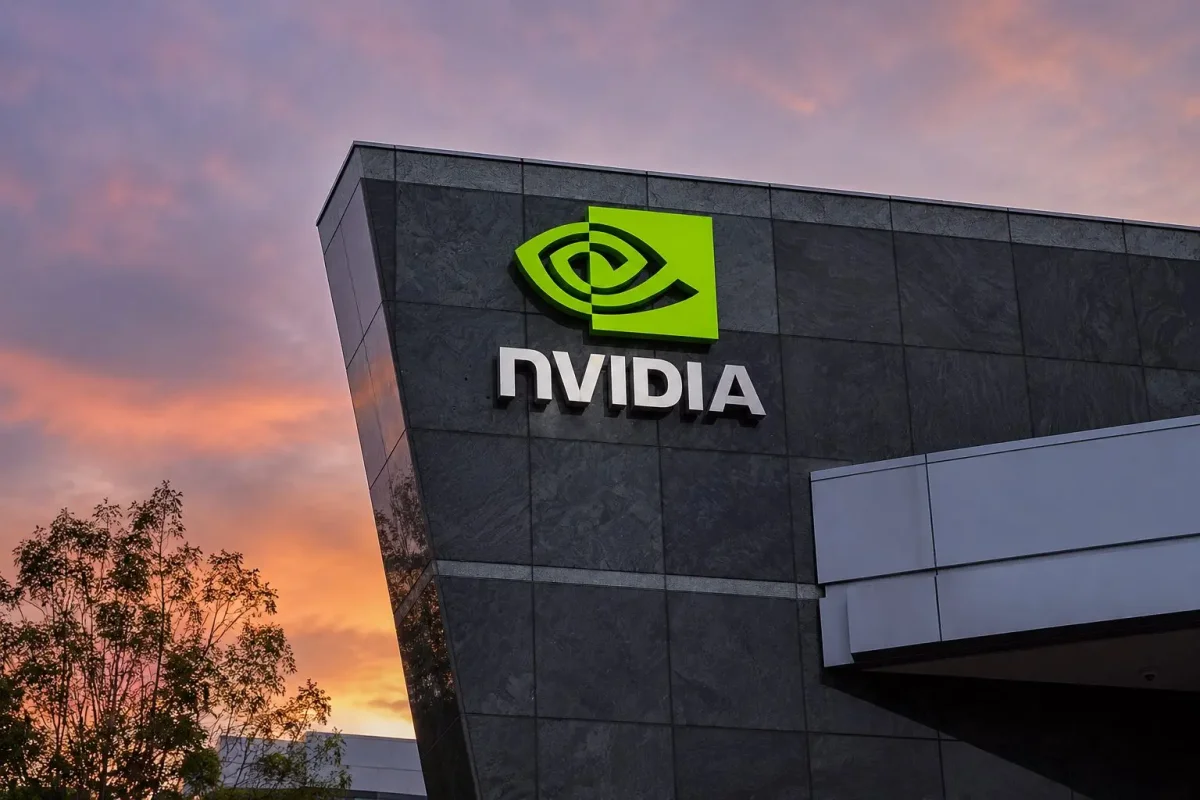
Nvidia Corporation (NVDA) experienced a sharp decline of 6.2%, closing at $205.10 on Friday, as a robust U.S. jobs report and emerging skepticism surrounding artificial intelligence chip demand triggered a widespread selloff in the semiconductor sector. The stock shed $13.56 from its previous close, contributing to a broader market downturn that saw the PHLX Semiconductor Index plunge 10.3%, its steepest single-day drop since March 2020. According to Reuters, U.S.-listed chip stocks collectively lost approximately $1.3 trillion in market capitalization.
The selloff was exacerbated by the release of stronger-than-expected labor market data. The U.S. Labor Department reported that nonfarm payrolls increased by 172,000 in May, while the unemployment rate held steady at 4.3%. These figures reignited concerns that the Federal Reserve may maintain higher interest rates for an extended period, a scenario that typically pressures growth stocks by diminishing the present value of their future earnings.
The broader market indices also suffered significant losses. The Nasdaq Composite fell 4.18%, and the S&P 500 declined 2.64%, snapping a nine-week streak of consecutive weekly gains. “After the record run we’ve seen the last nine weeks in equities, specifically tech and semiconductors, the dam just broke today,” said Ryan Detrick, chief market strategist at Carson Group, in an interview with Reuters.
Broadcom Inc. (AVGO) was another major contributor to the sector's weakness. Its shares dropped 7.9% to $385.73 after the company's earnings failed to meet lofty expectations for custom AI chips, which are designed for specific customer needs rather than general use. Broadcom partners with Alphabet Inc. (GOOGL) and Meta Platforms Inc. (META) to develop in-house processors, challenging Nvidia's dominance in the data center market. Analysts noted that Broadcom's reiterated $100 billion AI revenue forecast for fiscal 2027 disappointed investors who had hoped for a more aggressive outlook.
Advanced Micro Devices Inc. (AMD) also faced a steep decline, sliding 10.8% to $466.38, underscoring that Nvidia's drop was not an isolated incident but indicative of broader sector weakness. The simultaneous falls in these key players suggested that the entire semiconductor industry was under pressure.
Despite the rout, some analysts remain cautious about declaring the end of the semiconductor bull market. Ohsung Kwon, chief equity strategist at Wells Fargo, characterized the sector as “way overbought” but did not view this as “the end of the semi bull market.” Meanwhile, Dennis Dick, a proprietary trader at Triple D Trading, observed that investors had been “blindly” buying every dip until Friday's reversal.
Nvidia's own fundamentals remain strong. The company reported fiscal first-quarter revenue of $81.6 billion, up 85% year-over-year, with Data Center revenue contributing $75.2 billion. Its second-quarter revenue outlook stands at $91.0 billion, plus or minus 2%. The board also authorized an additional $80 billion for share buybacks and increased the dividend to 25 cents per share from 1 cent. In a show of confidence, Nvidia CEO Jensen Huang was in Seoul on Friday promoting future demand, emphasizing robotics and “physical AI” for South Korean factories. He also noted that Samsung Electronics, SK Hynix, and Micron Technology Inc. (MU) have been cleared to supply HBM4 memory for Nvidia's Vera Rubin AI platform.
Friday's selloff raises questions about whether the downturn is a temporary shakeout or a more fundamental shift. If Broadcom's weaker AI message signals a slowdown in custom-chip orders, or if rising yields continue to pressure expensive growth stocks, Nvidia may face headwinds despite its robust demand metrics. The coming days will reveal whether buyers return to AI chip stocks after the weekend or if traders will wait for cooler inflation data before re-entering positions in Nvidia and its peers.