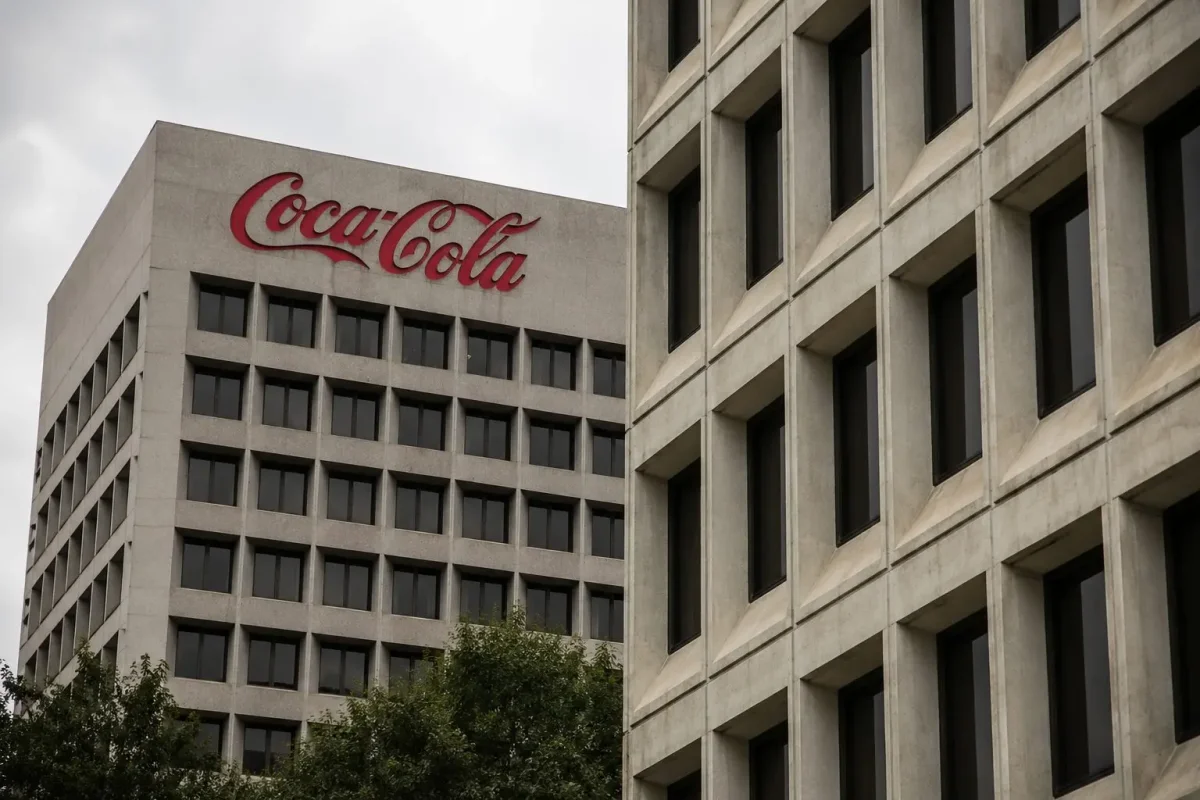
Coca-Cola Co (KO) experienced a notable decline on Friday, with shares falling 1.74% to close at $79.01. The drop marked a retreat from near 52-week highs, as investors appeared to lock in gains in the consumer staples giant. This pullback occurred despite the S&P 500 finishing the session 0.22% higher, underscoring the stock's underperformance relative to the broader market.
Trading activity was unusually heavy, with approximately 32.5 million shares changing hands on Friday, a sharp increase from the 8.2 million shares traded on May 22. The elevated volume suggests heightened investor attention and potential repositioning ahead of the holiday-shortened week.
U.S. equity markets were closed on Monday for Memorial Day, resulting in a four-day trading week. This compressed schedule may amplify reactions to corporate events and economic data, as market participants have fewer sessions to digest information.
Looking ahead, Coca-Cola's President and Chief Financial Officer John Murphy is scheduled to speak at Deutsche Bank's dbAccess Global Consumer Conference on June 4. His presentation is set for 11 a.m. CEST (5 a.m. ET), and the company has indicated that a transcript and related materials will be posted within 24 hours of the event. Investors will be closely watching for any updates on the company's financial outlook, operational trends, and strategic initiatives.
The stock's recent weakness comes after a strong year-to-date performance. According to Yahoo Finance data, Coca-Cola shares had gained 13.79% through May 29, leaving less room for error in a sector that is typically viewed as a defensive haven. The consumer staples sector, which includes food, beverages, and household products, can be sensitive to shifts in consumer spending and input costs.
Coca-Cola's first-quarter results, reported in April, provided a solid foundation. Net revenue rose 12% year-over-year to $12.5 billion, while organic revenue climbed 10%. Comparable earnings per share came in at $0.86, an 18% increase after adjusting for one-time items. The company also raised its full-year 2026 earnings guidance, now expecting comparable EPS growth of 8% to 9% from $3.00 in 2025, up from its previous forecast of 7% to 8%. Free cash flow guidance remained unchanged at approximately $12.2 billion.
During the earnings call, Chief Executive Henrique Braun acknowledged that while many consumers remain resilient, some are under pressure from persistent inflation, macroeconomic uncertainty, and geopolitical tensions in the Middle East. CFO Murphy also noted that a can-supply issue in India was expected to be resolved in the coming weeks, a factor that could influence regional performance.
The stock's decline on Friday stood out compared to its peers. PepsiCo slipped 1.44% to $144.19, while Keurig Dr Pepper inched up 0.03% to $30.03. Coca-Cola's larger drop suggests that profit-taking may have been more pronounced in the stock, possibly due to its recent outperformance.
Wall Street analysts remain broadly optimistic about Coca-Cola's prospects. In May, Bank of America's Peter Galbo set a price target of $90, Barclays' Lauren Lieberman raised her target to $89, and Citi's Filippo Falorni lifted his to $91. However, the stock's premium valuation and recent rally leave limited margin for error. Risks include potential consumer pullback, rising packaging costs, or weakness in the Asia-Pacific region offsetting gains in North America.
As the market enters a shortened trading week, all eyes will be on Coca-Cola's upcoming conference presentation. The company's ability to reinforce its earnings narrative and address investor concerns will be critical in determining whether the stock can regain its upward momentum or faces further consolidation.