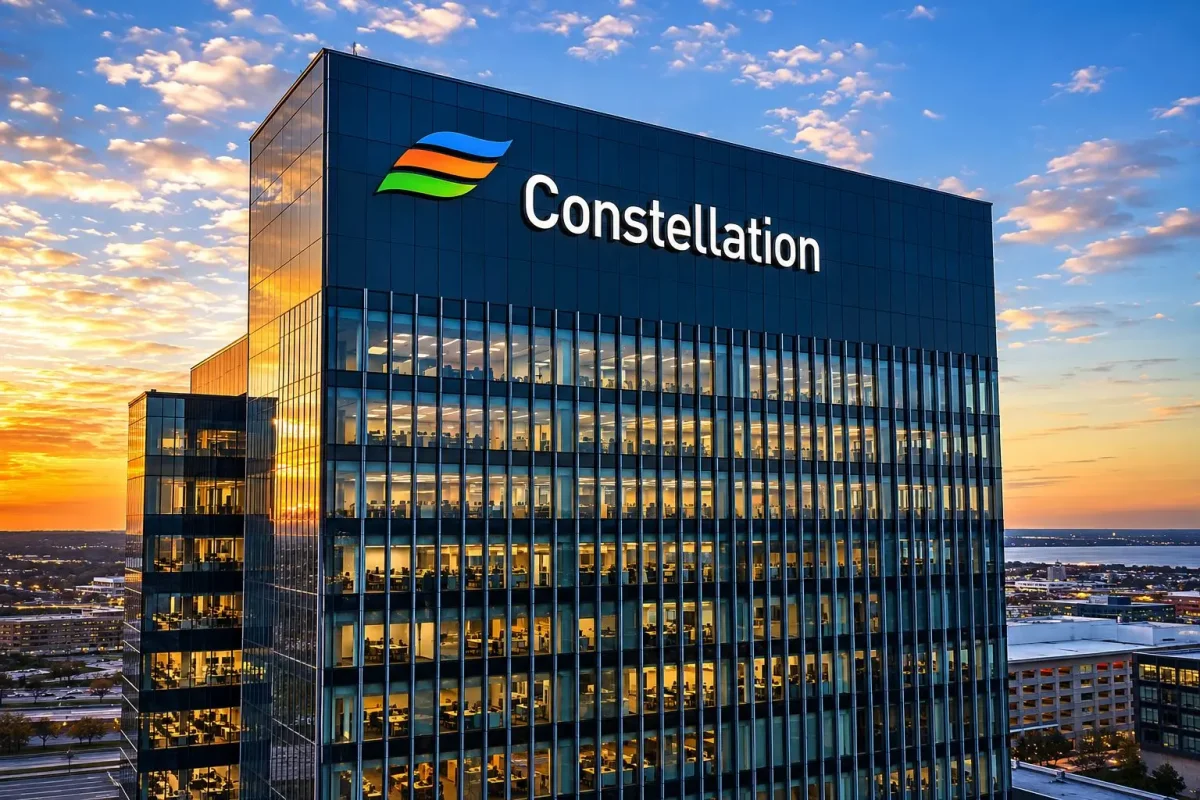
Constellation Energy (CEG) saw its shares slide 6.6% to $268.90 on Monday after existing shareholders priced a secondary offering of 11 million shares at $281 each, raising approximately $3.09 billion. The company confirmed it will not receive any proceeds from the sale, though it agreed to repurchase 2 million shares from the underwriters at the same price, contingent on the offering's closing.
The block sale added fresh pressure to a key nuclear-power trade on Wall Street that has been closely tied to surging demand from artificial intelligence data centers. While the broader market edged higher, with the SPDR S&P 500 ETF ticking up, the Utilities Select Sector SPDR Fund slipped 2.7%. Fellow utility and power producers also felt the heat: Vistra fell 3.5%, and NRG Energy dropped 3.6%. However, Constellation's decline was notably sharper, reflecting stock-specific concerns beyond the sector's weakness.
Supply dynamics are now in focus. The secondary offering involves only existing holders selling their shares; no new equity is being issued, meaning the company itself does not gain new funding unless it decides to sell. Constellation said the sellers set the price at $281 per share, totaling $3.09 billion. The company's agreement to buy back 2 million shares from underwriters helps offset some dilution, as a repurchase reduces the number of shares outstanding.
Morgan Stanley and J.P. Morgan are acting as joint underwriters for the offering. They also have the option to purchase an additional 1.35 million shares from selling shareholders over a 30-day period. The transaction is expected to close on June 2, subject to customary conditions.
This sale comes at a pivotal time for Constellation, which is viewed as more than a traditional utility. The company supplies constant, carbon-free power to data centers running AI workloads, a niche that has driven significant investor enthusiasm. A cornerstone of this strategy is the planned restart of the former Three Mile Island nuclear plant, now rebranded as the Crane Clean Energy Center, under a long-term contract to support Microsoft's data centers in the region.
However, the restart faces potential regulatory hurdles. Constellation executives told Reuters in May that they expect U.S. regulators to rule in June or July on the company's request to shift some grid-injection rights from its Eddystone gas plant to the Crane site. These rights are essential for pushing power onto the grid. PJM Interconnection, the grid operator, has provided early feedback that the Crane site might not be able to connect to the grid before 2031, raising concerns about delays.
CEO Joe Dominguez addressed the issue on the company's May earnings call, cautioning against the misconception that the plant won't start sooner. The restart timeline remains critical to Constellation's AI power narrative, and any further delays could undermine the bullish case centered on long-term nuclear power contracts with tech buyers.
On the financial front, Constellation reported first-quarter GAAP net income of $4.49 per share and adjusted operating earnings of $2.74 per share. The company reaffirmed its 2026 full-year adjusted operating earnings target of $11 to $12 per share. Adjusted operating earnings exclude certain noncash or one-time items that can affect the bottom line. CFO Shane Smith highlighted the company's strong, visible cash flow and commitment to guidance.
The completion of the $16.4 billion Calpine acquisition in January has further diversified Constellation's portfolio, merging its nuclear operations with Calpine's natural gas and geothermal assets. The combined entity now holds over 5,650 megawatts in long-term clean-energy contracts.
Looking ahead, the market may interpret the secondary offering as a signal of potential further shareholder exits, while regulatory delays on the Crane restart could weigh on sentiment. Even robust power demand from AI data centers may not be enough to support the stock if these risks materialize. Investors will be watching closely for the upcoming regulatory rulings and any signs of additional selling pressure.