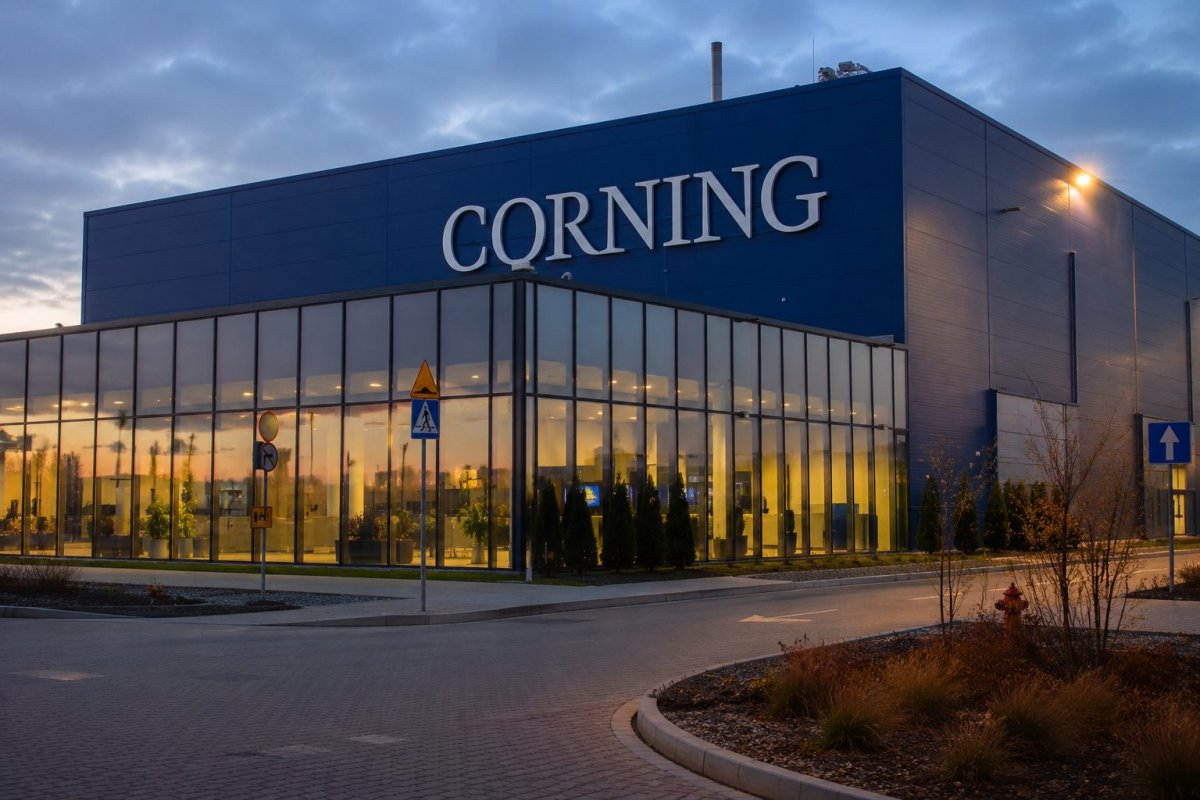
Corning Incorporated (NYSE: GLW) saw its stock surge 10.84% on Monday, closing at $207.21 and approaching its 52-week high near $209. The rally came after Bank of America added the specialty glass and fiber-optics company to its prestigious "U.S. 1 List" of top stock picks, building on momentum from last week's landmark partnership with Nvidia (NASDAQ: NVDA).
BofA's Endorsement and Wall Street Optimism
BofA's inclusion of Corning in its elite list signals strong conviction in the company's growth trajectory, particularly as AI infrastructure spending accelerates. This move follows a series of price target upgrades from other major Wall Street firms: Oppenheimer raised its target to $210, UBS to $223, and Citi to $225, according to market data compiled by StockAnalysis.
The stock's performance reflects a broader shift in investor focus beyond traditional chipmakers. Companies like Corning, which supply the fiber and optical connectors essential for high-speed data transmission in AI data centers, are now at the forefront of the AI infrastructure buildout.
The Nvidia Partnership: A Game-Changer
On May 6, Corning and Nvidia unveiled a multiyear commercial and technology agreement aimed at dramatically expanding U.S. manufacturing capacity for advanced optical connectivity products used in AI infrastructure. The plan includes a tenfold increase in domestic optical connectivity capacity and a more than 50% boost in U.S. fiber production.
The companies announced they will add three advanced manufacturing facilities—two in Texas and one in North Carolina—creating more than 3,000 jobs. Nvidia CEO Jensen Huang described AI as "the largest infrastructure buildout of our time," while Corning CEO Wendell Weeks characterized the initiative as "a manufacturing story" as much as a technology story.
According to a securities filing, Nvidia purchased warrants from Corning totaling $500 million, including the option to acquire up to 15 million Corning shares at $180 each, plus a pre-funded warrant for an additional 3 million shares at a nominal exercise price. However, both Huang and Weeks revealed to CNBC that Nvidia's total financial backing—including plant construction funding—amounts to several billion dollars beyond the equity-linked investment.
Aggressive Growth Targets
Corning has updated its Springboard growth plan, now projecting an annualized sales run rate of $20 billion by the end of 2026. The company's longer-term targets are even more ambitious: $30 billion by 2028 and $40 billion by 2030. A sales run rate represents what annual sales would be if current quarterly figures were sustained.
The first quarter provided strong evidence of this momentum. Core sales (a non-GAAP metric) rose 18% year-over-year to $4.35 billion, while core earnings per share climbed 30% to $0.70. The Optical Communications segment led the way with 36% growth, while the Solar segment surged 80%.
Industry-Wide Implications and Risks
The optical-networking sector has benefited from the AI data-center bandwidth narrative, with stocks like Lumentum and Coherent also gaining on Monday, as noted by Barron’s. Corning is increasingly viewed as an AI infrastructure supplier rather than just a traditional glass manufacturer.
However, challenges remain. Corning’s non-optical business segments continue to face headwinds, including sluggish electronics upgrades and weaker smartphone demand, as Reuters reported last month. For the second quarter, Corning projected core sales of approximately $4.6 billion, slightly below analyst expectations.
Key risks include the possibility that AI-driven orders may not materialize as quickly as hoped, factory buildouts could face delays, or major cloud customers might adjust their capital spending plans. Corning has acknowledged these uncertainties, citing demand fluctuations, competitive pressures, supply chain issues, government support dependencies, and shifts in capital expenditure as potential factors that could impact results.