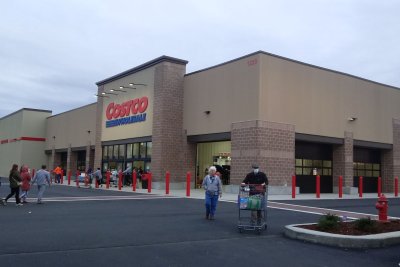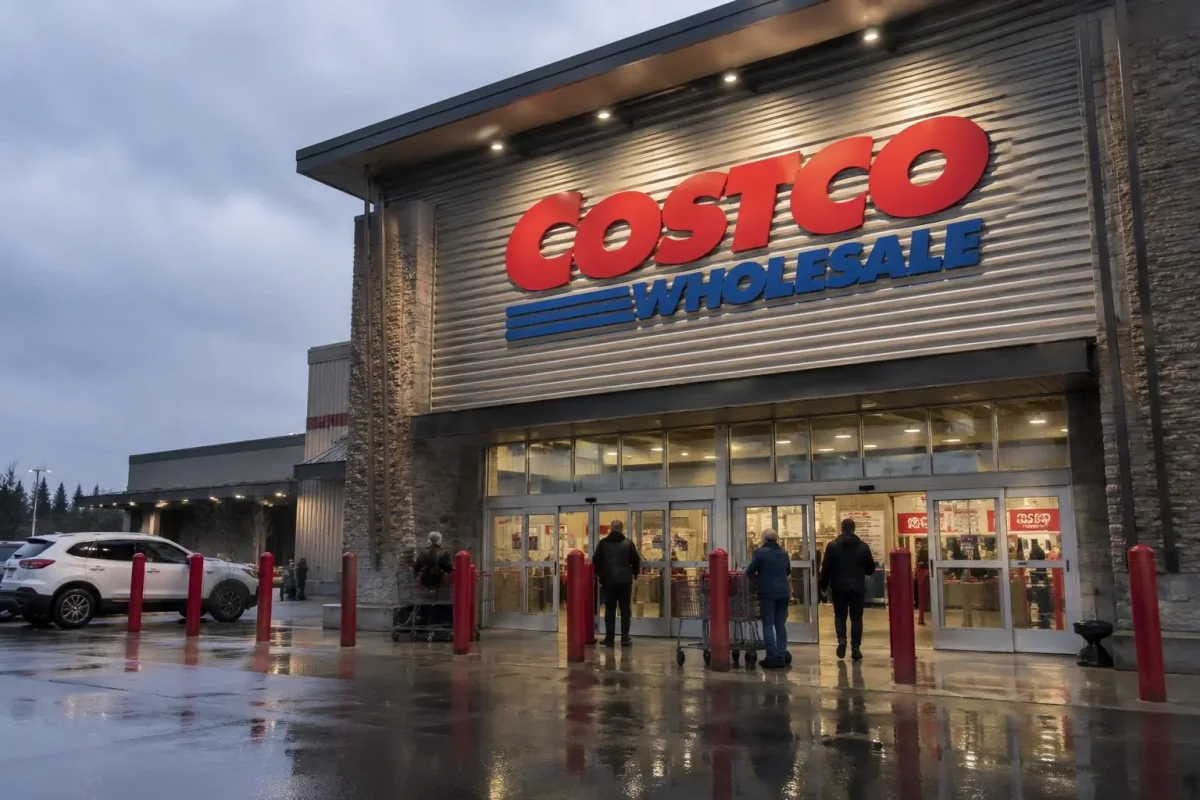
Costco Wholesale (NASDAQ:COST) shares edged up roughly 0.8% to $923.65 in midday trading Monday after RBC Capital Markets initiated coverage with a Sector Perform rating—equivalent to a hold—and a $1,000 price target, implying about 8.3% upside from current levels.
RBC analyst Steven Shemesh highlighted Costco's unusually low churn on both sides of the checkout. Employee turnover after the first year stands at approximately 7%, while the U.S.-Canada membership renewal rate is 92.2%, implying a 7.8% lapse rate. Although not directly comparable, both measures are exceptionally low, underscoring a retention moat that competitors struggle to replicate.
Experienced labor contributes more than cost savings. Long-tenured staff can process shoppers faster and train new hires more effectively, as reported by the Wall Street Journal. CEO Ron Vachris, who started as a forklift driver, has emphasized giving employees room to innovate. This operational efficiency is backed by a robust membership model: in the first 36 weeks of fiscal 2026, Costco generated $4.057 billion in membership fees, representing 51.5% of its $7.884 billion operating income.
June sales remained solid, though growth moderated from May. Net sales increased 10.6% to $29.24 billion, while comparable sales rose 8.8% (7% excluding fuel and currency effects). Digitally enabled comparable sales surged 21.5%, with Telsey Advisory reporting a 3.2% traffic gain and a 3.7% increase in average ticket, reflecting balanced growth from more visits and larger baskets. Telsey retained an Outperform rating and a $1,135 price target.
Costco's valuation premium is stark when compared to peers. Its trailing price-to-earnings (P/E) ratio of 46.5x is roughly 16% above Walmart's 40.1x and 125% above BJ's Wholesale Club's 20.7x. Shemesh called Costco "one of the best stories in retail," estimating food-retail market share gains of 67 basis points in 2024 and 77 in 2025. He also sees potential for up to 660 additional U.S. warehouses and a possible $23 special dividend within two years. However, at about 37x RBC's fiscal 2028 earnings forecast, Shemesh said he "struggles with the path to significant upside."
The downside case centers on margin pressure. Costco's third-quarter gross margin fell 21 basis points as it cut prices on food and household goods. CFO Gary Millerchip noted that online members renew at a slightly lower rate than warehouse sign-ups. If digital acquisition grows without a matching lift in retention, while wages and price investments remain elevated, earnings could expand without closing the valuation gap.
RBC's target offers about 8.3% upside, with the potential $23 special dividend adding another 2.5% (though not additive due to timing differences). Telsey's target implies roughly 22.9% upside. The wide spread reflects the investor dilemma: Costco's retention engine is formidable, but the stock already prices in a significant premium for that advantage.