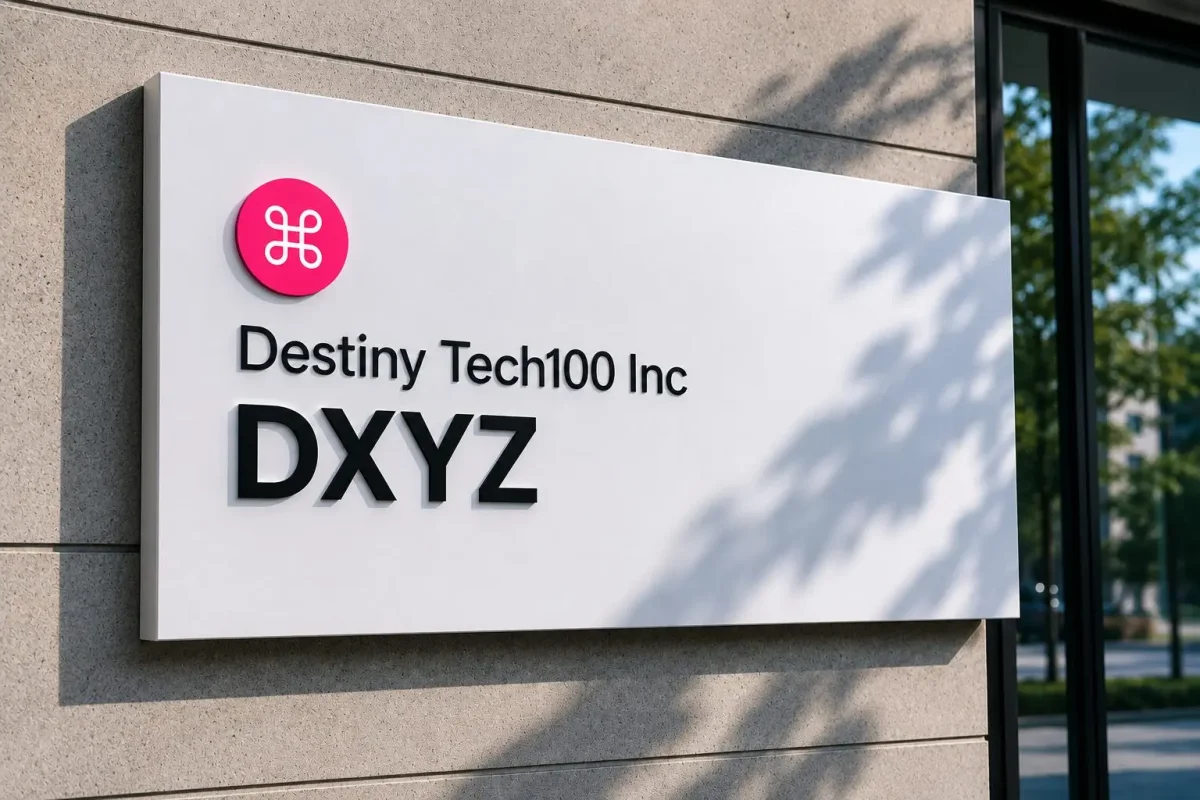
Destiny Tech100 Inc. (DXYZ) experienced a sharp decline on Tuesday, with shares falling approximately 8.3% after the fund announced plans to sell up to $1 billion in common stock through an at-the-market (ATM) offering via Jefferies. The stock last traded at $61.11, still more than double its net asset value (NAV) of $24.56 per share as of March 31, highlighting persistent valuation concerns despite the pullback.
Heavy Trading Volume and Volatility
Trading volume surged to over 10.9 million shares, reflecting intense retail interest in the fund, which serves as a proxy for private tech investments. The stock hit an intraday high of $73.74 before falling to $55.00, underscoring the volatility that has characterized Destiny since its NYSE debut in March 2024. The company itself acknowledged in the filing that its shares have been "significantly volatile" without corresponding changes in its financials or results.
SpaceX IPO Speculation Remains Key
The market's focus continues to be on Destiny's large stake in SpaceX, which accounts for 14.5% of the portfolio as of March 31. Speculation about a potential SpaceX IPO intensified after Reuters reported that the company has filed for a Nasdaq listing, with the offering potentially raising over $75 billion at a valuation near $1.75 trillion. Wedbush analyst Dan Ives called it the "largest IPO in stock market history." Destiny's exposure to SpaceX, along with stakes in Anthropic (18.1%) and OpenAI (5.8%), makes it a unique vehicle for retail investors seeking access to private tech giants.
ATM Program and Dilution Risks
The new ATM program allows Destiny to sell shares gradually into the market, which can provide cash for investments but also risks diluting existing shareholders. The fund stated that proceeds would be used for investments in private technology companies and general corporate needs. Jefferies may receive commissions of up to 3.0% on gross sales. The filing has reignited concerns about the fund's premium to NAV, which remains elevated despite the recent drop.
Valuation and Risk Factors
Destiny's NAV of $24.56 per share means the stock trades at roughly 2.5 times its underlying asset value, a premium that the company has warned may not be sustainable. The filing cautioned that investors in the offering could lose much of their investment if the stock declines. Additionally, the fund's investments are largely in illiquid private companies, and a significant portion may be held through special purpose vehicles (SPVs), which introduce additional risks and fee structures.
Market Context
While Destiny's stock fell, broader market indices were relatively stable. The SPDR S&P 500 ETF Trust (SPY) added 0.5%, while the ERShares Private-Public Crossover ETF (XOVR) was up 0.6%. This divergence suggests that Destiny's move was driven by company-specific factors rather than broader market trends. The fund's appeal as a pre-IPO play on SpaceX and other private tech firms continues to attract buyers, but the high premium and dilution risks pose significant challenges.
Outlook
Market participants are watching to see whether Destiny will tap the ATM program on rallies and how trading will evolve if more SpaceX news emerges before the anticipated June IPO window. The fund's exposure to high-profile private tech companies still draws interest, but pricing and valuation remain critical factors for investors.