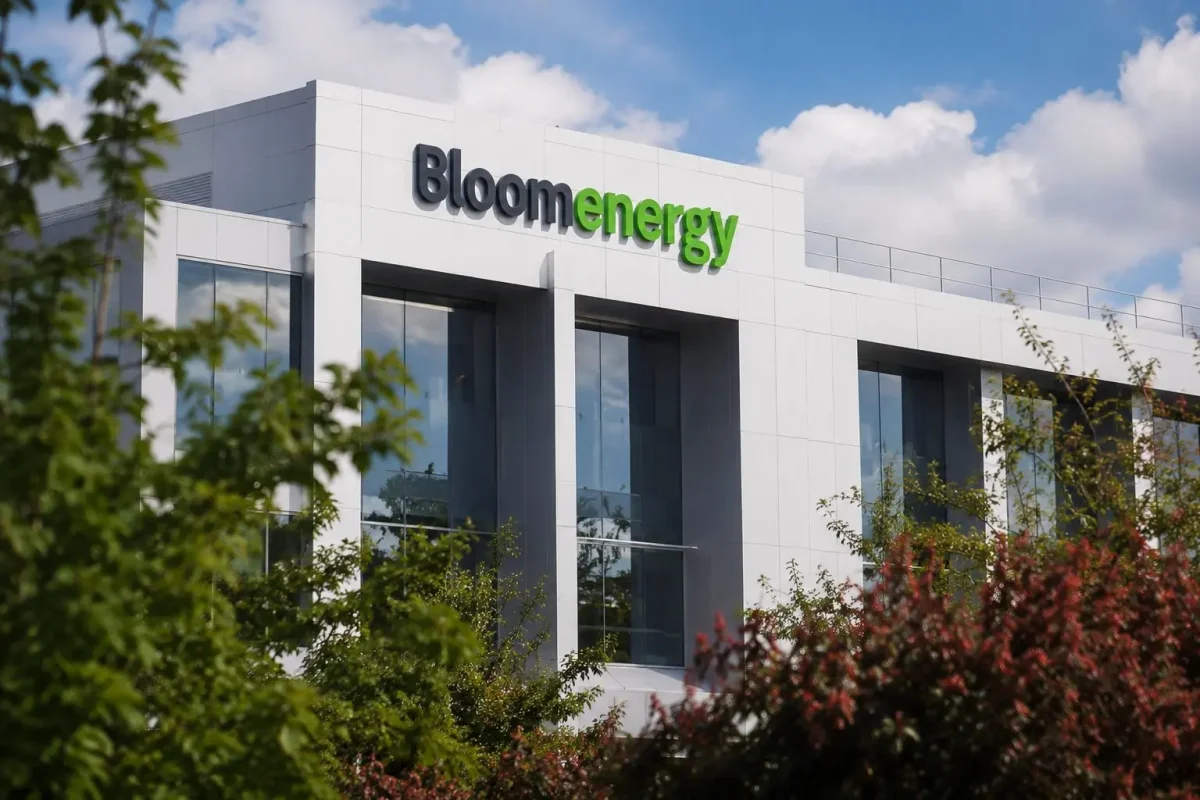
Bloom Energy Corporation (NYSE:BE) saw its stock tumble 5.5% to $243 on Friday afternoon, erasing a modest rebound from the prior session. The decline came as analysts flagged a significant disparity between the company's reported backlog and its remaining performance obligations (RPO), a metric that some investors worry could pressure future revenue if order conversions lag.
The core issue centers on Bloom's latest disclosed backlog of approximately $20 billion, which is roughly 40.6 times its RPO of $492.6 million as of March 31, 2026. While these figures are not directly comparable due to different measurement methodologies and timelines, the stark ratio has drawn scrutiny. The backlog includes expected revenue from signed deals, incorporating estimated investment tax credits, while RPO represents contracted revenue for work not yet completed, excluding contracts under one year and certain service billings.
Bloom's 2026 revenue forecast ranges from $3.4 billion to $3.8 billion, with adjusted operating income between $600 million and $750 million. Achieving these targets hinges on the timely conversion of large data center projects from financing stages to actual installation. Delays in these AI-driven initiatives could pose a downside risk to the company's outlook.
The broader fuel cell sector also faced headwinds, with FuelCell Energy (NASDAQ:FCEL) dropping 8.7% and Plug Power (NASDAQ:PLUG) falling 5.3%. In contrast, the SPDR S&P 500 ETF (NYSEARCA:SPY) edged up 0.3%, highlighting the stock-specific nature of the selloff.
Breaking down the backlog and RPO figures reveals a more nuanced picture. Product backlog stood at approximately $6.0 billion, with product RPO at $441.1 million, yielding a ratio of 13.6 times. Service backlog was about $14.0 billion, against service RPO of just $51.5 million, a ratio of 271.8 times. The service backlog includes long-term maintenance contracts ranging from five to 20 years, but customers have annual cancellation rights, adding uncertainty.
On a positive note, total RPO increased 17.5% from December 31 to March 31, and customer deposits surged 93% to $151.1 million. However, investors still lack visibility into how much of the $20 billion backlog is subject to cancellation, tied to tax incentives, or falls outside RPO definitions.
Another focal point is related-party revenue, which reached $373.3 million in the first quarter, representing nearly half of total sales, up sharply from $2.8 million a year ago. These transactions are linked to Bloom's partnership with Brookfield Asset Management (NYSE:BAM), which expanded their project finance agreement to $25 billion from $5 billion on June 30. While such structures can accelerate funding, actual revenue recognition depends on end-user deployment.
Bloom also faced questions from Hunterbrook Media regarding its scandium supply chain. The company denied claims about supply chain vulnerabilities, stating it has sufficient scandium oxide on hand and can support 25 gigawatts of annual fuel cell manufacturing. Chief Operating Officer Satish Chitoori emphasized that no single supplier or country determines Bloom's destiny.
Despite the concerns, sell-side analysts remain largely bullish. Baird's Ben Kallo reiterated an Outperform rating with a $310 price target, while Susquehanna raised its target to $298 from $293, maintaining a Positive rating. Key risks include delays in AI project deployments, slower conversion from joint venture sales to end-user installations, and rising scandium costs. Bulls will be watching for second-quarter results, due after the close on July 28, for signs of continued RPO and deposit growth, reduced party concentration, and stable margins.