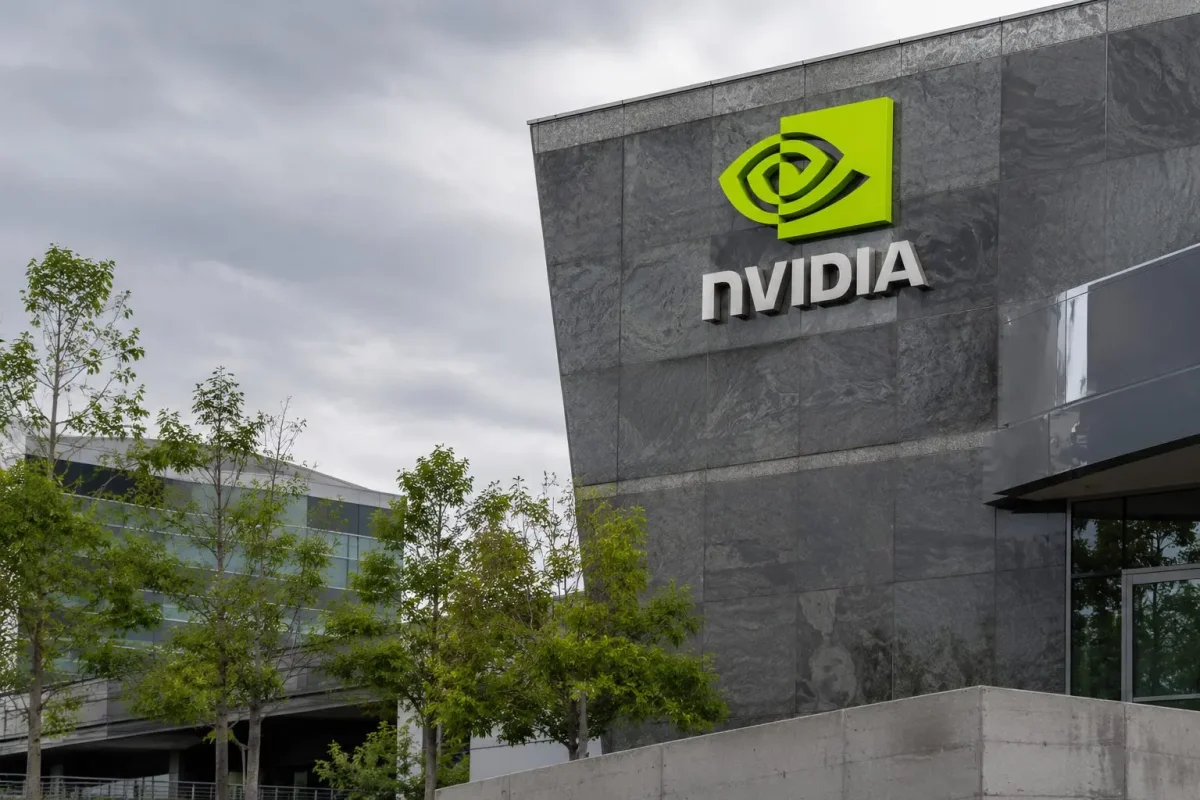
NEW YORK, July 10, 2026 – Nvidia (NASDAQ:NVDA) shares jumped 3.1% to $209.14 by late Friday morning, pushing its market capitalization to $5.10 trillion. The gain added approximately $155 billion in value since Thursday's close, a move that underscores the market's continued bet on artificial intelligence spending.
The rally came as Meta Platforms (NASDAQ:META) disclosed plans to reduce its reliance on external chip suppliers. An internal memo seen by Reuters revealed that Meta will begin producing its own Iris AI chip in September, with a goal of reaching 14 gigawatts of compute power by 2027. The social media giant also plans to invest up to $145 billion in AI infrastructure this year. “You can’t become an AI titan if you are dependent on another company for chips,” Forrester Research (NASDAQ:FORR) analyst Mike Gualtieri told Reuters.
Friday’s market cap gain for Nvidia alone exceeded Meta’s entire planned AI spending for 2026, and nearly doubled Nvidia’s own record $81.6 billion in first-quarter revenue. While these figures represent different metrics—market value, spending, and sales—the comparison highlights how rapidly the market is pricing in long-term growth expectations for the chipmaker.
The underlying thesis remains straightforward: Nvidia’s sales can continue to climb as long as overall AI computing demand grows fast enough, even if it loses some market share in specific customer segments. Friday’s price action suggests that view is still intact, but the rally is not without risks.
Index concentration is amplifying the effect. Nvidia accounted for 7.58% of the S&P 500 as of Thursday’s close, with Meta at 2.14%, according to SPY ETF (NYSEARCA:SPY) holdings. Based on Friday’s moves, the two stocks contributed about 0.38 percentage point to the index, yet SPY itself gained only 0.13%. The equal-weight S&P 500 ETF (NYSEARCA:RSP) rose 0.33%, while the tech-heavy Nasdaq-100 fund (NASDAQ:QQQ) slipped 0.07%.
Simple arithmetic shows that the rest of the cap-weighted S&P 500 subtracted roughly 0.25 percentage point from the index, ignoring minor tracking errors. The equal-weight fund’s gain suggests weakness was concentrated in other large names rather than spread across the typical stock—a divergence that the headline index number can obscure.
Other chip stocks traded in a tight range. Advanced Micro Devices (NASDAQ:AMD) edged up 0.2%, while Broadcom (NASDAQ:AVGO) was flat. Benchmark Research analyst Cody Acree wrote that hyperscaler spending is set to “still more than double,” implying Nvidia sales could keep growing even with share losses at Meta.
Nvidia’s supply chain sent mixed signals. SK Hynix (KRX:000660), the primary producer of high-bandwidth memory for AI chips, began trading 14% above its U.S. offer price. “The most crowded trade in the world right now,” said Great Hill Capital chairman Thomas Hayes, referring to global semiconductor stocks. AJ Bell (LON:AJB) markets head Dan Coatsworth added that the memory rally “might have just taken a breath rather than peaked.”
China could provide additional upside, but the outlook remains uncertain. Beijing is reportedly considering allowing leading local AI firms to purchase fewer than 200,000 of Nvidia’s H200 chips, far below earlier industry requests, according to Reuters. Nvidia itself is forecasting zero data-center computing sales to China for the second quarter.
The downside risks are becoming more tangible. Meta’s Iris chip could capture significant inference workloads—where AI models generate responses—from Nvidia, especially if custom processors reduce costs. Broader adoption of custom chips, slower infrastructure spending, or tighter China restrictions would pressure volumes and pricing. Index concentration works both ways: if Nvidia’s Friday gain were reversed, the S&P 500 would lose about 0.24 percentage point by the same math.
Taiwan Semiconductor Manufacturing Co (NYSE:TSM), Nvidia’s key contract chipmaker, is set to report second-quarter results on Thursday. Investors will be watching for updates on sales, spending, and price guidance. For Nvidia, the focus is shifting from whether AI spending will rise to how much of that new revenue will ultimately stick.