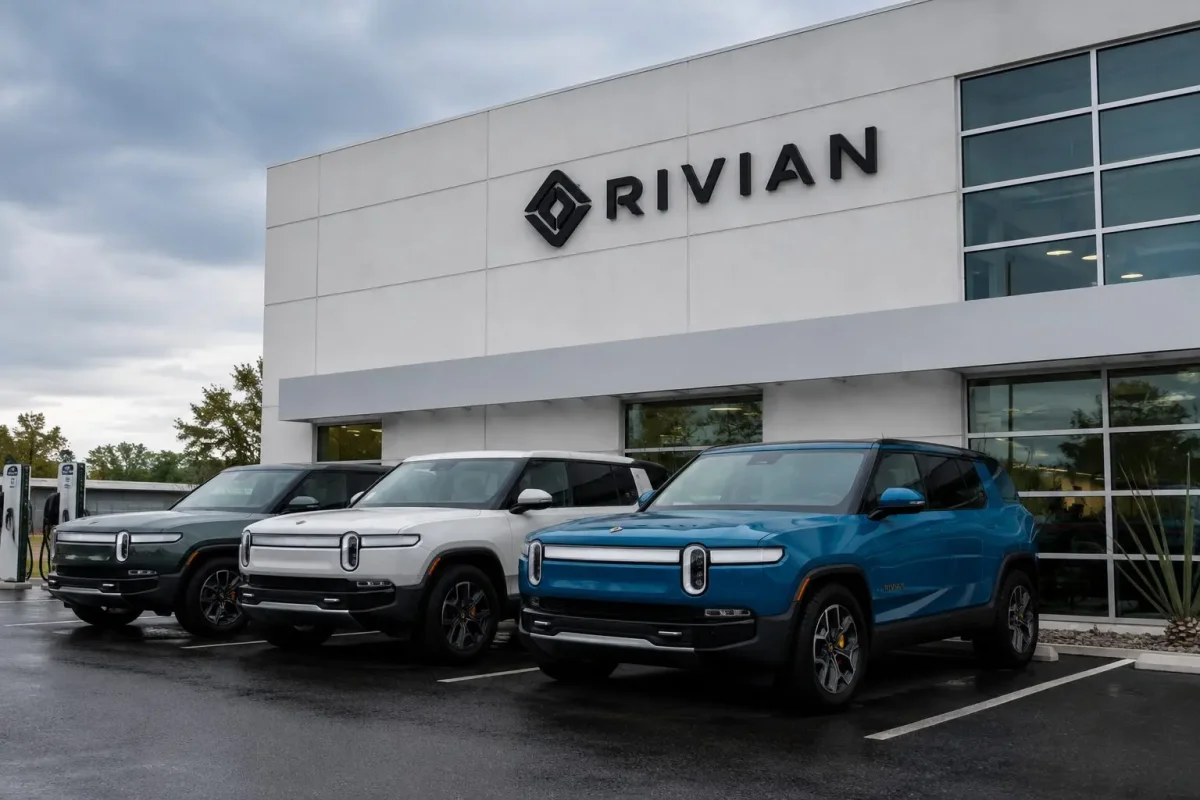
Rivian Automotive, Inc. (NASDAQ:RIVN) shares edged up 0.7% to $18.24 in Friday afternoon trading following a regulatory filing that revealed underwriters had fully exercised their option to purchase additional shares in the company's recent discounted stock sale. The move increased the total offering to 86.25 million shares and generated estimated net proceeds of $1.32 billion. Rivian's stock now trades nearly 18% above the $15.50 offer price, marking a significant rebound from earlier losses.
However, the recovery masks underlying concerns. Based on the share count outlined in the June 1 prospectus, the new shares create approximately 6% dilution for existing shareholders, meaning each stake is now slightly smaller. The stock had fallen 18.1% on Tuesday following the announcement and remains 9.4% below Monday's close of $20.14, suggesting investors are pricing in both financing and execution risks.
Financial Impact and Cash Position
The capital infusion is material but not unlimited. Adding the $1.32 billion to Rivian's preliminary June 30 cash, cash equivalents, and short-term investments of $5.3 billion yields a pro-forma balance of $6.62 billion, before any spending since quarter-end. The sale amount equals 1.23 times the company's first-quarter negative free cash flow of $1.075 billion, which measures cash from operations after capital expenditures.
There is also a notable gap in Rivian's cash trajectory. The company ended March with $4.83 billion and received $1 billion from Volkswagen AG (ETR:VOW3) on April 30, which would have brought the balance to $5.83 billion before other movements. The June estimate of $5.3 billion leaves a $530 million shortfall, which may reflect operational spending, working capital changes, or other balance sheet adjustments. While not a formal cash-flow figure, it indicates that external capital was already being consumed.
Operational Performance and Outlook
The stock sale followed a strong second-quarter operational update. Rivian produced 12,613 vehicles and delivered 12,194, beating its delivery forecast of 9,000 to 11,000 units. The company raised its 2026 delivery guidance to between 65,000 and 70,000 vehicles, while preliminary revenue of $1.55 billion to $1.65 billion surpassed the $1.45 billion analyst consensus compiled by LSEG.
Despite the positive update, the revised annual guidance implies a significant second-half ramp. To reach the midpoint of 67,500 deliveries, Rivian must deliver approximately 44,900 vehicles over the final six months, or roughly 22,500 per quarter — an 84% increase from the second-quarter total. Much of this growth is expected to come from the smaller R2 SUV, which is positioned to compete with Tesla, Inc. (NASDAQ:TSLA) Model Y.
Analyst Perspectives
Wall Street remains divided on Rivian's prospects. Jefferies analyst Owen Paterson raised his price target to $17 from $16 while maintaining a Hold rating, noting that the stock sale "significantly improves the funding profile" but warning that cash burn would remain substantial through 2027-2028. Stifel analyst Stephen Gengaro lifted his target to $22 from $20 with a Buy rating, while HSBC analyst Neil Churchill offered a more cautious view, stating that Rivian "is loss making and cash burning."
Friday's trading did not show a clear sector-wide trend. Rivian lagged Tesla but outperformed Lucid Group, Inc. (NASDAQ:LCID), while moving more than the technology-heavy Invesco QQQ Trust (NASDAQ:QQQ).
Risks and Downside Case
The financing does not eliminate downside risks. Rivian has noted that advances under its Department of Energy loan depend on meeting certain milestones, which could be delayed or missed. If the R2 ramp encounters delays while cash burn remains elevated, the new equity could be consumed before lower-cost loan funding arrives, potentially forcing another share sale, additional debt, or slower investment.
Full second-quarter results are scheduled for July 30. Investors will focus on automotive gross margin, free cash flow, and evidence that a quarterly delivery pace near 22,500 is achievable. The stock's rebound suggests the raise bought time, but the remaining discount to Monday's close indicates that the market has not fully priced out execution risk.