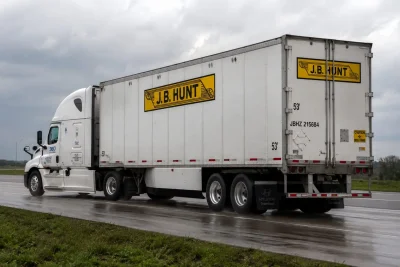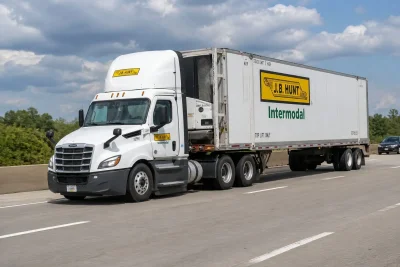
Record diesel prices are squeezing J.B. Hunt Transport Services, sending its stock down nearly 13% from Tuesday's close. The logistics giant warned that soaring fuel costs will add at least $10 million in extra expenses in the third quarter, and the market's reaction was swift.
On Wednesday, J.B. Hunt shares fell 13.3%, closing at $236.73. By Thursday afternoon, the stock had recovered slightly, trading at $238.19, up 0.6%, but still 12.8% below Tuesday's $273.05 close. The drop reflects investor concerns about the gap between sudden fuel price spikes and the slower repricing of customer contracts.
Diesel Hits Record High
The national average diesel price reached a record $6.3956 per gallon on Thursday, according to AAA. That's up from $5.9773 a week earlier, $5.4454 a month earlier, and $3.7075 a year ago—a 72.5% year-over-year increase. In contrast, regular gasoline averaged $4.4386, still below its June 2022 record.
The diesel surge is sharper than what most drivers see at the pump, and it's hitting trucking companies hard. J.B. Hunt, one of the largest transportation and logistics companies in North America, is particularly exposed due to its extensive fleet.
Fuel Surcharge Lag
Fuel surcharges are designed to pass higher diesel costs to customers, but they don't move at the pump's speed. J.B. Hunt pays the new fuel price before it collects the offsetting surcharge, creating a short-term margin squeeze. Intermodal and dedicated contracts reprice more slowly than spot trucking, leaving a temporary mismatch even when freight demand is strong.
At the Morgan Stanley conference on September 15, CFO Brad Delco said third-quarter earnings could fall 5% to 10% sequentially. He cited incremental driver-related costs of about $25 million and a fuel headwind of at least $10 million—totaling $35 million, roughly 13.5% of second-quarter operating income of $259.5 million.
Market Context and Data
The U.S. Energy Information Administration reported on-highway diesel at $6.285 for September 14, up 31.8 cents in one week. Meanwhile, August consumer prices showed gasoline rising 3.9%, contributing more than one-third of the overall CPI increase. The newer diesel spike has yet to appear in monthly inflation data.
High diesel prices can also shift freight from highways to rail, benefiting J.B. Hunt's intermodal segment. In the second quarter, intermodal revenue rose 22% to $1.75 billion, and operating income climbed 58% to $150.9 million. Management attributed part of the growth to customers seeking fuel and capacity advantages.
Outlook
The key question is whether the fuel cost shock is temporary. If diesel stays near $6.40, the surcharge lag could reverse as contracts catch up, and high fuel costs could drive more freight to rail. However, if fuel prices remain elevated long enough to weaken consumer spending and freight volumes, the demand benefit may fade before cost recovery is complete.
Investors will watch AAA's daily pump average, the EIA's next weekly fuel release on September 22, and J.B. Hunt's third-quarter earnings report, scheduled for October 15. Until then, Thursday's slight rebound is evidence of stabilization, not proof that the margin shock has passed.