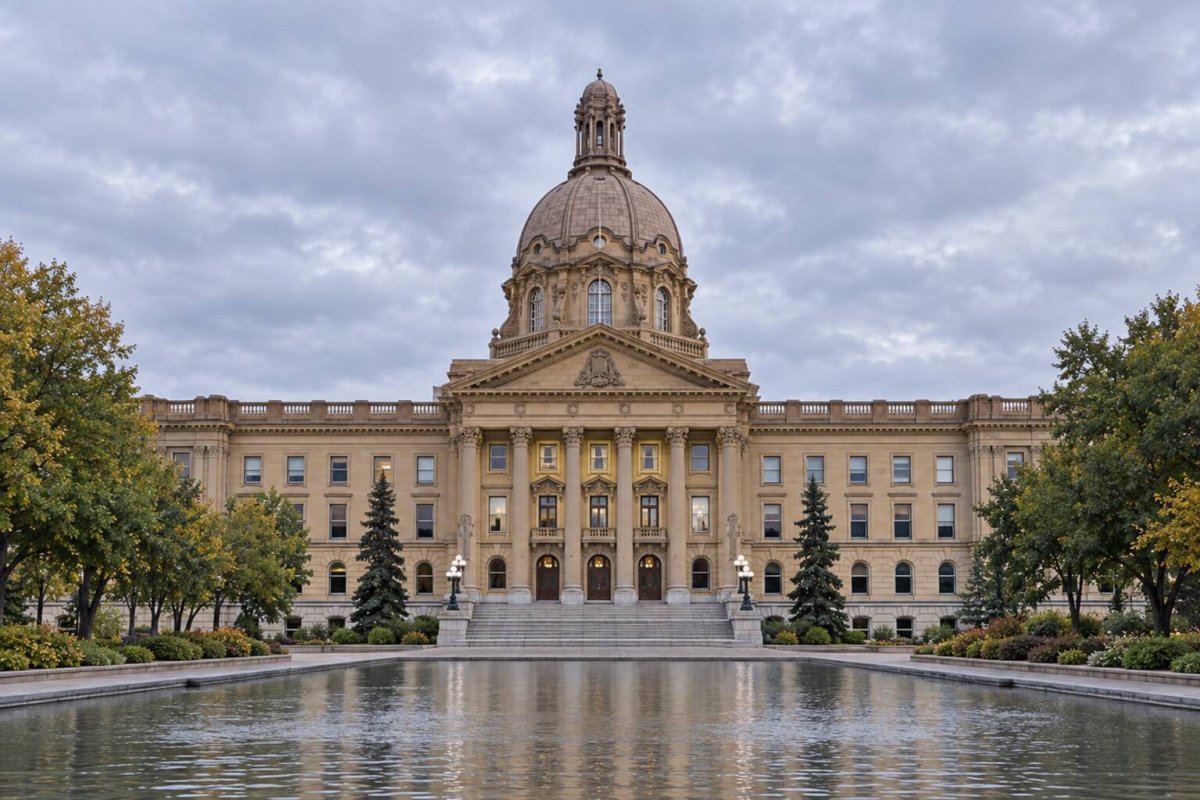
An independent report commissioned by Alberta's provincial government has quantified the potential price tag of separation, estimating that the first five years of an independent Alberta could cost between C$50 billion and C$170 billion. Released just weeks before the province's October 19 referendum on whether to begin the legal process toward independence, the study reframes a constitutional debate into a stark financial question: how much debt, tax burden, and economic disruption would Albertans tolerate before realizing any promised long-term benefits?
The upcoming vote does not itself trigger secession. According to Elections Alberta, voters will choose between remaining a province or directing the government to begin legal steps toward a future, binding referendum. Thus, October 19 serves as a decision on whether to open that process, not a final break with Canada.
The Cost Breakdown: Debt and New Institutions
The University of Calgary's School of Public Policy analyzed two scenarios. The "smooth" case assumes rapid negotiations and favorable trade and fiscal arrangements, while the "difficult" case envisions a slower, less cooperative separation. The school stresses that its analysis is independent and not a recommendation.
The startup cost estimate includes new government institutions, infrastructure, federal programs Alberta would need to administer, staffing, and a negotiated share of Canada's national debt. The report breaks down Alberta's resulting debt at C$324 billion to C$442.3 billion. At the upper end, debt would equal 88.5% of provincial GDP, a stark contrast to the 7.7% forecast for the end of the current fiscal year.
For bond investors, these debt figures carry more weight than the headline setup cost alone. A larger debt stock would lead to recurring interest payments, and the borrowing rate would hinge on the new sovereign's currency, tax base, trade access, and the negotiated division of assets and liabilities. Alberta currently benefits from a resource-rich economy and low debt, but separation would force capital markets to price a new nation before those institutional questions are settled.
Economic Divergence: Smooth vs. Difficult Paths
The report's economic projections are exceptionally wide. In the smooth case, real GDP would be 2.2% below the stay-in-Canada baseline after five years, but 3.4% above it after more than 20 years. The difficult case paints a grimmer picture: GDP 10.1% below baseline within five years and 16.2% lower in the long run. Employment could fall by as much as 10% in the first five years under that harsher path, with the average worker earning nearly C$5,500 less and paying roughly C$5,500 more in annual taxes.
The smooth case offers the report's strongest counterargument to its near-term warnings. It assumes Alberta retains access to major trade markets, expands resource development, and delivers public services more efficiently. Under those conditions, the initial shock could eventually give way to modest gains. However, the report notes that Ottawa, foreign governments, lenders, and energy markets control much of the route between these two extremes.
Market Reaction So Far
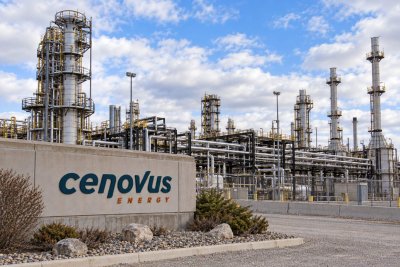
Markets showed little immediate reaction to the report. On Thursday afternoon, the Canadian dollar was unchanged at C$1.3987 per U.S. dollar, while shares of Suncor Energy (SU) and Cenovus Energy (CVE) edged up slightly. These small moves do not establish causation and should not be interpreted as an endorsement of either referendum option.
For energy producers, the investable risk lies less in whether oil stays in the ground and more in the terms under which it reaches customers. Pipeline regulation, cross-border trade, taxes, royalties, currency, and corporate domicile could all become negotiating issues. Neither company has translated the report's scenarios into guidance, and their shares still respond primarily to crude prices, production, refining margins, and capital returns.
The Canadian dollar channel runs both ways. Alberta supplies a large share of Canada's energy exports; the study suggests a difficult split could weaken Canada's trade balance and pressure the currency. An independent Alberta would also need a monetary arrangement, whether that means continuing to use the Canadian dollar without control over monetary policy or adopting another framework.
October 19: The Decision Tree
The next market test arrives on October 19 with the referendum on Question 10. A vote to remain would close the immediate separation path. A vote for the second option would begin legal work toward a binding referendum, leaving the costs of debt division, trade access, and federal programs to later negotiation.
Until then, the C$50 billion-to-C$170 billion range is best viewed as a scenario boundary, not an invoice or forecast with a single probability. The key signals to watch are whether Alberta's borrowing spread changes, whether businesses defer investment, and whether governments begin outlining concrete terms on debt, currency, and market access. Those would show that constitutional uncertainty has moved from the ballot into asset prices.