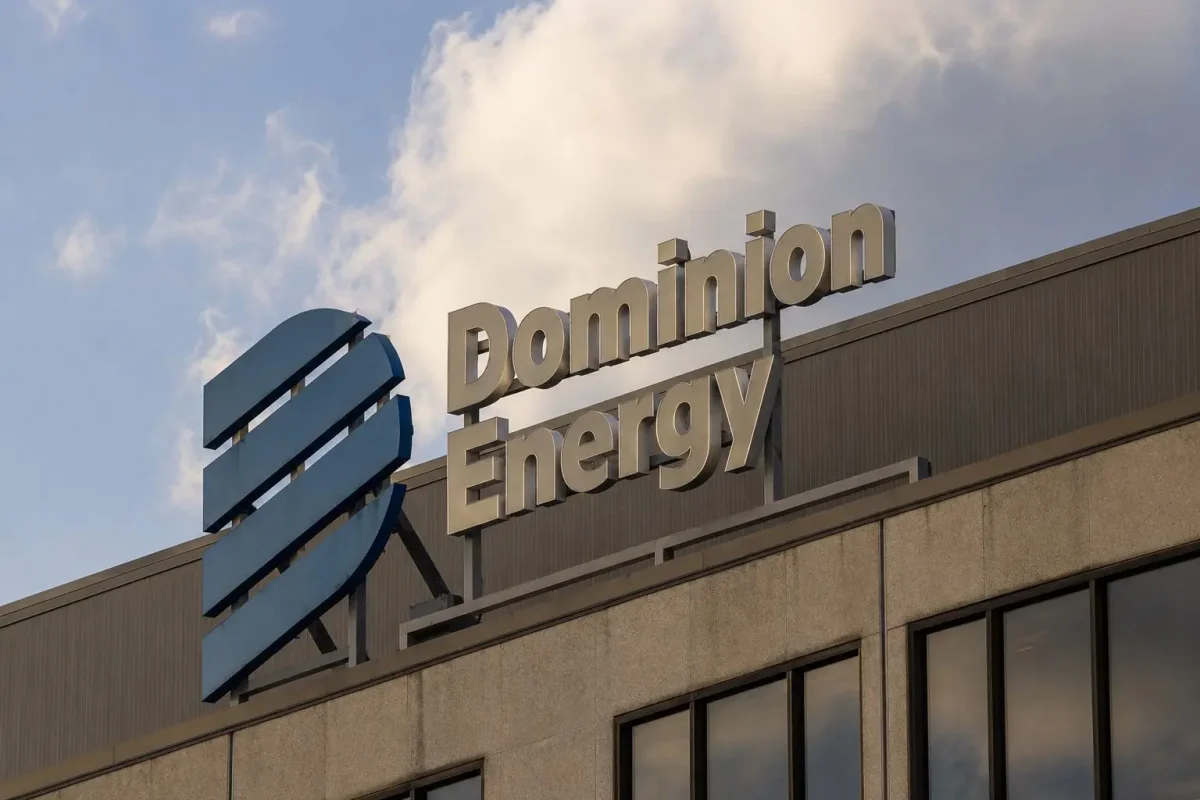
Dominion Energy (D) shares traded near their 52-week high on Monday, as investors evaluated the company's significant capital expenditure plans driven by surging data-center power demand in Virginia and the potential acquisition by NextEra Energy (NEE). The stock closed at $68.04, down 0.54%, after reaching an intraday high of $69.19. The 52-week high stands at $69.28.
Data Center Power Demand Surge
Dominion's Virginia service area encompasses the world's largest data center hub. PJM Interconnection forecasts that Dominion's zone will experience the largest increase in summer peak demand from 2026 to 2030, primarily due to new data-center loads, according to the U.S. Energy Information Administration. This growth is part of a broader trend: Reuters Events reported Monday that digital infrastructure investors are aggressively acquiring power developers as U.S. data-center electricity demand is projected to rise to 66 gigawatts by 2027, up from 31 gigawatts in 2025. Developers are seeking to secure power supply and bypass grid delays.
Capital Plan and Regulatory Hurdles
Dominion's expanded capital plan through 2030, focused on new generation, transmission, and other infrastructure, has shifted the investment outlook for the stock, according to Simply Wall St. The key question is whether this spending will be placed into rate base, where regulators approve returns, or if it will merely increase the balance sheet, necessitating additional debt and equity financing.
The company reported first-quarter operating earnings of 95 cents per share on $5.019 billion in operating revenue and maintained its 2026 operating earnings guidance of $3.45 to $3.69 per share. Dominion's data-center business is a central focus. Reuters reported in May that the company had nearly 51 gigawatts of contracted data-center load as of March, up 2.5 gigawatts since December. In a January PJM filing, Stan Blackwell, who leads Dominion's data-center practice, reported serving a 2025 coincident peak of 4 gigawatts for the sector and projected data-center demand would reach 6,526 megawatts by 2030.
NextEra Merger Overhang
The pending acquisition by NextEra Energy is a significant factor for Dominion shares. NextEra and Dominion announced on May 18 that they will merge in an all-stock deal, offering Dominion shareholders 0.8138 NextEra shares per Dominion share, resulting in Dominion holders owning approximately 25.5% of the combined entity. The merged utility would serve about 10 million accounts, have 110 gigawatts of generation, and operate under the NextEra name.
NextEra CEO John Ketchum emphasized that "scale matters more than ever" and that the larger group can "buy, build, finance and operate more efficiently." Dominion's Robert Blue also highlighted "scale and balance sheet" as critical for executing generation, transmission, and grid investments.
Analyst Perspectives and Risks
Analysts view Dominion more as a play on the merger's outcome than a traditional utility trade. Andrew Bischof, equity analyst at Morningstar, told Inside Climate News that the deal gives NextEra access to "Dominion's expertise and relationships" in expanding its data-center operations. However, the merger faces significant risks, including approvals from shareholders, FERC, the Nuclear Regulatory Commission, and state utility commissions in Virginia, North Carolina, and South Carolina. Dominion also cited risks from fast data-center growth, such as demand concentration, permitting, and regulatory hurdles.
FERC has already intervened, recently ordering grid operators to either defend or change rules for connecting large energy users, primarily data centers, to the grid. FERC Chair Laura Swett called this the U.S."s "biggest priority," aiming to prevent regular customers from subsidizing new loads. Affordability will determine how much of Dominion's data-center growth benefits shareholders. Ari Peskoe, director of the Electricity Law Initiative at Harvard Law School, told Inside Climate News that "mergers are not about consumers; they're about shareholders." Marissa Paslick Gillett, a former Connecticut utility regulator, warned that a larger utility could become a hard-to-control "behemoth."
Currently, Dominion's stock is caught between two narratives: the regulated grid expansion in the top data-center market and the M&A deal that depends on approvals, customer safeguards, and actual power demand growth. The ultimate question is not just whether Virginia needs more electricity, but who will pay for it and who will be compensated.