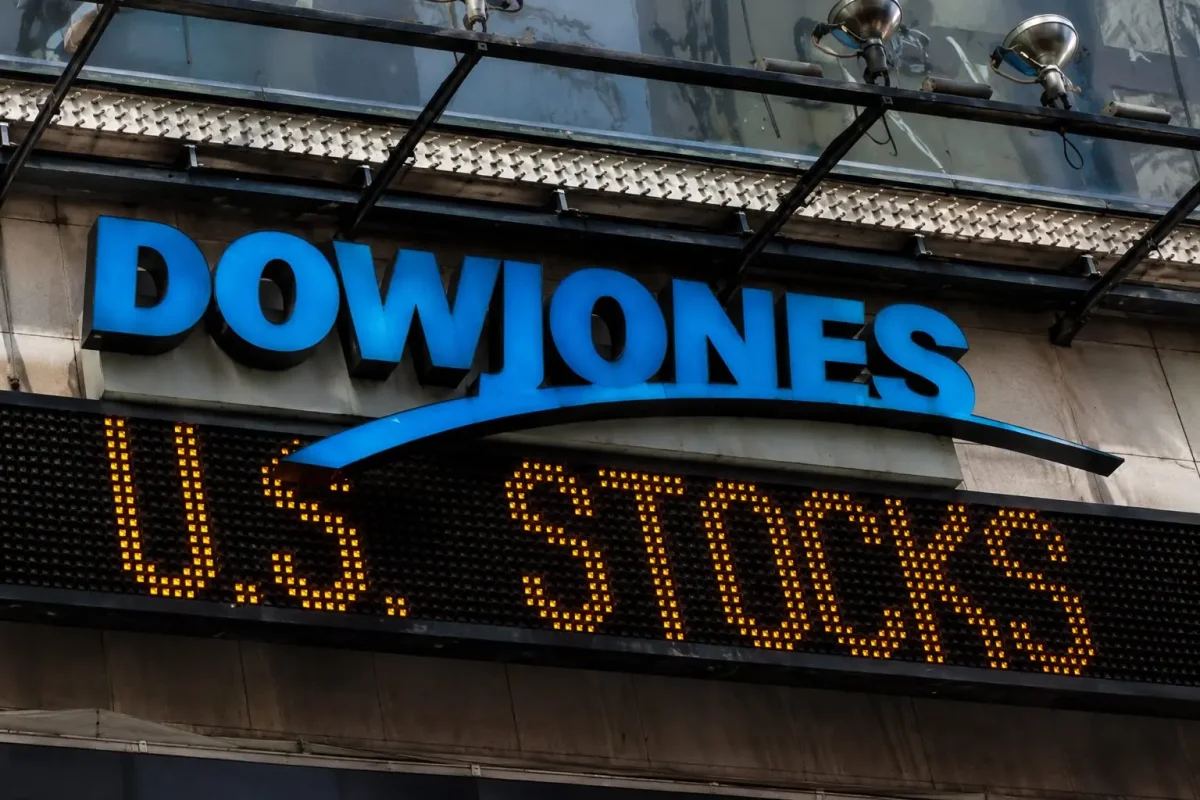
The Dow Jones Industrial Average dropped 338.84 points, or 0.66%, to 50,968.95 in late morning trading on Wednesday, retreating from record highs as a sharp rise in oil prices and renewed geopolitical tensions weighed on markets. The S&P 500 slipped 0.37%, while the Nasdaq Composite fell 0.45%, according to LSEG data.
The sell-off was triggered by a surge in crude oil prices toward $100 a barrel after reports that Iran fired ballistic missiles at Kuwait and Bahrain, and U.S. forces struck Iran's Qeshm Island. Brent crude rose 1.56% to $97.50, stoking fresh inflation concerns and ending a rally that had pushed the S&P 500 to a new record above 7,600 on Tuesday, fueled by bets on artificial-intelligence spending.
Higher oil prices typically feed into inflation by raising fuel, shipping, and input costs for companies and households, complicating the outlook for the Federal Reserve. The 10-year Treasury yield moved up to 4.491% as traders adjusted expectations.
Technology stocks, which had been leading the market's gains, lagged on Wednesday. The software sector fell 3.1%, with notable decliners including Datadog, Palo Alto Networks, and IBM, which dropped between 6.7% and 7.7%. The Philadelphia semiconductor index also traded lower, though Marvell Technology rose after Nvidia CEO Jensen Huang called it the next "trillion-dollar company."
Commodity analysts warned of further risks. Emril Jamil, senior oil analyst at LSEG, said stalled U.S.-Iran talks and concerns over tight stocks were "adding upward layers in risk premium in benchmark prices." Tom Baker, Vitol's managing director for Bahrain, told an energy conference that the oil market was not pricing in all risks from the Iran war, according to Reuters.
If oil continues to climb, the Dow could face a sharper decline as higher energy costs pressure corporate margins, consumer spending, and the case for rate cuts. However, any de-escalation in the Middle East or progress in reopening the Strait of Hormuz could send crude prices lower and draw buyers back to stocks.
On the economic front, private employers in the U.S. added 122,000 jobs in May, slightly ahead of the 117,000 expected by economists in a Reuters survey. The services sector remained strong, with the Institute for Supply Management's services PMI rising to 54.5 in May from 53.6 in April, though its prices-paid index increased to 71.3, indicating persistent price pressures.
Investors are now focused on Friday's nonfarm payrolls report, with economists expecting 85,000 jobs added in May and the unemployment rate steady at 4.3%. The outcome could determine whether Wednesday's Dow drop is a temporary pause or the start of a deeper correction.
Money markets currently price the Fed holding rates steady for the rest of the year, but bets on a 25-basis-point hike have ticked higher, reflecting the uncertainty around inflation and geopolitical risks.