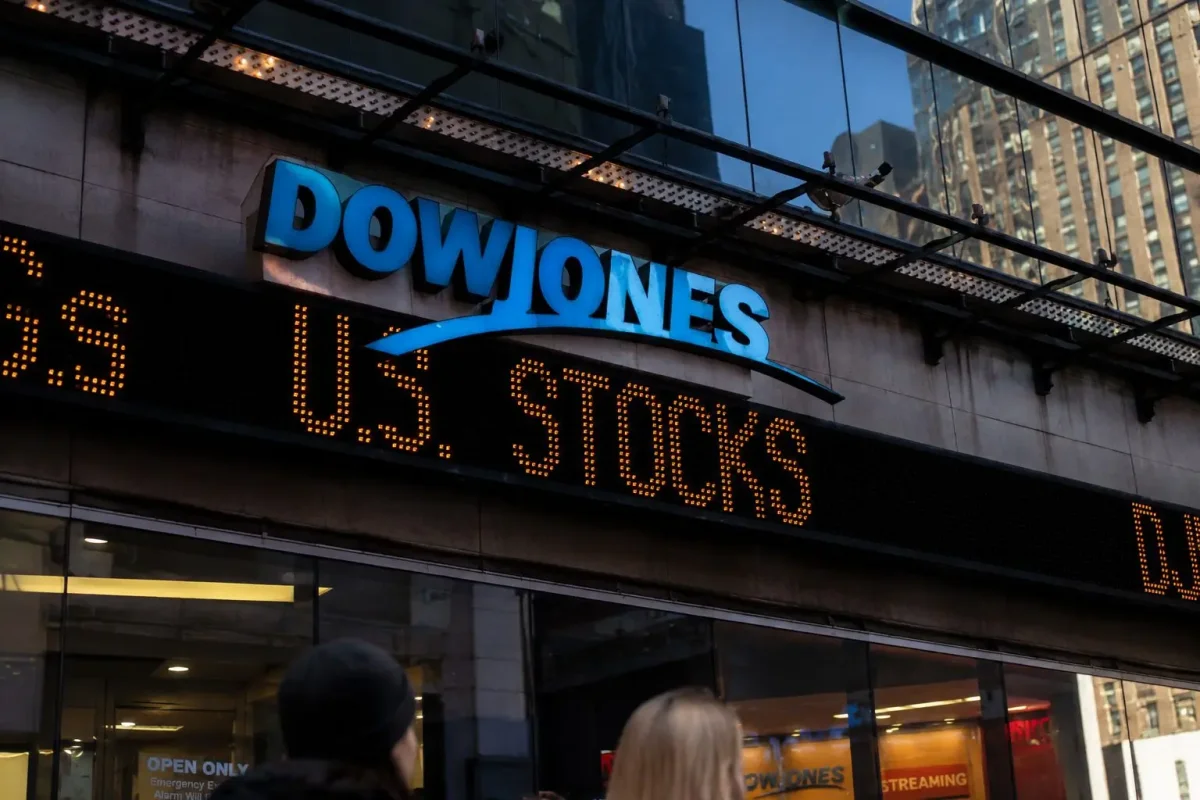
Wall Street staged a sharp rebound on Thursday, with the Dow Jones Industrial Average closing at a new all-time high as investors rotated into defensive sectors and oil prices tumbled. The advance, however, was tempered by a steep sell-off in Broadcom that weighed on the technology-heavy Nasdaq Composite.
The Dow surged 809.88 points, or 1.60%, to finish at 51,496.83, according to preliminary data from Reuters. The S&P 500 gained 39.74 points, or 0.53%, to 7,593.42, while the Nasdaq Composite eked out a modest gain of 60.69 points, or 0.23%, to 26,915.12. The move marked a sharp reversal from Wednesday's sell-off, which was sparked by rising oil prices and geopolitical tensions in the Middle East.
Healthcare and financial stocks led the charge. UnitedHealth Group climbed 5.0% after Bank of America upgraded the stock to a "buy" rating. Financials rebounded from the previous session's losses, which had been driven by fears over the private credit market. The rotation into these sectors signaled that investors were seeking safer havens within equities rather than fleeing the market entirely.
A significant tailwind came from the energy market. Brent crude oil futures fell approximately 3%, trading near $95 per barrel. The decline was fueled by reports of a potential U.S.-mediated ceasefire between Israel and Lebanon, as well as a House vote aimed at curbing President Donald Trump's ability to continue military action against Iran. Lower oil prices ease inflationary pressures, reducing the likelihood of tighter monetary policy and providing support for equities.
Despite the overall market gains, the technology sector faced headwinds from Broadcom's disappointing results. The chipmaker's stock plunged 11.2% after its second-quarter revenue missed forecasts and the company maintained its long-term artificial intelligence chip sales target at $16 billion for the fiscal third quarter, below the Visible Alpha consensus of $16.36 billion. The decline dragged on other chip stocks, though some competitors managed to avoid similar losses. Nvidia and Taiwan Semiconductor Manufacturing both rose on the day.
"Broadcom is down, but Nvidia and Taiwan Semiconductor are up," said Oliver Pursche, senior vice president at Wealthspire Advisors in New York, in an interview with Reuters. He described the divergence as "rational exuberance," noting that investors are rewarding companies that meet expectations while punishing those that disappoint. Ben Bajarin, CEO of Creative Strategies, added that Broadcom's guidance was not a sign of falling demand, but simply a lack of an upward revision. "They just didn't raise it," he said.
Ryan Lee, senior vice president of product and strategy at Direxion, warned that the market "demands perfection" for the chip rally to continue. Any slip in AI leadership could hurt risk appetite, even for sectors like the Dow that have limited direct exposure to semiconductors.
On the economic front, initial jobless claims rose by 13,000 to 225,000 for the week ending May 30, reaching a four-month high. Despite the uptick, economists described the labor market as steady. Oliver Allen, senior U.S. economist at Pantheon Macroeconomics, characterized the environment as a "low fire, low hire" situation, where companies are neither cutting jobs aggressively nor ramping up hiring. All eyes now turn to Friday's May jobs report, with economists polled by Reuters expecting a nonfarm payroll gain of 85,000 and the unemployment rate holding at 4.3%. A stronger-than-expected report could push Treasury yields higher and pressure rate-sensitive Dow stocks.
Geopolitical risks remain elevated. The ceasefire path appears uncertain after Hezbollah rejected the proposal, and the House measure on war powers faces political hurdles. If oil prices reverse course or chip sector weakness spreads to other AI stocks like Nvidia or Marvell Technology, Thursday's Dow rally could prove short-lived.