Oklo Inc. (NYSE: OKLO) saw its shares decline 15.8% over the week ending July 17, closing at $41.11 on Friday. The drop outpaced the broader nuclear sector, with NuScale Power Corp. (NYSE: SMR) falling 14.6% and the VanEck Uranium and Nuclear ETF (NYSEARCA: NLR) declining 9.0%. In contrast, Constellation Energy Corp. (NASDAQ: CEG), operator of the largest U.S. nuclear fleet, edged up 0.4%, highlighting a divergence between reactor developers and established operators.
Market Context and Financial Position
The sell-off in nuclear stocks occurred amid a weak broader market, with the S&P 500 slipping 1.0% and the Nasdaq dropping 1.4% on Friday. Over the week, the indices fell 1.55% and 2.9%, respectively. Oklo's decline was particularly steep, with the stock hitting a low of $39.53 on Friday before recovering slightly to close at $41.11.
Despite the price drop, Oklo's balance sheet remains robust. As of March 31, the company reported $2.537 billion in cash and marketable securities. First-quarter operating cash use was $17.9 million, with property and equipment spending totaling $32.8 million. Combined cash expenditures for the quarter were approximately $50.7 million, implying a cash runway of about 50 quarters at that burn rate, though this is not a formal forecast.
Funding and Dilution Risks
The substantial cash buffer was largely provided by shareholders. Oklo issued 12.38 million shares in the first quarter, generating $1.182 billion in net proceeds. In May, the company established a new $1 billion at-the-market (ATM) offering program, providing additional financial flexibility but also introducing potential dilution for existing shareholders.
The gap between Oklo's performance and the broader nuclear fund suggests investors are increasingly focused on execution and timeline risk rather than liquidity concerns. The company's ability to meet its July criticality milestone for the Groves reactor is now the key near-term test.
Regulatory and Operational Milestones
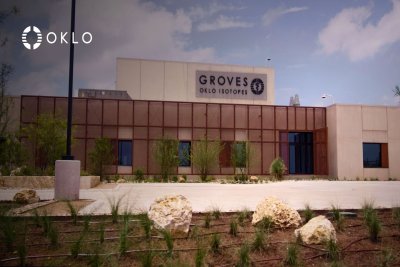
On July 1, the U.S. Department of Energy cleared the final safety analysis for Groves. A readiness review and final startup approval are still required before fuel loading and achieving criticality. Chief Executive Jacob DeWitte stated that Groves "now moves into the final phase before startup, including readiness review, fuel loading, and criticality." Oklo had initially targeted achieving criticality in July.
It is important to note that Groves is not a commercial power facility. According to the Department of Energy, it is a zero-power, 100-watt critical assembly designed to assist with prospective isotope production. While achieving criticality would be a significant demonstration of Oklo's ability to build and navigate regulatory processes, it does not establish the viability of the company's Aurora commercial product.
Outlook and Risks
The coming week is expected to hinge on confirmed regulatory developments. Clarity on the readiness review or formal startup approval could reduce uncertainty regarding the July schedule. However, risks remain, including the possibility that Groves may fall short of its goal. Returns could face pressure from challenges such as fuel availability, licensing, construction expenses, and potential additional share offerings.
For now, liquidity is not the primary concern. Oklo's underperformance relative to the nuclear fund indicates that investors are seeking proof that the company will meet its deadlines. The market is watching closely for the next catalyst.