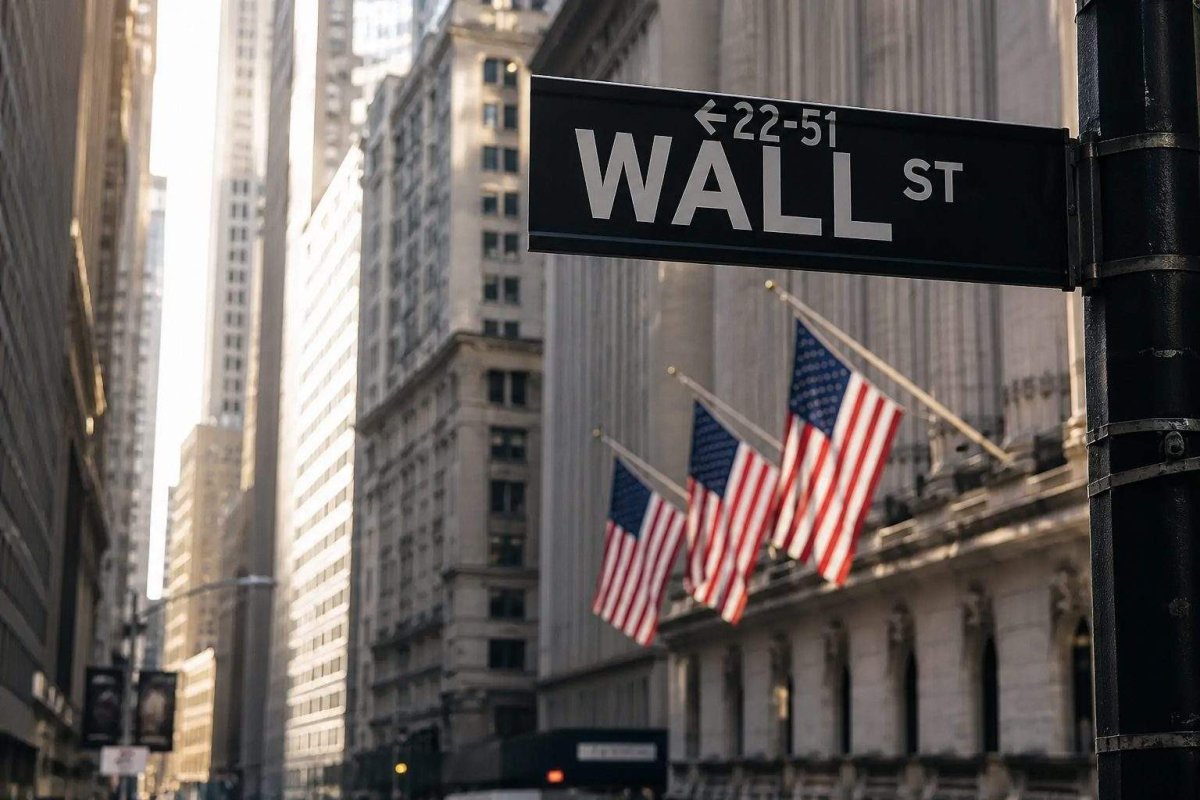
The Dow Jones Industrial Average set a fresh record high in a holiday-shortened session on Thursday, while the Nasdaq Composite slid as semiconductor shares tumbled. The S&P 500 ended nearly flat, but underlying breadth was strong, with a majority of its components advancing. U.S. markets were closed Friday for the Independence Day holiday and will resume normal trading on Monday.
Mixed Holiday Session
The Dow surged 594.83 points, or 1.1%, to close at 52,900.07, a new all-time high. The S&P 500 inched up less than 0.1% to 7,483.24, while the Nasdaq Composite dropped 207.36 points, or 0.8%, to 25,832.67. Despite the mixed finish, all three major indexes posted gains for the week: the S&P 500 rose 1.8%, the Dow gained 2.0%, and the Nasdaq added 2.1%.
Broad Market Strength Beneath the Surface
More than two-thirds of S&P 500 stocks advanced on Thursday, suggesting a rotation out of crowded artificial intelligence names rather than a broad selloff. On the New York Stock Exchange, advancers led decliners by a 1.42-to-1 ratio, with 318 stocks hitting new highs and 111 touching new lows. On the Nasdaq, however, decliners outpaced advancers 2,548 to 2,419.
Semiconductor Sector Under Pressure
The Philadelphia semiconductor index plunged 5.4%, driving the Nasdaq's decline. Nvidia (NASDAQ:NVDA) fell 1.4%, and SanDisk (NASDAQ:SNDK) tumbled 14.1%. In contrast, Apple (NASDAQ:AAPL) gained 4.8%, while Tesla (NASDAQ:TSLA) dropped 7.5% even after reporting second-quarter deliveries that exceeded expectations.
Labor Market Data Fuels Rotation
The market moves were sparked by weaker-than-expected labor data. The Bureau of Labor Statistics reported that nonfarm payrolls rose by only 57,000 in June, while the unemployment rate climbed to 4.2%. The labor-force participation rate fell to 61.5%, and leisure and hospitality lost 61,000 jobs. Revisions to April and May payrolls subtracted a combined 74,000 jobs. Average hourly earnings increased 0.3% for the month and 3.5% year-over-year.
Adam Sarhan, chief at 50 Park Investments, commented that the jobs report “takes the pressure off the Fed to raise rates in the short term.”
Key Events Ahead
Investors are now turning their attention to a busy week of economic data and corporate earnings. The Federal Reserve will release the minutes from its latest meeting on Wednesday, which could provide clues on the central bank's policy stance. Joe Mazzola, head trading and derivatives strategist at Charles Schwab (NYSE:SCHW), said he is watching “whether or not that broadening continues.” Matthew Miskin of Manulife John Hancock Investments noted that investors will assess “how incrementally hawkish are they leaning” in the Fed minutes.
Delta Air Lines (NYSE:DAL) and PepsiCo (NASDAQ:PEP) are both scheduled to report earnings next week. S&P 500 earnings for the second quarter are on track for more than 24% growth, according to LSEG IBES data.
The economic calendar includes services PMIs on Monday, trade balance figures on Tuesday, the FOMC minutes and consumer credit on Wednesday, and weekly jobless claims along with existing home sales on Thursday.