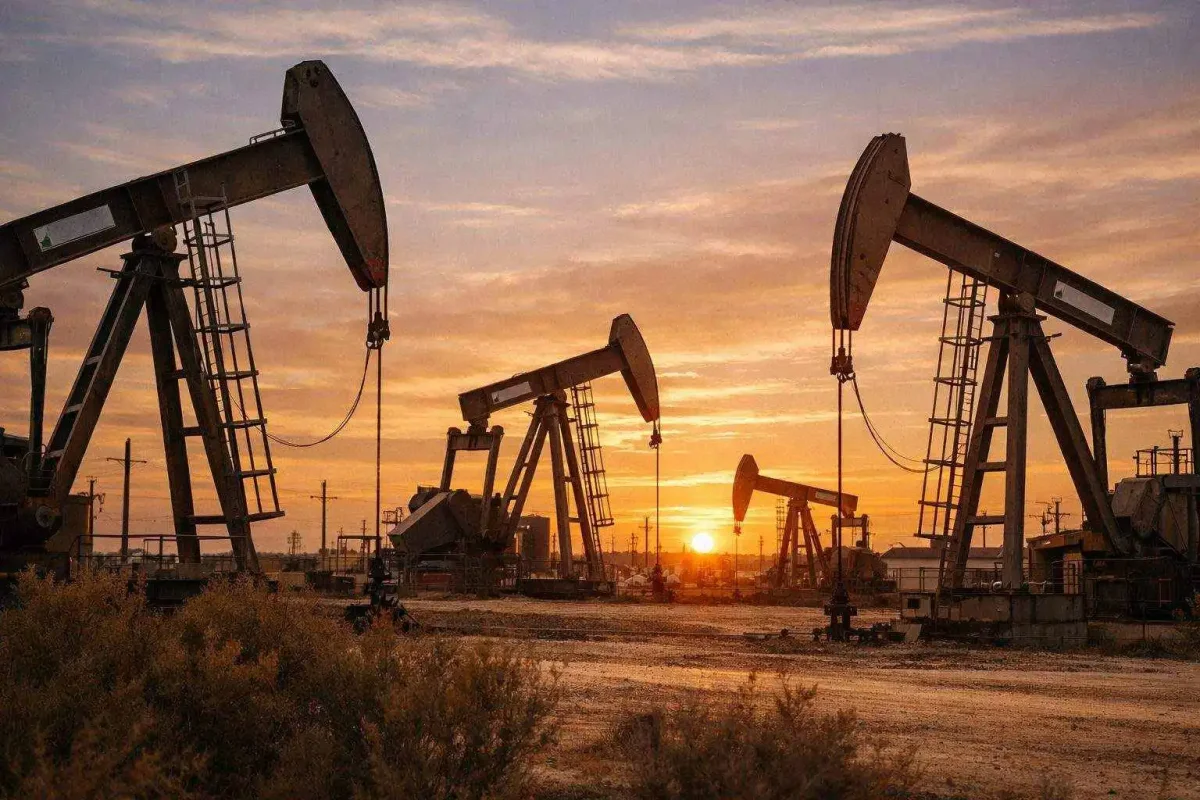
Global oil markets faced renewed turbulence on Friday as a drone strike targeted critical loading infrastructure at the Port of Fujairah in the United Arab Emirates. The incident, occurring just outside the strategically vital Strait of Hormuz, forced a halt to some operations and sent benchmark crude prices higher. Brent crude futures for April delivery settled at $103.14 per barrel, while U.S. West Texas Intermediate (WTI) closed at $98.71.
Strategic Chokepoint Under Threat
The attack's location carries significant weight for global energy flows. Fujairah serves as a major export hub, handling over 1.7 million barrels per day of crude and refined products. Its position outside the Strait of Hormuz makes it a critical alternative route should the strait itself become impassable. The narrow waterway is a transit corridor for approximately 20% of the world's seaborne oil and a substantial volume of liquefied natural gas (LNG). Analysts immediately highlighted the vulnerability this exposes. Helima Croft of RBC Capital Markets noted the event underscores that "no safe harbor" remains, with conflict now directly impacting infrastructure beyond the immediate strait.
Unprecedented Supply Shock Looms
The geopolitical tension exacerbates an already severe supply crisis. The International Energy Agency (IEA) has issued a stark warning, projecting global oil supply will plummet by a staggering 8 million barrels per day in March. This would represent the largest single disruption on record. Contributing to this shortfall, producers in the Gulf region have already slashed output by no less than 10 million barrels per day. In response, IEA member nations confirmed on March 11 a coordinated release of 400 million barrels from emergency strategic petroleum reserves.
Individual governments are now detailing their contributions to this effort. Canada has pledged 23.6 million barrels, drawing on planned production increases. Japan is set to release approximately 80 million barrels, with the process beginning on March 16. These moves aim to cushion the blow to consuming nations, but analysts question whether they can fully offset the scale of the disruption.
Broader Market and Economic Impact
The energy price surge has broad ramifications. Oil is now trading near $100 per barrel, marking a roughly 35% increase since the outbreak of recent hostilities. The pain extends to natural gas, with European benchmark prices soaring almost 60% in March alone. The inflationary consequences are severe. A European Central Bank study, cited by Reuters, suggests a sustained 14% rise in oil and gas prices could add half a percentage point to inflation and shave 0.1% off economic growth. Economists further warn that governments lack the fiscal capacity for sweeping consumer subsidies akin to those deployed during the 2022 energy crisis.
Analysts Revise Forecasts Upward
Major financial institutions are scrambling to adjust their price projections in light of the escalating crisis. Goldman Sachs now expects Brent to average above $100 per barrel for March, though it sees a potential pullback to around $85 by April. Barclays has raised its full-year 2026 Brent forecast to $85 per barrel, cautioning that prices could spike back to $100 if market participants begin pricing in a Strait of Hormuz closure lasting four to six weeks.
The potential for further supply losses is alarming. JPMorgan analysts project crude supply losses could approach 12 million barrels per day by the end of next week. Europe is particularly vulnerable, given its heavy reliance on Middle Eastern diesel and jet fuel after severing most energy imports from Russia. Additional risks loom, such as potential damage to Iran's Kharg Island oil infrastructure. Dan Pickering of Pickering Energy Partners warned that such damage could permanently remove up to 2 million barrels per day from the market until complex repairs are completed and the strait is secured.
Path to Resolution Remains Unclear
While efforts to stabilize the situation are underway, the path forward is fraught with uncertainty. Former U.S. President Donald Trump claimed "many countries" were prepared to send warships to help secure the Strait of Hormuz, though he did not name specific nations. Yuvraj Narayan, CEO of DP World, suggested a phased reopening of the strait with naval escorts might be possible, but concrete details on such an escort coalition are lacking.
The immediate threat landscape remains complex. Concerns persist over naval mines reportedly deployed by Iran and the potential for further attacks on ports and infrastructure outside the immediate conflict zone. These factors suggest oil markets will likely remain tight and volatile in the coming week, with traders closely monitoring any developments that could either ease the supply crunch or plunge it deeper into crisis.