NEW YORK — U.S. gasoline prices have climbed to their highest level in nearly four years, with the national average for regular unleaded reaching $4.229 per gallon on Wednesday, according to AAA. The last time prices were this elevated was July 2022, and analysts warn the rally may have further to run as the summer driving season approaches.
The latest surge is underpinned by a sharp decline in gasoline stockpiles. The Energy Information Administration (EIA) reported that motor gasoline inventories fell by 6.1 million barrels in the week ended April 24, pushing supplies below the five-year seasonal average. Over the past four weeks, demand — measured by product supplied — averaged 9.0 million barrels per day, up 1.2% from the same period last year.
Crude oil prices have also provided a powerful tailwind. Brent crude futures jumped 6.1% to settle at $118.03 a barrel on Wednesday, briefly touching $120 after the close. West Texas Intermediate (WTI) crude rose 7% to finish at $106.88. The rally was fueled by stalled U.S.-Iran nuclear talks, renewed fears of supply disruptions in the Middle East, and larger-than-expected draws in U.S. crude and fuel inventories.
“If the administration is prepared to extend the blockade, supply disruptions would worsen further and continue to push oil prices higher,” said Yang An, an analyst at Haitong Futures, referring to the Strait of Hormuz, through which about a fifth of the world’s oil and gas supply passes.
Retail prices have yet to fully reflect the wholesale surge. Gasoline futures — contracts used by traders to lock in prices — jumped 5% on Wednesday to $3.7423 per gallon, the highest since 2022. Tom Kloza, chief energy adviser at Gulf Oil, noted that station margins have been squeezed as wholesale costs rose faster than pump prices, forcing dealers to “take one for the team.”
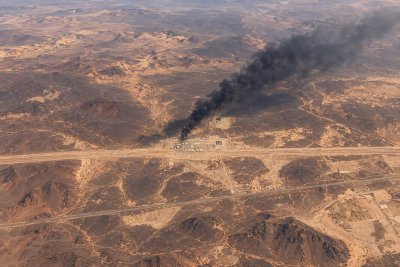
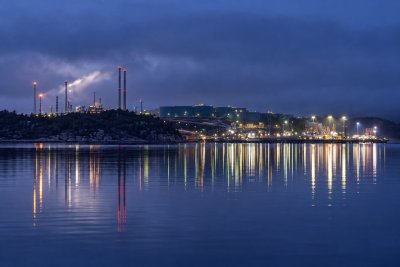
Refinery outages have added to the pressure. BP’s Whiting plant in Indiana, which processes 440,000 barrels per day, was knocked offline by a power failure on Sunday. Then on Tuesday, Shell’s Norco facility in Louisiana, with a capacity of 250,000 barrels per day, was hit by a fire. GasBuddy analyst Patrick De Haan warned that the Whiting outage could push some Midwest gasoline prices above $5 a gallon.
“This is getting ugly fast,” said Bob Yawger, managing director at Mizuho, commenting on the rapid deterioration in gasoline stock levels just ahead of peak travel season.
State-level prices show wide variation. California posted the highest average at $5.983 per gallon, followed by Hawaii at $5.634 and Washington at $5.539. Drivers in Oklahoma enjoyed the lowest prices at $3.658 per gallon.
The outlook remains tilted to the upside. Crude oil continues to trade above $100, inventories are thinning, refineries are struggling, and summer demand is looming. While a resolution to geopolitical tensions or a drop in driving could cause prices to plateau, analysts note that demand destruction typically takes a month or two to materialize. Dennis Kissler, senior vice president at BOK Financial, pointed out that U.S. demand has not yet shown signs of easing.
Looking further ahead, Wood Mackenzie flagged the UAE’s potential departure from OPEC as a factor that could increase oversupply risks starting in 2027, but chief analyst Simon Flowers expects minimal impact on 2026 fundamentals even if the Strait of Hormuz reopens.