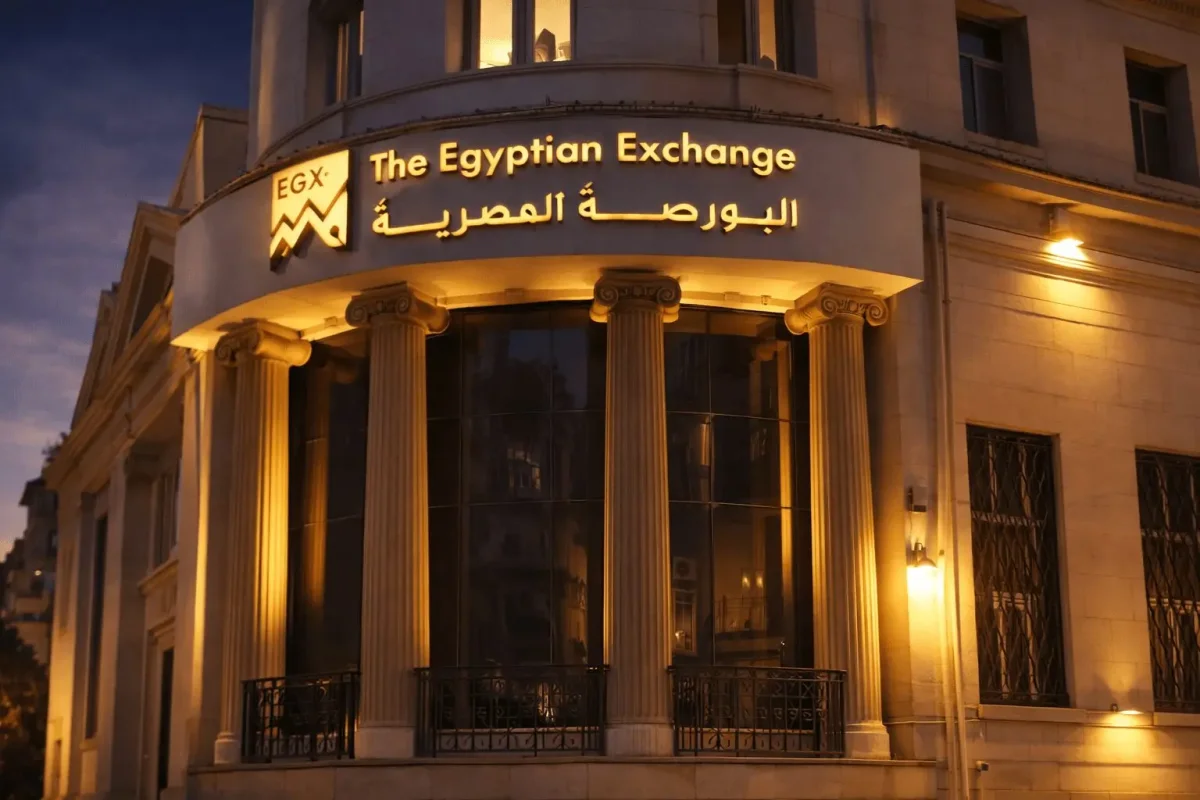
The Egyptian Exchange endured a turbulent week, with its primary EGX30 index closing down 3.5%, representing its most severe weekly decline since June of the previous year. The sell-off unfolded against a backdrop of escalating regional geopolitical friction and pronounced foreign investor withdrawals, highlighting the market's vulnerability to external shocks.
A Volatile Trading Week
The week began with severe pressure following military strikes on Iran, which sent shockwaves through Gulf markets and triggered a sharp sell-off in Cairo. On Sunday, March 1, the EGX30 initially plunged more than 5% before paring losses to close down 2.5%. The downward trajectory continued on Monday with a further 0.61% loss, followed by a significant 2.03% slide on Tuesday. Data revealed that foreign investors were net sellers to the tune of 1.003 billion Egyptian pounds that day, underscoring the flight of international capital.
A modest decline of 0.59% occurred on Wednesday, setting the stage for a notable rebound on Thursday. The index rallied 2.29% to close at 47,516.44, halting a four-day losing streak. This recovery was spearheaded by a 3.7% surge in shares of Commercial International Bank (CIB), Egypt's largest private lender. Trading activity surged alongside the bounce, with Thursday's turnover reaching 6.933 billion Egyptian pounds on 1.763 billion shares, boosting the total market capitalization to 3.213 trillion pounds.
Broader Market Performance and Regional Context
While the blue-chip EGX30 bore the brunt of the selling, broader market indices demonstrated greater resilience. The EGX70 and EGX100 ended Thursday's session only marginally below their levels from February 27, indicating that the selling pressure was largely concentrated in the largest and most liquid stocks.
Egypt's performance notably lagged behind other regional markets. Saudi Arabia's Tadawul All Share Index, for instance, managed a 0.6% weekly gain. Markets in Qatar and the United Arab Emirates exhibited more volatility, with the latter closed for two days during the week, but Egypt's losses were distinctly sharper.
Geopolitical Risks Dominate Sentiment
Analysts were quick to attribute the downturn to investor anxiety over regional instability. "Market sentiment is likely to remain highly sensitive to regional geopolitical developments," stated Daniel Takieddine, co-founder and CEO at Sky Links Capital Group. The concerns are multifaceted, focusing on potential impacts on foreign direct investment, critical revenue streams from the Suez Canal and tourism, and regional energy supplies.
The tangible effects of the tensions were already visible in global trade. Major shipping firms, including Maersk, Hapag-Lloyd, and CMA CGM, had diverted vessels around Africa and suspended transit bookings via the Suez Canal. In an attempt to reassure markets, Suez Canal Authority chief Osama Rabie stated on March 3 that vessel traffic was proceeding normally in both directions. However, energy markets remained skeptical, with Brent crude oil climbing past $90 per barrel by Friday, reflecting persistent broader supply concerns.
Domestic Developments Offer Mixed Signals
The external turmoil contrasted with a series of positive domestic developments that had previously buoyed investor confidence. Just days before the sell-off, the International Monetary Fund (IMF) completed two reviews of Egypt's economic reform program, unlocking approximately $2.3 billion in funding. Furthermore, central bank data showed the country's net foreign assets—a key indicator of the banking sector's foreign exchange position—reached a record high of $29.54 billion in January.
Concurrently, Egyptian authorities continue to advance capital market initiatives. On March 1, the exchange launched EGX30 futures contracts, providing investors with new tools to hedge against volatility or speculate on the index's direction. The government also finalized a fair-value assessment for state-owned Banque du Caire, a crucial step toward its long-anticipated initial public offering (IPO).
Nevertheless, recent economic data suggests some softening. The S&P Global Egypt Purchasing Managers' Index (PMI) for February slipped to 48.9 from 49.8 in January, remaining below the 50.0 threshold that separates expansion from contraction. Economist David Owen noted the reading "pointed to a slowdown," with both business activity and new orders losing momentum.
Looking ahead, the market's direction appears inextricably linked to the geopolitical landscape. As George Pavel, General Manager at Naga.com Middle East, observed, the week's declines illustrate investor apprehension regarding the conflict's potential to disrupt FDI, Suez Canal revenue, tourism, and gas supplies. While frontier markets like Egypt have historically demonstrated resilience in managing foreign-exchange demand during shocks, as noted by Yvette Babb of William Blair, the current climate suggests a period of heightened volatility and sensitivity to headlines from the wider region.
