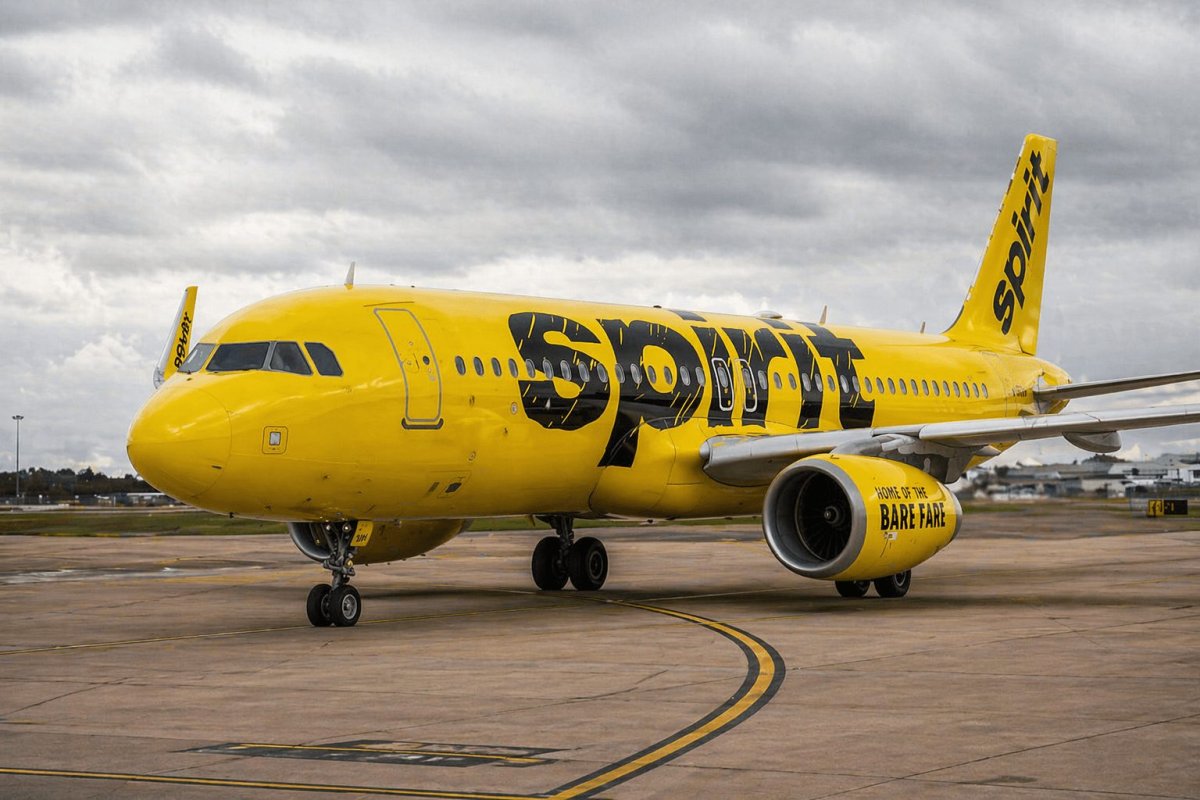
Spirit Airlines has formally proposed granting the U.S. government an ownership stake in the company as part of urgent rescue talks, signaling severe financial distress as the carrier battles escalating liquidation threats. According to multiple financial news reports, the low-cost airline is seeking hundreds of millions in emergency capital after a dramatic surge in jet fuel prices severely eroded its cash reserves.
Fuel Crisis Reaches Breaking Point
The airline's precarious position stems directly from the fuel price shock linked to ongoing geopolitical tensions, which has transformed a sector-wide challenge into an existential crisis for several smaller carriers. Jet fuel costs have nearly doubled from the levels Spirit used in its 2026 strategic planning, reaching approximately $4.24 per gallon by mid-April compared to the anticipated $2.24 price. Analysts at J.P. Morgan estimate this spike could add roughly $360 million in unexpected expenses this year alone, exceeding the airline's projected available cash for the end of 2025.
This Tuesday, chief executives from Spirit, Frontier, Allegiant, Sun Country, and Avelo Airlines are scheduled to meet with Transportation Secretary Sean Duffy to advocate for temporary relief measures. Their primary request involves Congress suspending the 7.5% federal ticket tax and the $5.30 per-segment fee. The Association of Value Airlines calculates that eliminating these charges would offset about one-third of the additional fuel costs burdening these carriers.
Restructuring Plan Under Threat
In March, Spirit outlined a comprehensive reorganization strategy that included reducing its fleet to between 76 and 80 aircraft by the third quarter of 2026, intensifying focus on key hubs including Fort Lauderdale, Orlando, Detroit, and the New York metropolitan area, and slashing total debt and lease liabilities from $7.4 billion to approximately $2 billion before emerging from Chapter 11 bankruptcy protection.
However, creditors represented by Citi have warned in court documents that this entire recovery blueprint could rapidly collapse if elevated fuel prices persist or if lenders begin seizing aircraft engines and spare parts that were pledged as collateral. The recent fuel cost surge has injected significant uncertainty into the airline's previously announced early-summer timeline for stabilization.
Passenger Uncertainty and Industry Ripples
Travelers already face considerable uncertainty regardless of the negotiations' outcome. Aviation analyst Henry Harteveldt noted that Spirit has been operating on "financial fumes" and advised passengers to secure backup reservations. The U.S. Department of Transportation has issued guidance stating that if Spirit ceases operations, customers who purchased tickets with credit cards but did not receive their flights should immediately file claims with their card issuers. Stranded passengers may request that other airlines honor their tickets or offer discounted replacement fares, though carriers have no legal obligation to comply.
The distress extends beyond Spirit, though its effects vary across the industry. Frontier Airlines has reported increased demand as it assumes routes Spirit abandoned in western markets. Conversely, JetBlue Airways is experiencing significant pressure, with CEO Joanna Geraghty informing employees that fuel expenses have made the operating environment "more challenging than we had expected," while simultaneously emphasizing that bankruptcy is not under consideration for 2026.
Uncertain Federal Response
The prospect of a federal bailout remains highly uncertain. When Spirit initially requested assistance, the Transportation Department maintained silence on the matter. Historical precedent also presents a hurdle, as direct government intervention for a single airline has been exceedingly rare outside the broad, pandemic-era relief programs that supported the entire industry.
Spirit CEO Dave Davis described the airline's reorganization plan in March as "another significant step forward," assuring customers that flight bookings, tickets, travel credits, and loyalty points would remain unaffected. The subsequent fuel price explosion has now placed those assurances in serious doubt, with the company's future hinging on successful negotiations for immediate financial relief.