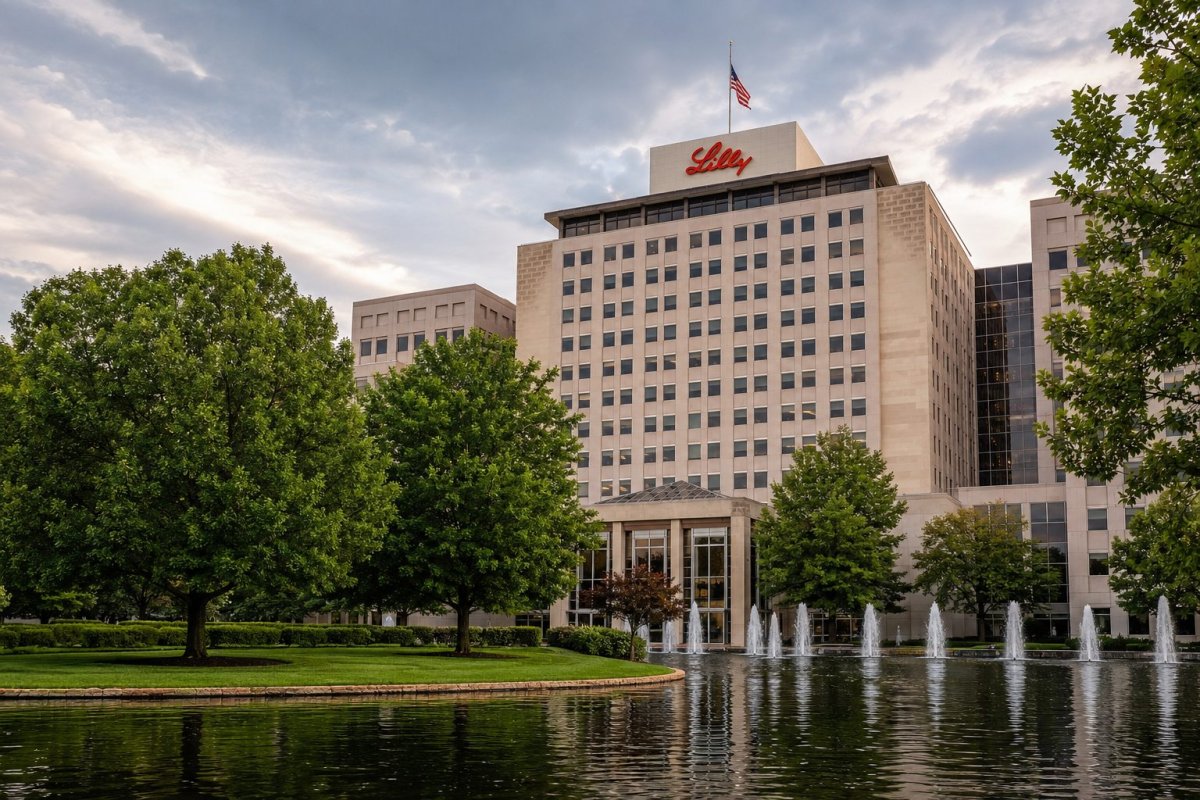
Eli Lilly (NYSE:LLY) shares finished Tuesday's session just 1.9% below their record high, as a sharp increase in sales volume continues to offset persistent pricing pressure. The pharmaceutical giant closed at $1,225.73, up 3.6% on the day, after investors cheered the company's latest earnings report and raised guidance.
The stock's rally is underpinned by robust demand for its obesity and diabetes treatments. In the second quarter, revenue surged 48% year-over-year to $22.97 billion, propelled by a 60% jump in sales volume. However, realized prices fell 13% during the same period, reflecting ongoing competitive dynamics and rebate adjustments. This price-volume mix has become a key focus for analysts and investors alike.
Mounjaro and Zepbound, the company's flagship injectable GLP-1 therapies, generated combined revenue of $14.8 billion in the quarter, representing roughly 64% of total sales. Mounjaro contributed $9.9 billion, while Zepbound added $4.9 billion. The concentration underscores both the scale of Lilly's franchise and the risks associated with relying heavily on a single product category.
Following the August 5 earnings release, the stock gained 6.9% over two sessions. As of Tuesday's close, shares were 9.9% above their pre-earnings level on August 4, surpassing the roughly 6% move that options traders had priced in ahead of the report.
Pricing pressures remain a central theme. In the United States, revenue increased 33% on 37% higher volume, but realized prices dropped 3%—or about 9% when excluding rebate-estimate adjustments. The company's growth bridge highlights the stark contrast: worldwide volume contributed +60% to revenue growth, while price changes shaved off 13 percentage points.
Competition is intensifying, particularly in the oral GLP-1 segment. Novo Nordisk (NYSE:NVO) holds roughly 90% market share with its oral Wegovy, which recorded about 163,000 U.S. prescriptions in early August, compared to Lilly's Foundayo at 38,900. While Foundayo is growing faster on a percentage basis, its absolute numbers remain well behind. Novo's oral therapy also requires fasting and a 30-minute wait after dosing, whereas Foundayo has no such restrictions.
Novo Nordisk launched a new late-stage trial for Wegovy on August 12, aiming to evaluate lower maintenance doses through 2028. The study addresses both cost and side-effect concerns, which could further intensify pricing competition in the category.
Lilly raised its full-year 2026 revenue guidance to $85 billion–$87 billion, up from previous estimates, and committed an additional $4.5 billion to manufacturing capacity in Indiana. CEO David Ricks emphasized the company's momentum, highlighting the potential of retatrutide, an investigational obesity drug, and expanded production capabilities.
Wall Street remains optimistic, though upside appears limited. The consensus price target stands at $1,277, implying just 4.2% upside from Tuesday's close. Analyst targets range from $1,330 (Wells Fargo) to $1,500 (RBC Capital), with most firms maintaining Overweight or Outperform ratings. The projected trading range of $850 to $1,600 reflects a wide band of expectations, underscoring uncertainty around pricing and competition.
Looking ahead, the critical question is whether volume growth can continue to outpace price declines. Foundayo, while still nascent, adds another growth vector, though it currently contributes less than 1% of quarterly revenue. Risks include a slowdown in prescription trends, higher rebates, potential safety issues, manufacturing setbacks, and intensified rivalry from Novo Nordisk. These factors will likely dictate whether Lilly can sustain its near-record valuation.