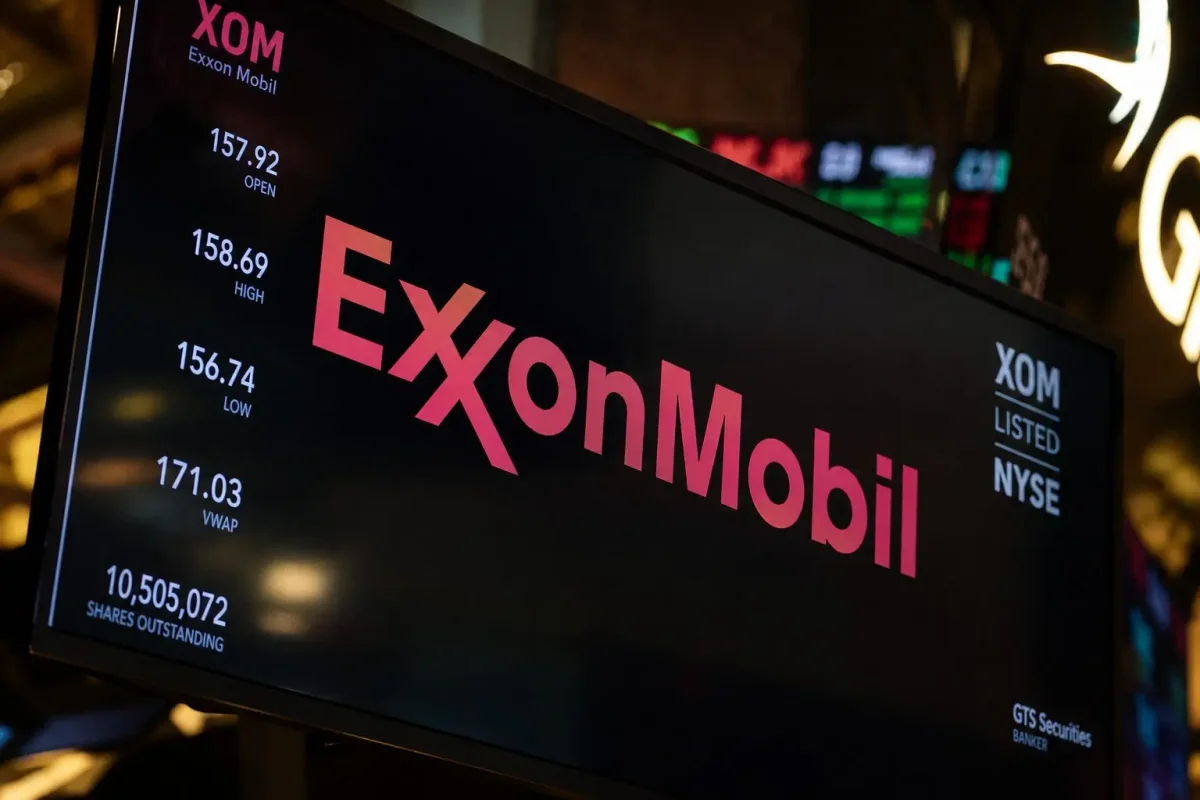
Exxon Mobil Corporation (NYSE: XOM) saw its stock close at $157.92 on Friday, marking a 3.4% daily gain and a 5.5% weekly increase. The rally was driven by a surge in crude oil prices and a favorable jury verdict in a long-running investor lawsuit.
Brent crude futures settled at $109.26 per barrel, while West Texas Intermediate (WTI) crude finished at $105.42, both rising over 3% on Friday. For the week, Brent climbed 7.84% and WTI surged 10.48%, according to data from Reuters. The price spike reflects growing concerns over disruptions at the Strait of Hormuz, a critical passage for about one-fifth of global oil and LNG shipments.
Market analysts highlighted the heightened geopolitical risks. Vandana Hari of Vanda Insights described the situation as a “tail risk of renewed military escalation,” while Phil Flynn of Price Futures Group noted that the “margin for error is shrinking rapidly.” These factors have boosted investor confidence in oil producers like Exxon, as rising crude prices typically enhance upstream profitability.
In contrast, the broader market struggled. The S&P 500 fell 1.24% and the Nasdaq Composite lost 1.54% on Friday, reversing earlier gains. Energy-driven inflation concerns pushed Treasury yields higher, with the 10-year note reaching its highest level since May 2025. Mike Sanders, head of fixed income at Madison Investments, commented that the bond market does not foresee a “quick resolution” in energy prices.
Exxon also benefited from a legal victory on Wednesday. A Texas jury found the company not liable in a 2016 investor lawsuit that alleged it defrauded shareholders by failing to disclose losses related to Canadian oil sands and Rocky Mountain gas assets, and by delaying impairment charges. The verdict cleared a significant legal overhang for the company.
Peers also gained, indicating a sector-wide trend. Chevron Corp. (NYSE: CVX) closed at $191.10, and ConocoPhillips (NYSE: COP) finished at $122.41, as investors rotated into oil producers with higher exposure to crude prices.
Exxon reported first-quarter earnings of $4.2 billion, or $1.00 per share, on May 1. Adjusted earnings, excluding identified items and estimated timing effects, were $8.8 billion. CEO Darren Woods stated that the quarter demonstrated Exxon is “built to perform through disruption and across market cycles.”
Looking ahead, Exxon’s annual shareholder meeting is scheduled for May 27 at 9:30 a.m. CDT. Institutional Shareholder Services (ISS) has recommended that investors vote against the company’s proposal to reincorporate from New Jersey to Texas, citing potential challenges in holding directors and officers accountable. Senior Vice President Neil Chapman is also set to speak at the Bernstein Strategic Decisions Conference in New York on May 28, where topics are expected to include Guyana, Permian production, shareholder returns, and the impact of Middle East unrest on margins.
Prediction markets reflect cautious sentiment on the Strait of Hormuz situation. Polymarket traders assign only a 30% chance of normal traffic resuming by end of June, while Kalshi odds stand at 37% for before August 1, 48% for before September 1, and 60% for before October 1. Exxon’s stock is expected to open steady but could be volatile if WTI remains near $105. A move toward $160 is possible after the stock hit an intraday high of $158 on Friday. The average analyst target is $166, about 5% above Friday’s close, according to MarketScreener. However, any news of a Hormuz reopening could reduce crude’s risk premium, and higher yields continue to pressure equities, potentially reversing Exxon’s recent gains.