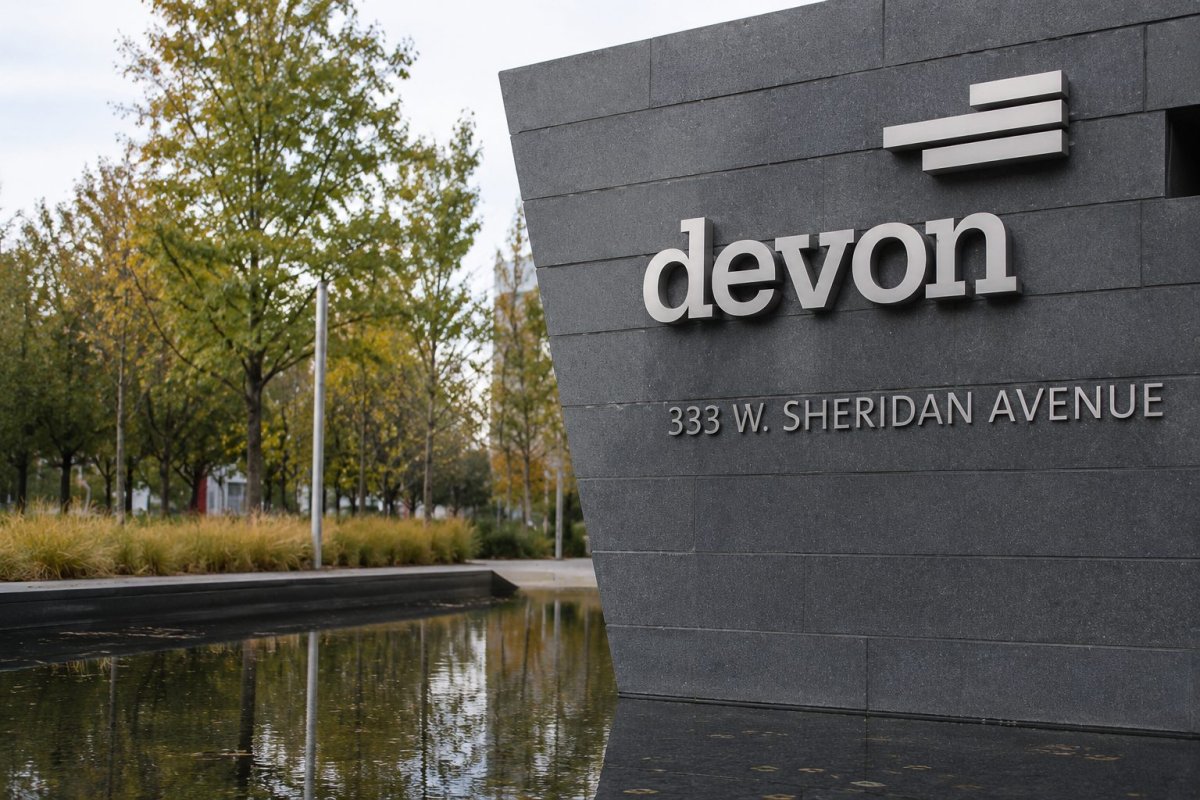
Devon Energy (DVN) shares ended Friday's trading session up 4.76% at $49.49, as a surge in crude oil prices and the company's recently approved $8 billion share buyback program fueled investor optimism. The stock's gain brought it closer to its 52-week high of $52.71, though it still remains below that level.
Oil prices rallied on persistent concerns over the Strait of Hormuz, a critical chokepoint for global oil and LNG shipments. Brent crude settled at $109.26 per barrel, up 3.35%, while West Texas Intermediate (WTI) closed at $105.42, adding 4.2%. Traders remained vigilant after reports of ship attacks and seizures near the strait, which handles roughly 20% of global oil and LNG flows. Prediction markets reflect ongoing uncertainty: Polymarket placed the odds of Strait of Hormuz traffic returning to normal by end of May at just 6%, while Kalshi contracts showed a 37% chance of normalization before August 1, 48% before September 1, and 60% before October 1.
Devon's move followed the completion of its all-stock merger with Coterra Energy on May 7. The combined company retains the Devon name and DVN ticker, with headquarters in Houston and a significant presence in Oklahoma City. Former Devon shareholders own approximately 54% of the merged entity, while former Coterra holders own about 46%. The merger has created a larger shale producer with a broader asset base, particularly in the Delaware Basin.
In addition to the merger, Devon's board authorized an $8 billion share buyback program and set a fixed quarterly dividend of 32 cents per share. CEO Clay Gaspar described the deal as a "defining moment" and outlined a target of $1 billion in annual pre-tax synergies by the end of 2027, achieved through cost reductions and earnings enhancements from integration. Gaspar stated the company intends to be "active and opportunistic" with the buyback, though actual timing and amount will depend on market conditions, commodity prices, cash flow, and debt reduction priorities.
The stock's advance also reflected broader strength in the energy sector. Occidental Petroleum jumped 4.89%, EOG Resources rose 3.14%, and Diamondback Energy added 1.65%. Trading volume for Devon reached approximately 16.5 million shares, indicating robust investor interest.
However, the company faces headwinds. Devon missed first-quarter profit forecasts earlier this month, partly due to weak U.S. natural gas prices. Waha Hub gas prices in the Permian Basin were negative for a record 61 days, constrained by pipeline capacity limitations. If natural gas prices remain soft, or if the war premium in oil dissipates, Friday's rally may prove temporary.
Kimmeridge, which holds about 1.4% of Devon, has publicly called for asset sales, tighter capital allocation, and adjustments to executive compensation. "Scale alone does not create value, but discipline and execution do," wrote Managing Partner Mark Viviano in an open letter. The firm's pressure adds to management's challenge of demonstrating that the buyback aligns with cash flow generation.
Industry consolidation is also a tailwind. U.S. upstream oil and gas M&A reached $38 billion in the first quarter, the highest in two years, according to Enverus. The Devon-Coterra deal was the largest contributor. "The case for 'higher-for-longer oil prices' is strengthening and could lead to more consolidation," said Andrew Dittmar, principal analyst at Enverus Intelligence Research.
Devon's next formal update is expected in mid-June, when it will release new financial and operating guidance for the combined company starting from May 7. For now, the market is focused on the larger asset base, the $8 billion buyback, and the trajectory of crude oil prices. The stock's performance in coming weeks will likely hinge on execution of the merger synergies and sustained oil price strength.