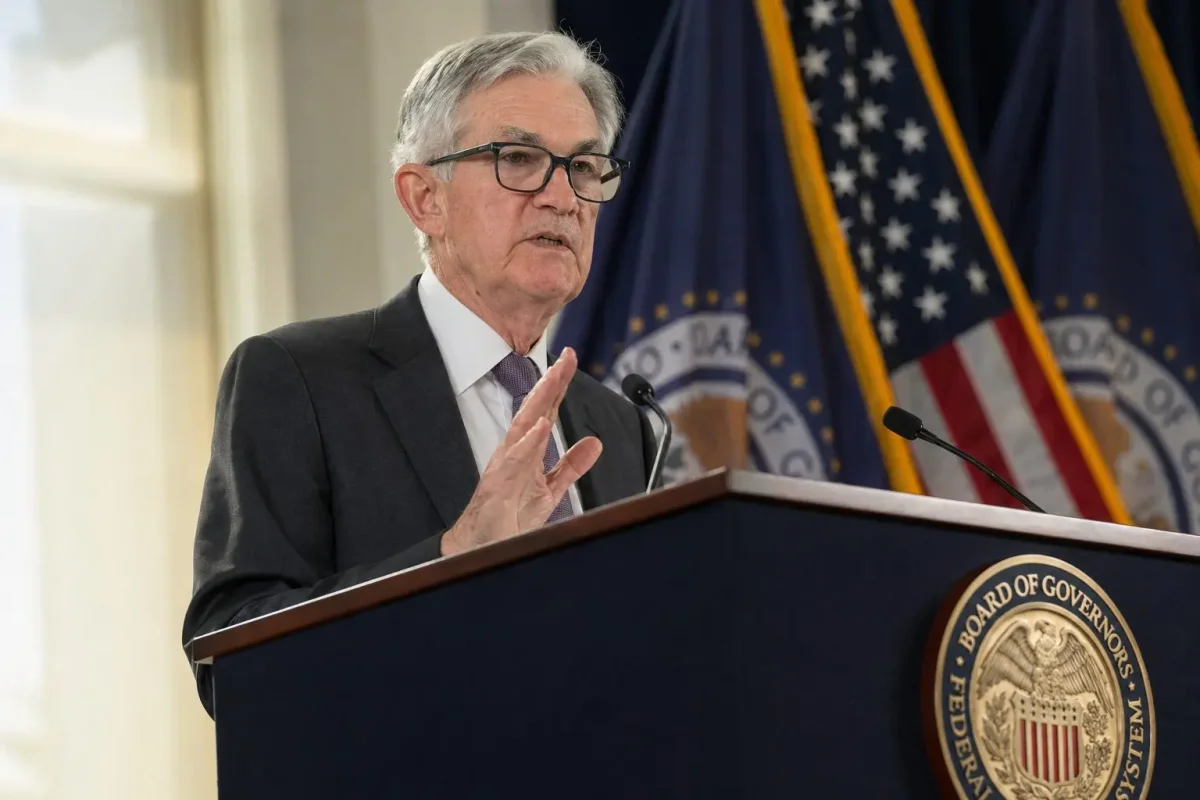
The Federal Reserve is widely anticipated to maintain its benchmark interest rate at 3.50%-3.75% following its two-day policy meeting concluding Wednesday. However, the focus is squarely on Chair Jerome Powell, who may be presiding over his final meeting, and the signals he sends regarding the trajectory of monetary policy amid rising inflation pressures.
Inflation risks have once again taken center stage, fueled by escalating oil prices and disruptions in the Strait of Hormuz. The Fed's decision comes just hours before the release of first-quarter GDP and March Personal Consumption Expenditures (PCE) inflation data on Thursday morning, which will provide critical insights into the health of the economy.
Markets are currently pricing in a 66% probability that rates will remain unchanged through the end of 2026, according to CME FedWatch data cited by Barron's. Bond markets, as reported by Reuters, have similarly priced in no change in the Fed's policy rate until at least mid-2027. This cautious stance reflects the uncertainty surrounding the economic outlook.
The possibility of Powell's departure adds a layer of intrigue. The Justice Department's recent conclusion of its criminal investigation into renovations at the Fed's offices has cleared the way for the Senate to confirm Kevin Warsh, President Trump's nominee to succeed Powell. This development makes this week's meeting potentially Powell's swan song, with his remarks under heightened scrutiny.
Investors will parse the Fed's statement and Powell's press conference for any shift in language. A key signal would be if the Fed tweaks its guidance to indicate that rates could move 'in either direction,' moving away from the previously anticipated rate-cut path and signaling a renewed focus on combating inflation.
Economic data due Thursday is expected to reinforce inflation concerns. Elias Haddad at Brown Brothers Harriman forecasts March headline PCE to rise 0.7% month-over-month and 3.5% year-over-year, while core PCE, which excludes volatile food and energy prices, is seen at 3.2% annually—well above the Fed's March median forecast of 2.7%. The energy component remains a major driver, with March CPI data showing a 10.9% monthly surge in energy costs, led by a 21.2% spike at the pump.
Oil prices continue to be a wild card. Brent crude climbed 1% to $106.40 a barrel on Monday, adding to inflationary pressures. Chris Turner, ING's head of forex research, noted that the Fed 'may be inclined to warn' that rates could stay elevated longer than some market participants expect.
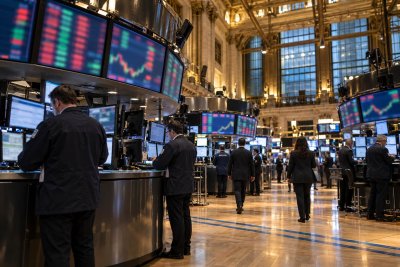
Equity markets have rallied recently, with the S&P 500 up about 13% and the Nasdaq Composite gaining over 19% since March 30, driven largely by tech stocks. However, Ameriprise's Anthony Saglimbene cautioned that this week poses a crucial test for the rally, as the Fed's stance and economic data could either validate or undermine the recent gains.
The Fed is not alone in its cautious approach. Central banks across the G7, including the Bank of Japan, are widely expected to hold rates steady this week, watching how the recent uptick in energy costs filters through inflation data. Powell's stance thus slots into a global waiting game, not just an American hold.
The risk runs in both directions. If the Strait of Hormuz reopens and energy prices drop, the Fed could shift its focus away from the oil shock and back to the slackening labor market. Conversely, if the blockade persists, Governor Christopher Waller has warned that persistent disruption might allow higher inflation to become 'embedded' across goods and services. That would leave policymakers stuck with tepid growth and stubbornly high prices.