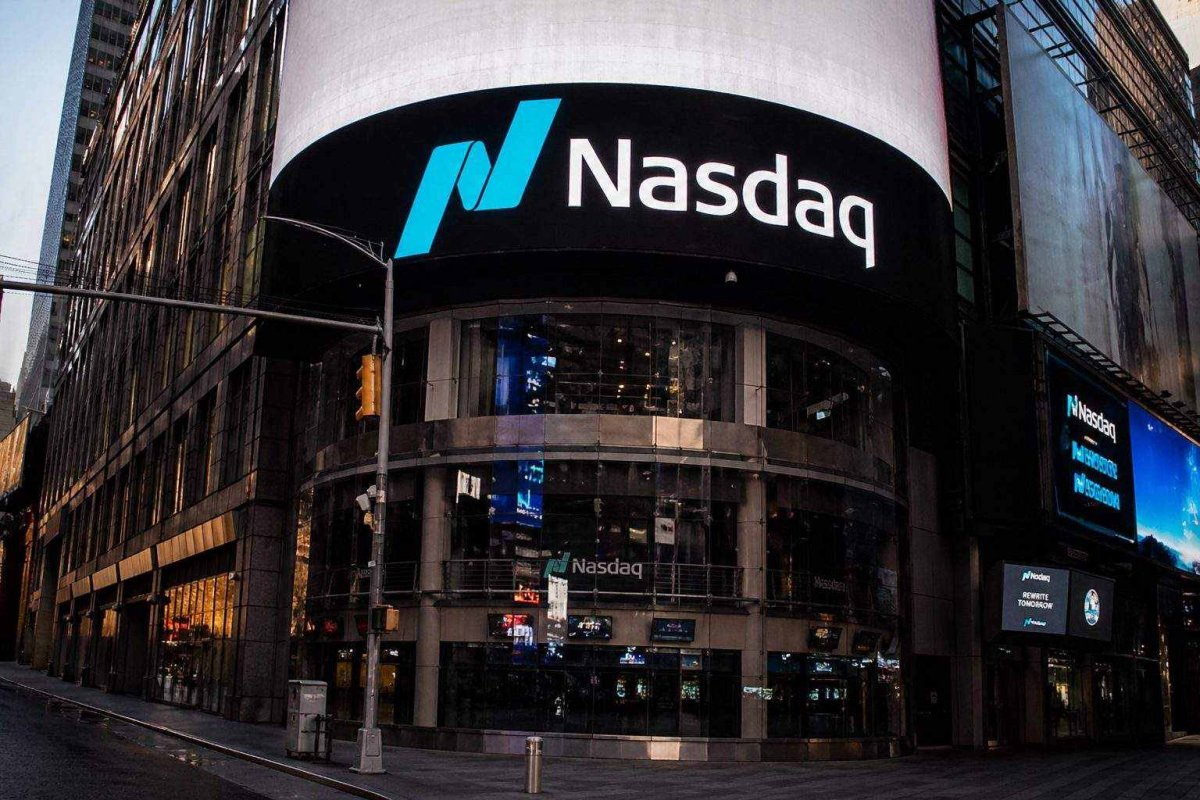
Wall Street took a cautious step back on Monday, with the Nasdaq Composite sliding 0.4% to 24,738.40, pulling back from its record close last Friday. The dip reflects a broader pause as investors turn their attention to a heavy week of earnings from the biggest technology companies, a looming Federal Reserve decision, and fresh geopolitical tensions that have pushed oil prices sharply higher.
The S&P 500 edged 0.16% lower, while the Dow Jones Industrial Average remained nearly flat, according to data from LSEG cited by Reuters. The pullback comes as the market shifts from AI-fueled optimism to a reality check: about 44% of the S&P 500 by market capitalization is set to report earnings this week, according to Raymond James. Investors are keen to see if massive spending on artificial intelligence is translating into tangible revenue and profit growth.
Oil Surge Adds Inflation Worries
In commodities, Brent crude jumped 2.44% to $107.90 per barrel, according to Reuters market data. The rally followed a breakdown in U.S.-Iran peace talks, keeping the Strait of Hormuz—a critical chokepoint for global oil shipments—firmly in traders' sights. Rising energy prices risk reigniting inflationary pressures, which could complicate any moves by the Federal Reserve to lower interest rates.
“Earnings have taken center stage for investors, but the Iranian conflict keeps humming in the background,” said Peter Andersen, founder of Andersen Capital Management, in comments to Reuters. “There’s really no sign of any resolution happening.”
AI Deals and Earnings in Focus
The AI narrative remained prominent, with Qualcomm shares rising in premarket trading after analyst Ming-Chi Kuo of TF International Securities reported that OpenAI is partnering with Qualcomm and Taiwan's MediaTek to develop AI-first smartphone chips. Mass production could begin as early as 2028, Kuo said. Qualcomm, MediaTek, and OpenAI did not respond to Reuters' requests for comment. Such a move would bring OpenAI closer to Apple and Samsung, which together control roughly 40% of the global smartphone market, keeping mobile devices at the center of the AI battle even as investors focus on cloud and data center infrastructure.
Microsoft shares slipped after the company and OpenAI revised the terms of their alliance. While OpenAI reaffirmed Microsoft as its primary cloud partner, the software giant's license to OpenAI's models is now non-exclusive, allowing OpenAI to work with other cloud operators. Microsoft is also ending its revenue-sharing payments from OpenAI, though OpenAI will continue to pay Microsoft through 2030 up to a predetermined cap. This shift opens the door for Amazon and Google to distribute OpenAI's technology more broadly, potentially eroding Microsoft's competitive edge, according to Reuters.
Nvidia and the Fed Loom
Nvidia remained a key market driver, with its market capitalization climbing back above $5 trillion following a 4.3% jump in the prior session. The chipmaker's strength powered Friday's advance, pushing both the S&P 500 and Nasdaq to record closes.
The Federal Reserve's upcoming meeting adds another layer of uncertainty. Investors broadly expect no change in interest rates, with a Reuters poll last week indicating the central bank is unlikely to cut rates for at least six more months. Jefferies chief U.S. economist Thomas Simons noted that there is now a clearer path for Kevin Warsh to be confirmed as Fed chair before the June policy meeting.
If oil prices continue to climb, inflation fears could resurface, and any disappointment from Big Tech—such as scaled-back AI investments or slower cloud growth—could weigh heavily on the Nasdaq. The Dow, less exposed to the megacap tech names driving the recent rally, appears less vulnerable to such shocks.