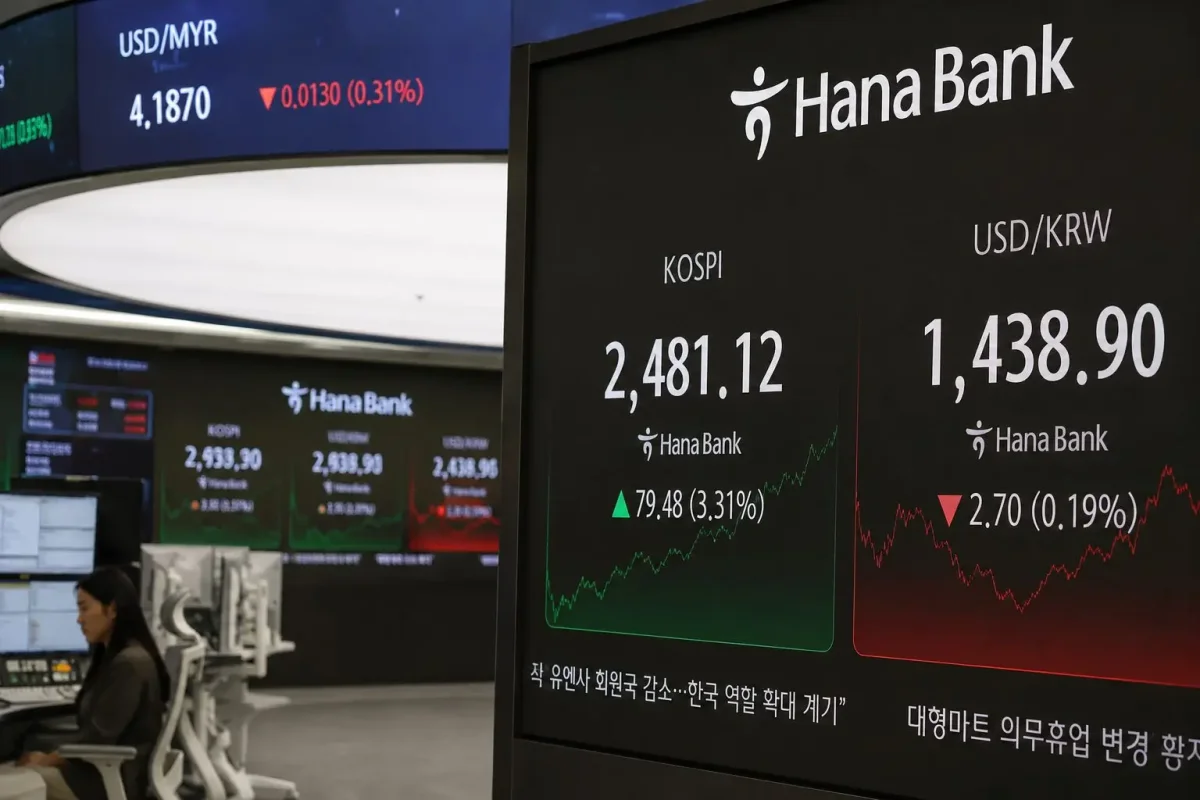
Foreign investors sold approximately $8.6 billion worth of South Korean and Taiwanese stocks on Wednesday, even as Seoul's KOSPI index rebounded 3.3% to close at 8,471.02. The bounce was primarily driven by local retail and institutional buyers, who purchased 4.55 trillion won ($3.0 billion) of equities, offsetting net foreign outflows of 4.66 trillion won. In Taiwan, foreign investors set a record by selling NT$177.42 billion ($5.6 billion) in stocks, representing 12.2% of market turnover. TSMC fell 4.02%, accounting for about 76% of the Taiex's 1,057-point decline.
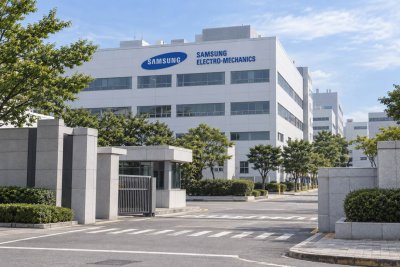
The foreign exodus underscores that the Seoul rebound was not a signal of renewed risk appetite. The KOSPI had plunged 9.99% on Tuesday, leaving it 7.1% below Monday's all-time high of 9,114.55. Samsung Electronics climbed 9.84% on Wednesday following a reported $58.6 billion share buyback plan, but the stock remains about 3.7% below Monday's close after a 12.3% drop on Tuesday. SK Hynix added 0.98%.
Buyback Details and Market Concentration
According to Yonhap News, Samsung Electronics is planning a share buyback of approximately 90 trillion won ($58.6 billion). The chipmaker recently completed wage negotiations that included stock bonuses for employees, with workers able to sell one-third of those bonus shares immediately, which could partially offset the buyback's impact. Samsung has not responded to Reuters' requests for comment.
Samsung and SK Hynix now account for over half of the KOSPI's total market capitalization. The launch of leveraged single-stock ETFs last month has amplified volatility, while margin debt hit a record high in June as investors borrowed heavily to buy shares. "Volatility has blown out," said Alexander Redman, chief equity strategist at CLSA, attributing the swings to active retail trading.
Regional Market Impact
Japan's Nikkei 225 fell 0.88%, and the semiconductor index dropped 1.26%, while the Nikkei volatility index surged 26.64%. However, the Nikkei Asia300 index in dollar terms was nearly flat, down just 0.06%. Hong Kong's market rose 0.33%, and Shanghai gained 0.11%, indicating that the large price swings in chip-heavy markets did not spill over broadly.
Bank of America reported that 80% of fund managers now consider "long semiconductors" the most crowded trade. Micron Technology's after-hours earnings report is being closely watched for guidance and supply contract details with major buyers. "When markets move so rapidly, in either direction, it's a sign of instability," said Michael McCarthy, market analyst at Moomoo Securities Australia.
Currency and Commodity Markets
The U.S. dollar hit a one-year high against major currencies, with the yen falling to around 161.70 per dollar. Oil prices dropped over 1%, holding near four-month lows. "The trade has been highly concentrated and flow-driven," said Ross Mayfield, investment strategy analyst at Baird. "That makes it vulnerable to relatively small shifts in sentiment."
If Micron's earnings disappoint or if U.S. PCE inflation data pushes up rate expectations, the recent bounce could falter. Foreign outflows may face weaker domestic buying support, and the heavy weight of chip stocks could drag indices down further.