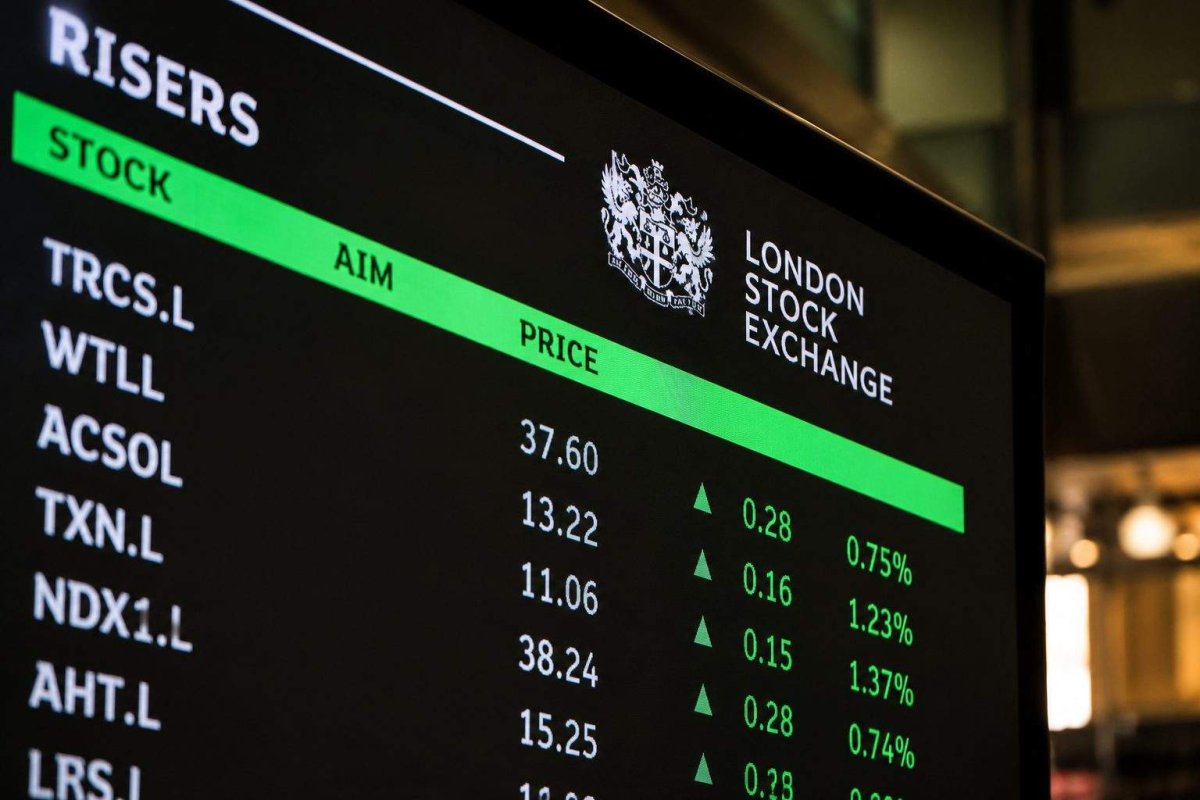
The FTSE 100 index retreated on Tuesday, closing 0.48% lower at 10,219.95, as a sharp surge in UK government bond yields and escalating political uncertainty weighed on investor sentiment. The benchmark touched an intraday low of 10,152.05, with trading volume reaching 117.9 million shares, according to LSEG data. Over the past 12 months, the FTSE 100 has traded in a range between 8,531.06 and 10,934.94.
The selloff was broad-based, hitting stocks, bonds, and the currency simultaneously. Yields on long-dated UK gilts spiked to levels not seen in nearly three decades, with the 10-year yield climbing 11 basis points to 5.11%, while the 20-year and 30-year yields rose to 5.12% and 5.80%, respectively. The British pound weakened 0.7% against the US dollar to $1.351 and slipped 0.4% versus the euro to 86.92 pence.
Political turmoil added to the market jitters. Prime Minister Keir Starmer faced renewed calls to step down after a poor showing in local elections, with nearly 80 Labour MPs demanding he set a resignation date. The pressure intensified as Miatta Fahnbulleh, a junior minister in the housing and communities department, resigned, urging Starmer to outline a timeline for a smooth transition. Reuters reported that four ministerial aides have already left their posts. Bond markets have grown nervous about the possibility that Starmer and Chancellor Rachel Reeves might be replaced by officials perceived as more willing to increase borrowing and spending.
The domestically focused FTSE 250 index fell 1.1% to 22,566.28, underperforming the FTSE 100, while the AIM All-Share index dropped 0.6%. In Europe, the STOXX 600 declined 1.1%, as rising oil prices and fading hopes for a US-Iran peace deal kept inflation concerns alive.
Banking stocks bore the brunt of the selloff. Barclays shares slid approximately 4%, while NatWest and Lloyds each lost more than 3%. Analysts at JPMorgan, cited by Reuters, now see the UK's banking surcharge potentially rising to 5% from 3% amid an increased likelihood of a leftward policy shift.
According to Kathleen Brooks, research director at XTB, the bond market's reaction is not solely about Starmer's potential departure. Traders are also assessing the risk of a prolonged leadership contest that could bring new fiscal pledges the UK's finances cannot sustain. Rate expectations have risen sharply, with UK rate futures now pricing in roughly 68 basis points of Bank of England rate hikes by December, up from 56 basis points on Monday. The Bank Rate currently stands at 3.75%, with the next policy decision scheduled for June 18.
In corporate news, shares of Intertek diverged from the broader market after Sweden's EQT private equity group submitted what it called its final bid for the testing and inspection firm. The cash component of the offer is £60 per share, plus a potential final dividend of up to 107.7p, valuing Intertek at approximately £9.4 billion including the dividend. Intertek said it is reviewing the approach and cautioned that there is no certainty a formal offer will be made. EQT faces a May 14 deadline to either make a firm offer or walk away.
Vodafone also drew attention after releasing its full-year results. Revenue rose 8.0% to €40.5 billion, with service revenue increasing 8.8% to €33.5 billion. Adjusted EBITDA after leases climbed 3.8% to €11.4 billion. Despite the solid numbers, Vodafone shares edged lower in early London trading.
Looking ahead, the market's focus will be on the US consumer price index release at 13:30 BST, as investors look for signs that rising energy costs are feeding into broader inflation. The Bank of England's policy decision on June 18 remains a key event for UK rates. If gilt yields continue to climb, domestically focused companies could face tighter financial conditions, while a further spike in oil prices would add to the Bank's inflation challenges.