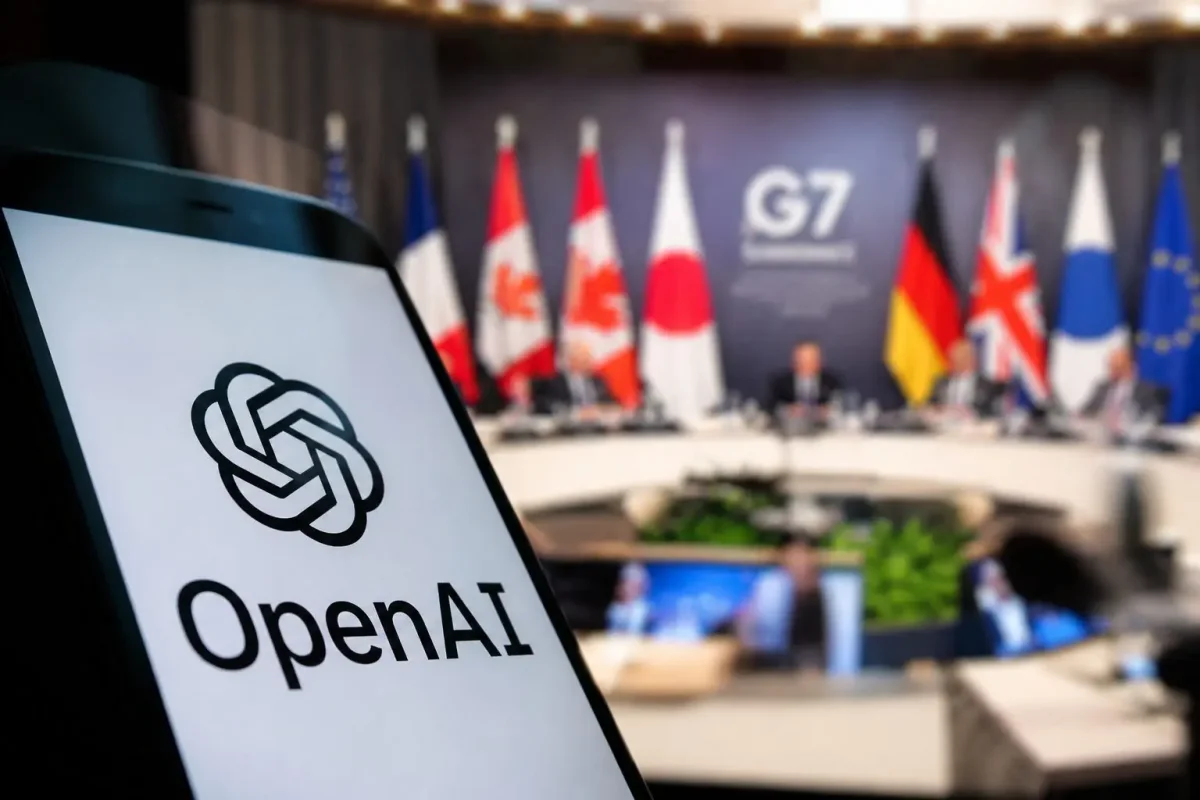
Leaders of the Group of Seven (G7) are grappling with the contentious issue of granting access to advanced artificial intelligence models, as the United States tightens controls on the technology amid growing rivalry with China. The discussions, held at the G7 summit in Evian-les-Bains, France, come as OpenAI, the developer of ChatGPT, has confidentially filed for a U.S. initial public offering that could value the company at up to $1 trillion, according to sources familiar with the matter.
OpenAI's financial performance has been under scrutiny, with the company reporting a loss of $3.7 billion in the first quarter of 2026 against revenue of $5.7 billion, as disclosed in shareholder documents. The IPO, which could occur as early as September, would be one of the largest in history, reflecting the immense investor appetite for AI technology. However, questions about cash burn, security, and infrastructure are becoming more pressing as the industry matures.
The G7 discussions were prompted by Anthropic's decision to block its top AI models for users outside the U.S., following a directive from the Trump administration to restrict foreign nationals from accessing the most powerful AI systems. This move has elevated AI access from a commercial issue to a matter of national security and industrial policy. European leaders, in particular, are concerned about their heavy reliance on U.S. cloud services, chips, and leading AI labs. At the VivaTech conference in Paris, Ana Paula Assis, senior vice president at IBM, noted that "tech sovereignty will be top of mind this week at VivaTech."
Meanwhile, China is accelerating its own AI ambitions. The Shanghai Stock Exchange has introduced new rules allowing large-scale AI model companies to go public on the STAR Market, signaling support for IPOs from "future industry" startups in quantum technology, nuclear fusion, and brain-computer interfaces. Alibaba has launched its first set of AI models designed for robots, shifting focus from chatbots to agents that can perform tasks in factories and warehouses. This move puts pressure on domestic rivals to build AI businesses with reduced dependence on U.S. technology.
In the cybersecurity arena, dealmaking is heating up. Databricks has agreed to acquire Panther Labs, its third cybersecurity acquisition, as it seeks to challenge established players like CrowdStrike and Splunk. CEO Ali Ghodsi emphasized that AI is accelerating the speed at which attackers can exploit software vulnerabilities, stating, "If they’re going to attack you with agents, you have to defend with agents." SoftBank has also launched a cybersecurity product in Japan using OpenAI models, part of a joint venture with the AI company. Founder Masayoshi Son told enterprise customers that the goal is to protect critical infrastructure and "leverage the new weapon of OpenAI to defend."
The U.S. government is investing $500 million in Nvidia-backed SandboxAQ to bolster domestic chip supply chains, focusing on new materials for semiconductors, including alternatives to PFAS and rare earths. CEO Jack Hidary said the company's work could enable manufacturers to select alternative chemicals and destroy PFAS at their own facilities. Trade controls remain unsettled, with the U.S. deciding not to add DeepSeek, memory-chip maker CXMT, or over 100 other firms to the Commerce Department's Entity List, which blocks exports of U.S. goods. Former official Kevin Kurland criticized the pause, saying trade policy is "overshadowing the use of a critical national security tool."
Despite the challenges, optimism persists. Jeff Bezos told VivaTech that he believes AI will lead to labor shortages rather than job cuts, contrasting with a Reuters/Ipsos poll showing half of Americans worry about AI-related job losses. Companies continue to hire, spend, and lobby, with the political landscape only beginning to shift. The G7's deliberations on AI access will likely shape the future of global technology competition and cooperation.