NEW YORK, July 4, 2026 – A sharp drop in Russian crude processing following Ukrainian strikes on refineries is reshaping the fuel supply landscape, drawing investor attention to the profitability of major U.S. gas station chains. Russian crude throughput fell to 3.95 million barrels per day (bpd) in June, a 25% decline from last year, while gasoline production slumped 17% to 850,000 bpd, according to AP News.
In the United States, gasoline demand rose to 9.13 million bpd last week, pushing total gasoline stocks down to approximately 214 million barrels. Gulf Coast inventories are at their lowest since October 2024, a tightening that supports refining margins. The EIA reported the Gulf Coast 3:2:1 crack spread at $58.12 per barrel on July 1, reflecting strong product margins.
Publicly traded convenience store chains are capitalizing on this environment. Casey's General Stores Inc (NASDAQ:CASY) reported a fuel margin of 46.9 cents per gallon in its fiscal fourth quarter, with fuel gross profit surging 29.1% to $397.4 million. CEO Darren Rebelez noted the fuel team successfully balanced gallon volume with margin. For fiscal 2027, Casey's targets inside same-store sales growth of 2% to 5%, inside margins above 42%, and EBITDA growth of 8% to 10%, with plans for at least 120 new stores.
Murphy USA Inc (NYSE:MUSA) posted a total fuel contribution of 35.0 cents per gallon in the first quarter, up from 25.4 cents a year earlier. While same-store fuel volumes dipped 0.8%, total retail gallons rose 2.1%, and merchandise contribution jumped 7.3%. The company's lower-price format continues to drive traffic and inside-store sales, which are critical as fuel makes up 65% of convenience-store sales but only 38.8% of gross profit.
Investors tracking crude alone may miss these dynamics. Brent crude ended Friday at $71.94, and U.S. West Texas Intermediate at $68.78, both roughly flat for the week. The RBOB gasoline front-month contract last traded at $2.9531 per gallon. Refiners such as Valero Energy (NYSE:VLO), Marathon Petroleum (NYSE:MPC), and Phillips 66 (NYSE:PSX) are increasingly exposed to product spreads rather than just crude price swings.
Russia's fuel situation adds further complexity. Since March, Ukraine has struck Russian oil refineries and energy targets over 50 times, according to AP. President Vladimir Putin described the issue as "not critical," but acknowledged queues at gas stations. Russia holds 1.7 million metric tons of gasoline in reserve and is considering a total diesel export ban, according to Reuters. Gary Peach of Energy Intelligence called the outages "extraordinary," while Chris Weafer of Macro-Advisory noted the pressure comes at a "critical time for the Russian economy" as harvest season boosts fuel demand.
Private roadside chains are also expanding aggressively. Buc-ee's now operates 56 stores across 13 states, with 15 more travel centers planned, including a 74,000-square-foot site in Goodyear, Arizona, featuring 120 gas pumps. In Tennessee, Dolly Parton opened Dolly's Tennessean Travel Stop on June 24. These large-format stations raise the competitive bar for listed rivals.
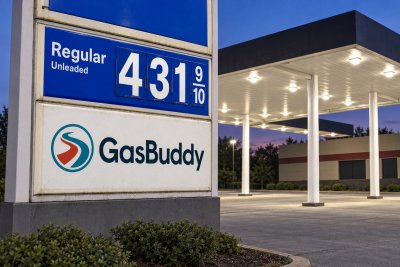
Patrick De Haan, head of petroleum analysis at GasBuddy, described the U.S. price outlook as "anything but predictable." AAA reported regular gasoline at $3.81 per gallon on Saturday, down from $4.24 last month but above $3.15 a year ago. Diesel stands at $4.80. With Gulf Coast refineries accounting for over 55% of U.S. refining capacity, and gasoline inventories there at their lowest since October 2024, traders are now closely watching the next EIA weekly stock report rather than crude price moves.