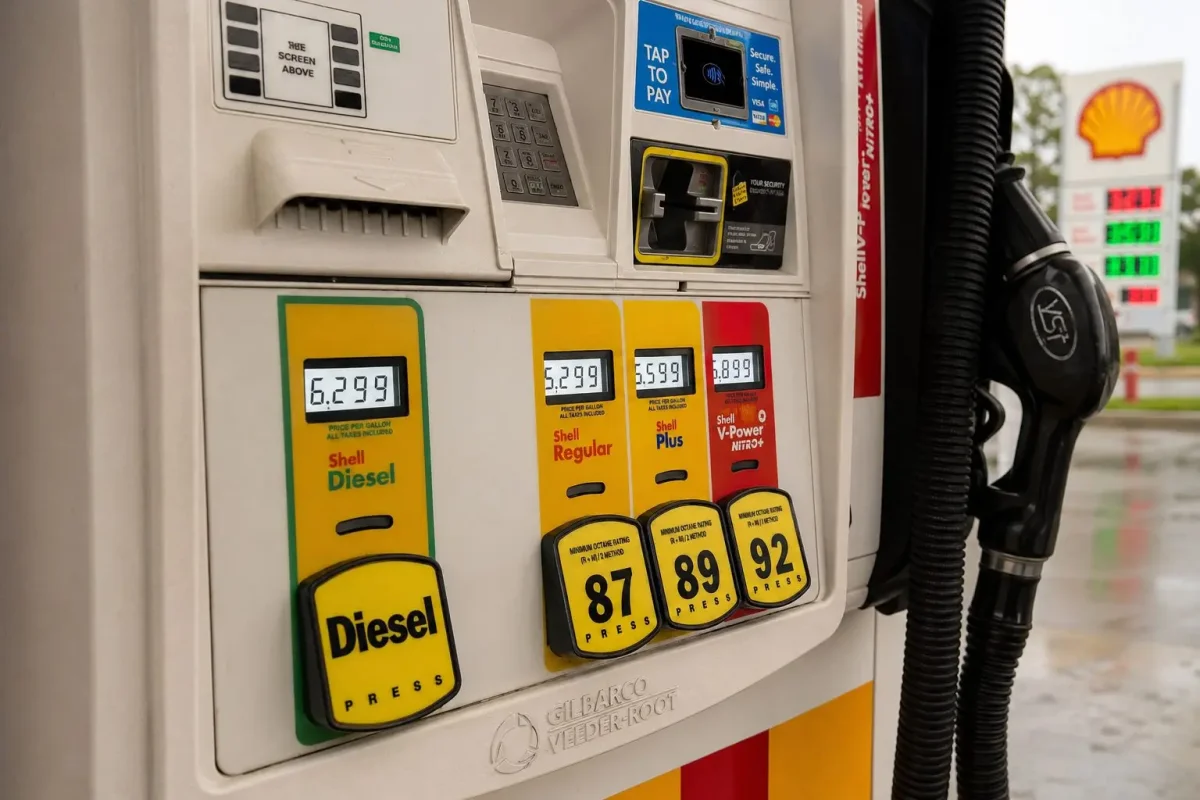
U.S. drivers saw modest relief at the pump Monday as the national average for regular gasoline slipped to $4.322 per gallon, according to AAA. That marks a decline of 18.5 cents from the previous week's $4.507, but still represents a year-over-year increase of roughly $1.18. The drop follows a sharp pullback in crude oil prices late last week, but the reprieve may be short-lived as fresh geopolitical tensions roil energy markets.
Oil Surges on Iran Tensions
Crude prices rebounded sharply Monday, with Brent crude closing at $94.98 a barrel, up 4.2%, and U.S. West Texas Intermediate rising 5.5% to $92.16. The move came after Iran announced it was halting indirect swaps with the United States, reigniting fears of a broader supply disruption. New blockade concerns in the Middle East further rattled markets, threatening to choke off flows through key chokepoints.
The reversal underscores the fragility of recent price declines. Patrick De Haan, an analyst at GasBuddy, warned that any pullback might not last if diplomatic talks break down. “If there is no deal, then we are probably worse off every day that this continues,” he said, adding that drivers may soon need to “dig a little deeper” again.
Inventories at Critical Levels
U.S. gasoline inventories have now fallen for 15 consecutive weeks, tying the longest streak on record, according to Reuters columnist Gavin Maguire, citing EIA data. Inventories are at their lowest for this time of year since 2014, leaving little buffer as summer driving season picks up. If the EIA's next weekly update on June 3 shows another decline, it would break the record.
AAA reported that U.S. gasoline demand rose to 9.25 million barrels per day from 8.76 million, while supplies fell to 211.6 million barrels. The tight inventory situation means any supply disruption can quickly filter into wholesale prices and then to the pump.
Regional Relief, But Diesel Stays High
Drivers in some states are seeing more noticeable relief. In New Hampshire, the average price for regular gas fell to $4.372, down from $4.47 a week ago, while Colorado averaged $4.346. Denver prices dropped nearly 50 cents over the week, according to GasBuddy data. However, diesel remains a persistent burden, averaging $5.448 per gallon, down from $5.599 last week but still well above the $3.524 seen a year ago. Elevated diesel costs continue to pressure trucking and delivery sectors.
Record U.S. Crude Exports
In a sign of shifting global flows, U.S. crude exports hit a record 5.6 million barrels per day in May, as refiners in Asia and Europe turned away from Middle Eastern supply. Matt Smith of Kpler noted, “It’s not a surprise to see Asia pulling so much given the loss of barrels from the Mideast Gulf.” The data, cited by Reuters, highlights how geopolitical risk is reshaping trade patterns.
Outlook: Risk Premium to Persist
Market participants face a binary risk scenario. If a lasting peace deal is reached and the Strait of Hormuz reopens quickly, fuel prices could see a cap. However, any new wave of attacks or a tougher blockade would likely push crude and wholesale gasoline higher again. The EIA has cautioned that even after hostilities cease, restoring full oil flows through the strait could take months, keeping a risk premium embedded in prices.
For now, the question is whether retail gasoline will continue its downward drift after Monday's crude bounce, or if the summer driving season will see a renewed spike. With inventories tight and geopolitical tensions high, the path of least resistance appears to be upward.