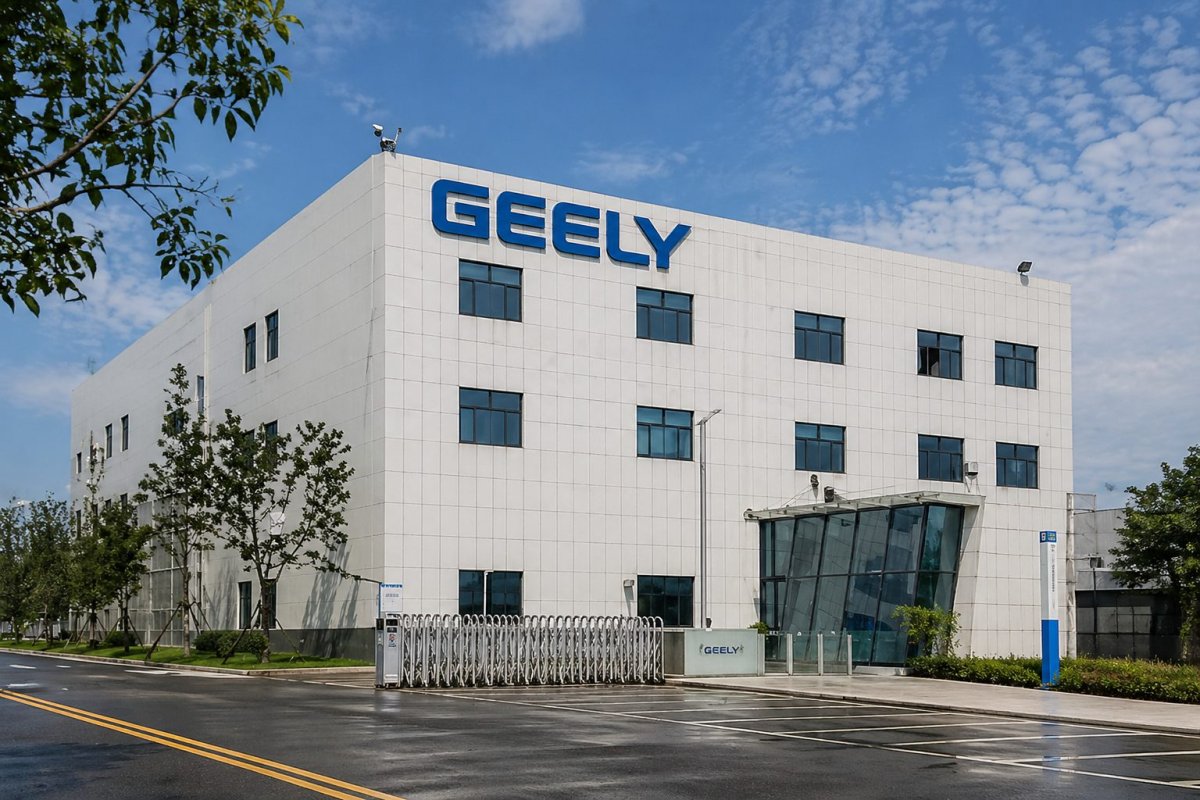
Hangzhou-based automaker Geely Holding has set an ambitious target of selling over 6.5 million vehicles annually by 2030, a move that intensifies its rivalry with BYD and underscores China's accelerating push into global auto markets.
The company's first-quarter results provided a strong foundation for that goal. Geely Automobile sold 709,358 vehicles in the January-March period, a record for the quarter. Exports surged 126% year-over-year to 203,024 units, with March alone accounting for 81,639 vehicles—more than double the same month last year.
Geely's broader portfolio, which includes Geely Auto, Lynk & Co, Zeekr, Volvo Cars, and Proton, moved 4.116 million vehicles in 2025, up 26% from the prior year. New energy vehicles (NEVs)—comprising both battery-electric and plug-in hybrids—made up 56% of that total. By 2030, Geely expects NEVs to represent nearly three-quarters of its sales.
The company's export momentum comes amid a broader surge in Chinese clean-tech exports. China's EV export value reached $21 billion in the first quarter, up from $12 billion a year earlier, as disruptions from the Iran war and the Strait of Hormuz closure boosted demand for electric vehicles and related technologies.
Geely is also accelerating its European expansion. In March, it launched the Geely E5 and Starray EM-i in Spain, Germany, the Netherlands, Belgium, and Luxembourg within 48 hours, bringing its presence to nearly 20 major European markets. The company's European tech hub aims to double its vehicle projects by next year and reduce the time gap between China and overseas launches to under six months.
BYD, the dominant player in China's EV market, is facing mounting pressure. Domestic sales have declined for seven consecutive months as rivals like Geely and Leapmotor gain ground. BYD Executive Vice President Stella Li said the company's new flash charging technology 'solves the last barrier for EV adoption' and allows it to compete directly with gasoline vehicles.
The competitive landscape is shifting from price wars to value-for-money battles, according to industry analysts. Geely's push upmarket, exemplified by the launch of Zeekr's 8X plug-in hybrid SUV, is focusing on technology and branding rather than low-cost EVs. 'The price war has turned into a value-for-money war,' said Bo Yu of JATO Dynamics.
International automakers are taking notice. Kia CEO Song Ho-sung noted that the South Korean carmaker has narrowed its price gap with Chinese competitors in Europe to 15%-20%, down from 20%-25%. Meanwhile, BYD's European registrations jumped nearly 150% in March.
Other Chinese automakers are also scaling up. Changan aims for 5 million vehicles sold globally by 2030, Dongfeng targets 4 million, and Jetour—Chery's unit—wants to hit 2 million, with half from international buyers. 'The international market will provide more opportunity,' said Jetour International President Ke Chuandeng, though he warned that 'every year some of the brands will disappear.'
However, risks are mounting. EU tariffs, U.S. political hurdles, shifting subsidies, and intense domestic price competition threaten export growth. In March, Chinese EV sales to the Middle East dropped sharply due to war-related trade disruptions, highlighting the volatility of global markets.
Geely's strategy now focuses on locking in overseas market share before conditions tighten at home. BYD, with its volume advantage and aggressive charging technology, aims to have half of its new-car sales abroad by 2030. Geely counters with a broader brand lineup, faster export growth, and a 6.5 million-unit target, setting the stage for China's next battle for auto dominance.
