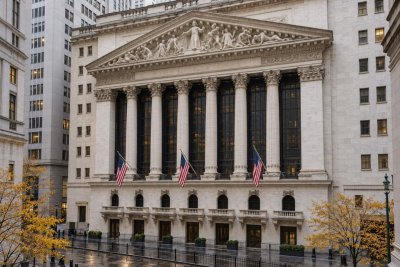
Global financial markets experienced a mixed start to the week on Monday, June 8, 2026, as investors grappled with the aftermath of a sharp sell-off on Wall Street triggered by robust US jobs data and escalating geopolitical tensions in the Middle East. The S&P 500 fell 2.64% on Friday, while the Nasdaq Composite tumbled 4.18%, driven by a stronger-than-expected May employment report that signaled a resilient labor market. This has raised expectations that the Federal Reserve may maintain or even increase interest rates, dampening hopes for a near-term policy pivot.
US stock futures reflected this uncertainty on Monday morning, with Dow Jones Industrial Average futures pointing lower amid renewed hostilities between Israel and Iran that frayed a fragile cease-fire. In contrast, S&P 500 and Nasdaq futures edged higher, suggesting a potential rebound in technology stocks after Friday's steep losses. Key names like Micron, Marvell, and Nvidia remained in focus, highlighting ongoing volatility in the AI-driven tech sector.
Indian Market Shows Resilience
In Asia, India's stock market stood out for its relative strength. The Nifty 50 index declined by approximately 0.65%, but this performance outperformed nearly all other Asian markets, which faced broader weakness due to global jitters. Analysts attributed India's resilience to strong domestic investor confidence and a less direct exposure to global trade tensions, underscoring the country's appeal as a defensive play in an uncertain environment.
Oil Prices Surge on Middle East Tensions
Oil prices surged sharply as hostilities between Iran and Israel escalated, raising fears of potential supply disruptions in the Middle East. The renewed conflict casts doubt on the stability of the region and has prompted investors to price in a risk premium on crude. This spike in oil prices is expected to benefit energy stocks, particularly those listed on the Australian Securities Exchange (ASX) with strong exposure to crude markets. Companies in the oil and gas sector are likely to see improved profitability, though the sustainability of gains will depend on production levels and export capacities.
Goldman Sachs Revises Fed Rate Cut Forecast
In a significant shift, Goldman Sachs economists have revised their forecast, now expecting no interest rate cuts from the Federal Reserve in 2024. The revision is driven by the stronger-than-expected labor market, which reduces the likelihood of the Fed easing policy this year. This signals continued monetary tightening amid persistent economic resilience, affecting market expectations for borrowing costs and investment decisions. The upcoming US inflation data will be a key risk factor; if inflation rises, pressure for higher rates could deepen market downturns.
Zealand Pharma Shares Plummet on Trial Setback
In the biotech sector, Zealand Pharma's stock fell 20% in Copenhagen trading after the company reported that 20% of participants in a trial of its weight-loss drug discontinued treatment due to gastrointestinal side effects. The high dropout rate raised concerns over the drug's tolerability and market potential, underscoring the sensitivity of biotech stocks to clinical trial outcomes. Investors remain cautious as patient adherence is a critical factor in determining a drug's commercial viability.
Buckle Inc Shines in Quality Investing Screen
Buckle Inc (NYSE: BKE) emerged as a standout in quality investing screens, boasting zero debt, an impressive 41.3% Return on Invested Capital (ROIC), and earnings before interest and taxes (EBIT) growth exceeding revenue gains. This financial profile underscores Buckle's superior profitability and operational efficiency, reinforcing its appeal to quality-focused investors seeking resilient companies amid market volatility.
Key Events This Week: SpaceX IPO and Inflation Data
Looking ahead, investors are closely watching the anticipated Nasdaq debut of SpaceX, which could be the largest initial public offering (IPO) in history. This event, along with key US inflation data and Apple's developer conference, is expected to drive trading volumes and volatility. These developments will provide critical cues for market direction, as traders assess the interplay between corporate fundamentals, monetary policy, and geopolitical risks.
Overall, the market remains in a state of flux, with defensive stocks like Coca-Cola offering potential resilience amid the turbulence. As the week unfolds, the focus will be on whether the recent sell-off is a short-term reaction or the beginning of a more sustained downturn.