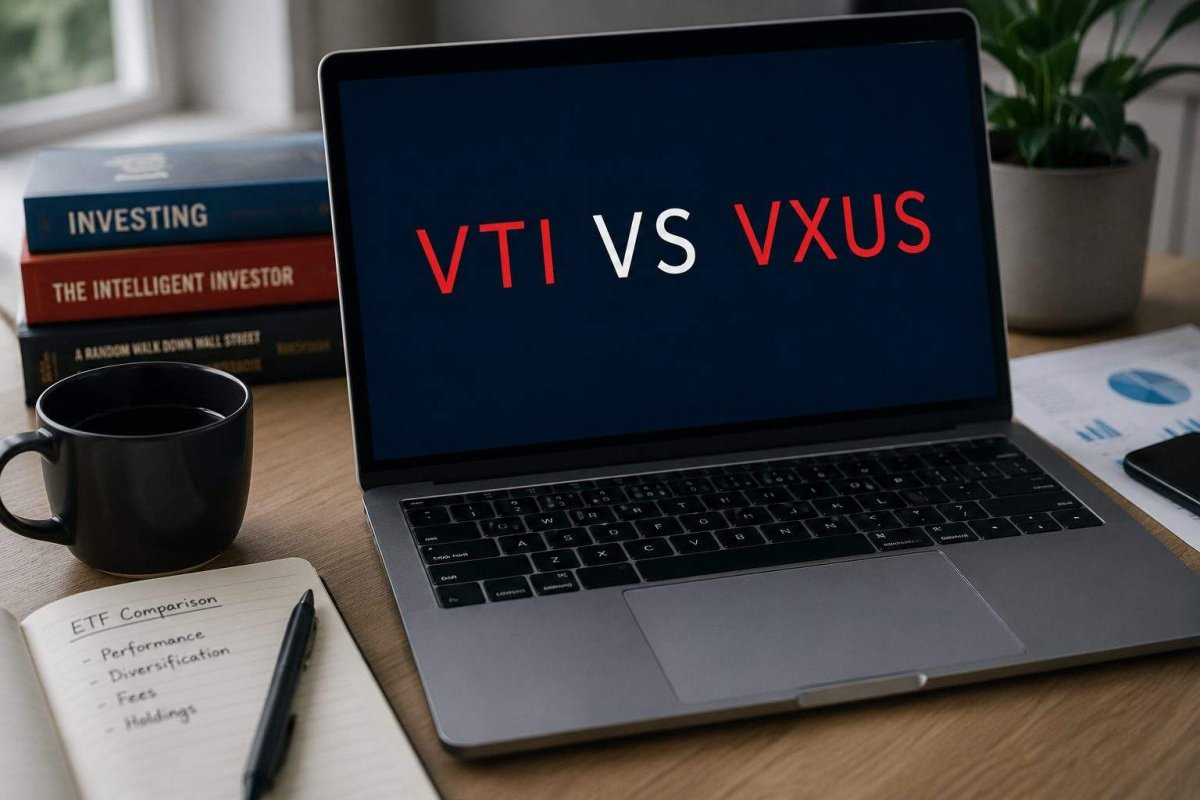
International equities are outpacing their U.S. counterparts in 2026, with the Vanguard Total International Stock ETF (NASDAQ:VXUS) delivering a year-to-date return of 15.99% through August 7, compared to 14.59% for the Vanguard Total Stock Market ETF (NYSEARCA:VTI). This performance gap underscores a broader trend of global diversification gaining traction among investors seeking value beyond American shores.
Valuation metrics further highlight the divergence: VXUS trades at 18.3 times its portfolio earnings, while VTI commands a higher multiple of 27.0 times—a 32% discount for international equities. This disparity suggests that investors are paying a significant premium for U.S. market exposure, which may be justified by stronger earnings growth but also introduces concentration risks.
The U.S. market's earnings growth rate stands at 21.9% annually, nearly double VXUS's 12.6%. Over the past decade, VTI has outperformed VXUS by an average of 5.2 percentage points per year. However, recent performance tells a different story: over the trailing 12 months, VXUS has surged 27.38% versus VTI's 19.80%, and the 2026 year-to-date figures continue that trend.
For retirement portfolios heavily weighted in U.S. stocks, the case for international diversification is compelling. VXUS's top ten holdings account for just 14.43% of assets, compared to 31.88% for VTI, reducing single-stock risk. Additionally, VXUS offers a dividend yield of 2.33%, more than double VTI's 1.06%, providing income-seeking investors with an attractive alternative.
Investors can achieve global market-capitalization weighting by allocating 62.07% to VTI and 37.93% to VXUS, mirroring the Vanguard Total World Stock ETF (NYSEARCA:VT). This blended approach would increase annual fund expenses by only $76 per $1 million invested—a negligible cost for the benefits of diversification.
The combined portfolio's effective price-to-earnings ratio drops to 22.9 times, and its top-ten concentration falls to approximately 20.4%, down from VTI's 31.88%. Dividend yield rises to 1.54%, a 45% improvement over VTI alone. These preliminary calculations, based on June 30 holdings and current expense ratios, illustrate the potential for reducing valuation and concentration risks without significant added cost.
However, valuation alone is not a reliable timing tool. Vanguard noted in July that valuations are poor predictors of short- and medium-term performance. Returns are influenced by earnings, dividends, and currency fluctuations. International investing introduces foreign exchange risk, geopolitical uncertainties, and emerging market volatility. A strengthening U.S. dollar could erode some of VXUS's recent gains.
Market analysts remain cautiously optimistic. Lumen Research assigns a Buy rating to VXUS, forecasting high-single-digit to low-double-digit returns over the next six to twelve months, contingent on sustained international profit growth. TipRanks' holdings-weighted model gives VTI a Moderate Buy, while its technical analysis suggests a Buy for VXUS, though with mixed signals from moving averages and MACD.
In Monday's trading, VXUS dipped 0.29% to $86.96, while VTI edged up 0.10% to $382.17. Brent crude climbed past $86 per barrel amid tensions in the Hormuz Strait, with investors eyeing upcoming inflation data. These factors, combined with divergent valuations, make a balanced global allocation an increasingly prudent strategy for long-term investors.