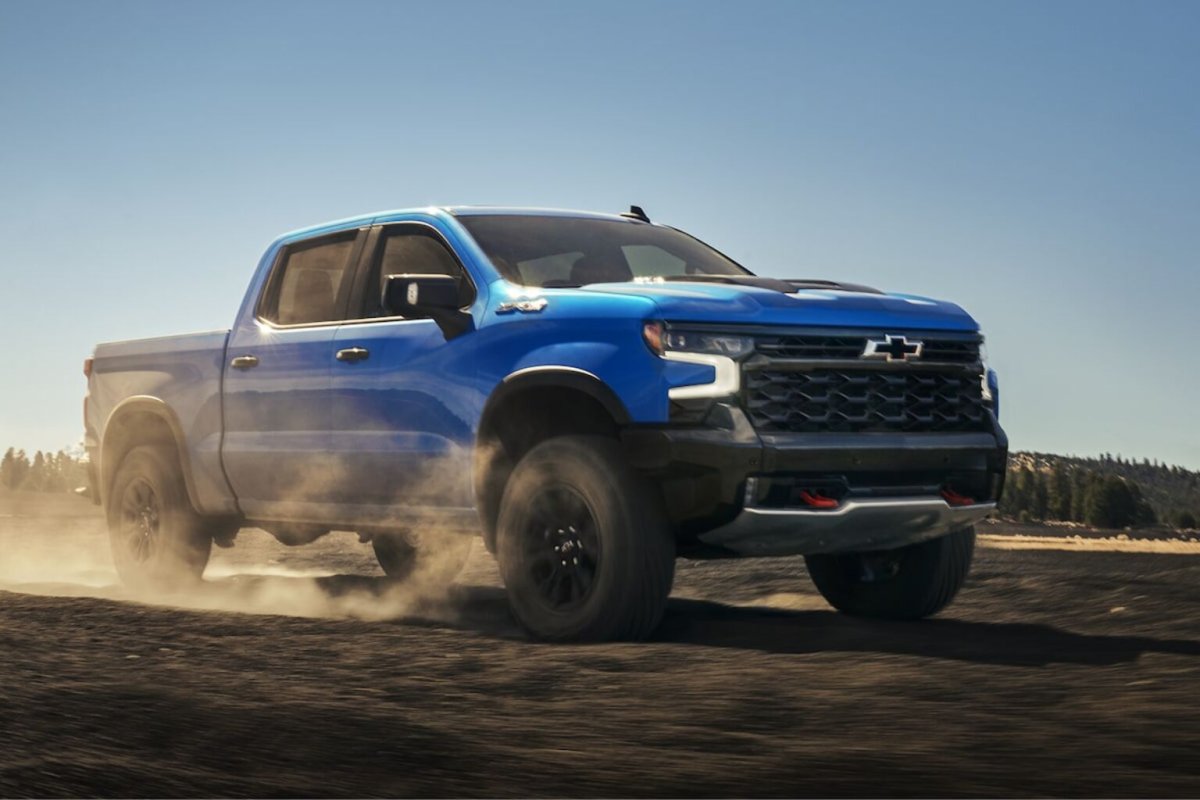
Federal safety regulators have launched a new review into General Motors' (NYSE: GM) remedy for failing 6.2-liter V8 engines, a move that could have significant financial implications for the automaker. The investigation, opened by the National Highway Traffic Safety Administration (NHTSA) on August 20, covers 997,743 model-year 2021–2026 trucks and SUVs, including the Chevrolet Silverado 1500, and extends to vehicles built after the original recall production window.
Engineering Analysis: What's at Stake?
The NHTSA's Engineering Analysis (EA26005) is a formal step that could lead to an expanded recall or further action. It follows a recall query initiated in January, after the agency received 499 complaints of engine failure following recall remedies: 473 after an oil-viscosity change and 26 after full engine replacements. Additionally, 191 failure reports involved engines produced after the original recall window, and GM itself reported 6,953 post-remedy complaints to the regulator.
The original recall, campaign 25V-274, covered 597,630 Cadillac, Chevrolet, and GMC vehicles equipped with the L87 engine, built from March 1, 2021, through May 31, 2024. This includes 107,244 Silverado 1500s, with GM estimating that 3% of the total recall population contains the defect. The issue stems from sediment in connecting rods or crankshaft oil galleries, and crankshafts with improper dimensions or surface finish, which can lead to engine failure and loss of propulsion while driving.
Dealers were instructed to inspect engines; those failing were to be repaired or replaced, while those passing received higher-viscosity 0W-40 oil, a new oil cap, and a new filter. EA26005 does not declare all vehicles defective, nor does it constitute a new recall. Its purpose is to evaluate whether the remedy is effective and whether the affected population should be expanded to include later production.
Impact on GM's Financials and Market Position
Full-size pickups and SUVs are critical to GM's North American profitability. In its second-quarter 10-Q filing, GM highlighted these as high-margin products and reported 1.3 million U.S. vehicle sales in the first half of the year, representing a 16.7% market share. This makes repair capacity and owner confidence crucial, especially since the same engine family is used across Chevrolet, GMC, and Cadillac models.
GM's product warranty and related liabilities stood at $14.023 billion as of June 30, down to $13.606 billion after expected supplier recoveries. This compares to $11.223 billion a year earlier. However, second-quarter warranty expense, net of recoveries, fell to $1.581 billion from $1.969 billion, and recall campaign accruals dropped to $162 million from $471 million. These figures suggest GM's warranty costs are trending downward, which could offset some bearish sentiment.
In its July 21 shareholder letter, GM noted that North America adjusted operating margin rose 2.5 percentage points to 8.6%, and warranty costs were declining. The complaint totals do not indicate how many engines have the same defect or how many repairs failed for the same reason, nor what GM might recover from suppliers. GM shares closed at $85.62 on Friday, Sept. 11, down about 0.6% from the prior day, though that move cannot be directly attributed to the investigation.
Future Outlook and Risks
The market-sensitive question is whether NHTSA will demand a broader remedy, raising repair rates, parts demand, or customer-compensation costs beyond GM's current assumptions. There is also a product-cycle boundary: Chevrolet has announced that the next-generation 2027 Silverado 1500, due late this year, will use new 5.7-liter and 6.6-liter V8s, not the L87. This limits direct exposure in the new design but does not eliminate the service burden on the installed 2021–2026 fleet.
Three factors could change the risk assessment: an NHTSA conclusion that the oil remedy is ineffective, an expansion into later model years through a new recall, or a material upward revision to GM's warranty assumptions. Until any of these occur, EA26005 remains a live cost and reputation risk—not a disclosed earnings charge of known size. Investors should monitor the investigation closely, as it could affect GM's near-term earnings and long-term brand trust.