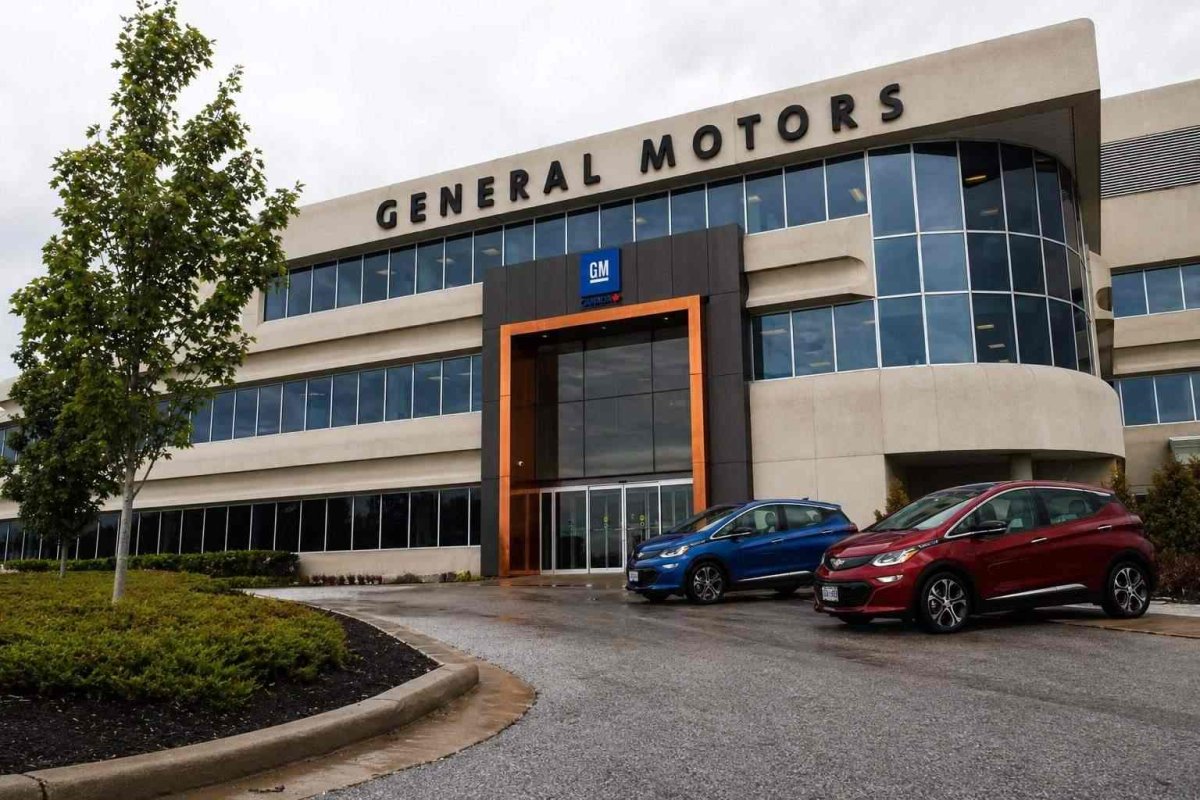
General Motors (GM) on Tuesday raised its full-year 2026 profit forecast, citing a strong first quarter and a $500 million tariff-related benefit, even as overall revenue and net income declined year over year. The automaker reported first-quarter revenue of $43.6 billion, net income attributable to shareholders of $2.6 billion, and adjusted earnings before interest and taxes (EBIT) of $4.3 billion. Adjusted diluted earnings per share came in at $3.70, a 33% increase from the prior-year period and well above the $2.62 consensus estimate from analysts polled by LSEG.
Tariff Adjustments and Cost Pressures
GM has been working to protect its margins amid shifting tariff rules, persistent cost inflation, and uneven electric vehicle demand. The company now expects its full-year gross tariff costs to range between $2.5 billion and $3.5 billion, down from the previous $3.0 billion to $4.0 billion range. The reduction stems from a favorable adjustment related to tariffs paid under the International Emergency Economic Powers Act (IEEPA). The tariff refund process, however, remains tied up in government bureaucracy. U.S. Customs and Border Protection has rolled out its CAPE refund-processing platform following a Supreme Court decision that overturned IEEPA-imposed tariffs, but court records show over 330,000 importers paid those tariffs on 53 million shipments.
Financial Outlook and Guidance
GM increased its full-year adjusted EBIT guidance to a range of $13.5 billion to $15.5 billion, up from $13.0 billion to $15.0 billion. The company also raised its adjusted diluted EPS forecast to $11.50 to $13.50, compared with the earlier $11.00 to $13.00 range. Adjusted automotive free cash flow guidance remained unchanged at $9.0 billion to $11.0 billion. However, GM trimmed its automotive operating cash flow target to $16.8 billion to $20.8 billion, down from $19.0 billion to $23.0 billion, reflecting ongoing headwinds.
Operational Highlights and Segment Performance
Despite a slight 0.9% dip in revenue and a 5.7% decline in net income year over year, GM's adjusted EBIT surged 21.9%, driven by a strong performance in its North American operations. The region's adjusted margin improved to 10.1% from 8.8% a year earlier. In a letter to shareholders, CEO Mary Barra highlighted "solid momentum in our core operations," noting GM's sales leadership in the U.S. and Canada and a 42% market share for full-size pickups. She also pointed out that crossovers now account for over 46% of GM's total sales, up from just above 40% in 2023, as the company continues to refresh that lineup.
Software and EV Strategy
Software remains a key part of GM's margin expansion strategy. The company highlighted its OnStar and Super Cruise services as high-margin revenue drivers. Barra said GM is making progress in automated-driving technology, aiming to carve out a distinctive position in the market. However, EVs continue to weigh on profitability. GM recorded a $1.1 billion charge related to settling supplier claims after scaling back its electric vehicle rollout, adding to $7.6 billion in EV write-offs last year. Barra described the current environment as "very dynamic."
Competitive Landscape
GM faces intense competition from Ford and Stellantis, as all three Detroit automakers navigate tariffs, EV losses, and cost pressures. Ford has been dealing with operational hiccups and higher aluminum prices, while Stellantis continues its broader turnaround. The higher outlook does not eliminate risks: GM is bracing for a $1.5 billion to $2.0 billion hit to earnings this year from higher raw material, chip, and logistics costs.
Dividend and Shareholder Returns
GM set its quarterly cash dividend at $0.18 per share, payable on June 18 to shareholders of record as of June 5. While the dividend was not a central focus of Tuesday's results, it underscores management's commitment to returning capital to shareholders even as the company navigates tariff uncertainty, EV adjustments, and softer demand.