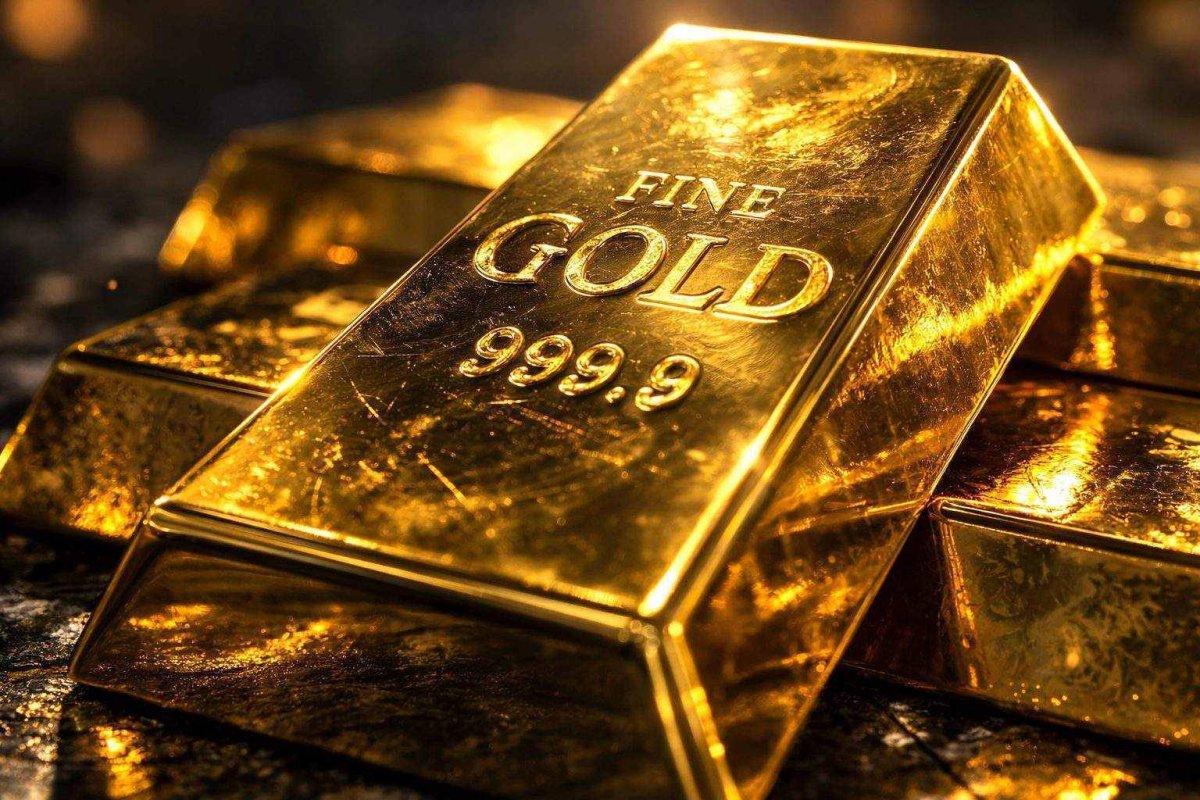
Gold markets opened the new week in a holding pattern on Monday, with prices stabilizing after notching a third straight weekly gain. The precious metal closed Friday's session at $4,761.79 per ounce for spot transactions, while the most active U.S. gold futures contract settled at $4,787.40. The sideways trade follows a period of notable strength, though the immediate outlook is clouded by mixed fundamental drivers.
Geopolitical Uncertainty Weighs on Sentiment
A key factor injecting fresh uncertainty into the market was the conclusion of U.S.-Iran negotiations in Islamabad over the weekend. Diplomats failed to reach an agreement, leaving questions hanging over both a fragile ceasefire and the security of the critical Strait of Hormuz shipping lane. This outcome reinforces gold's traditional role as a safe-haven asset during periods of geopolitical strain, providing underlying support for prices as investors seek shelter from potential disruptions.
Dollar Dynamics and Inflation Data
Last week's price advance was significantly aided by currency markets. The U.S. dollar index recorded its most substantial weekly decline since January, making dollar-denominated gold less expensive for international buyers. Market strategists, including Bob Haberkorn of RJO Futures, attributed gold's ability to "regain its footing" primarily to this softer greenback. However, the bullish impulse was tempered by concerning inflation data. U.S. consumer prices surged 0.9% in March, the largest monthly increase since mid-2022, driven significantly by a 21.2% spike in gasoline costs.
This persistent inflation complicates the Federal Reserve's path forward, potentially delaying interest rate cuts. Higher interest rates typically create a headwind for non-yielding assets like gold, as they increase the opportunity cost of holding it. Christopher Rupkey, chief economist at FWDBONDS, described the ongoing economic impact of global conflicts as a "direct inflation hit" that pressures monetary policy.
Physical and Investment Demand Trends
Physical market activity presented a mixed picture. In India, the world's second-largest consumer, demand saw a modest uptick ahead of the Akshaya Tritiya festival on April 19. However, local jewelers reported that store traffic remained subdued compared to historical levels, as high prices continued to deter buyers. In China, premiums for physical gold over the global benchmark fell to a range of $3 to $5 per ounce, down from $12 to $17 the prior week, indicating a slowdown in retail purchasing.
Despite the softer retail tone, investment interest held steady, albeit with greater selectivity. Bernard Sin of MKS PAMP noted that while consumer buying eased, investment demand for the metal remained resilient. A more significant source of consistent demand came from the official sector. The People's Bank of China added to its gold reserves for a seventeenth consecutive month in March, raising its holdings to 74.38 million fine troy ounces. Analysts at ING highlighted that these steady central bank purchases have historically helped establish a price floor during volatile market phases.
Broader Commodity and Market Context
The broader commodity complex saw divergent moves. Silver, often more sensitive to industrial cycles, added 1.6%. In contrast, platinum group metals faced selling pressure, with platinum dropping 2.3% and palladium declining 1.9%. Some pressure on gold's geopolitical risk premium emerged from energy market developments. Over the weekend, three supertankers exited the Persian Gulf, and Saudi Arabia reported that its vital East-West pipeline had resumed operations at full capacity of 7 million barrels per day. This combination of events could alleviate near-term oil supply fears, potentially reducing the urgency for safe-haven flows into gold if stability holds.
Looking ahead, traders are balancing several crosscurrents. The weaker dollar and ongoing central bank accumulation provide solid foundational support. Yet, the lack of a diplomatic breakthrough with Iran, coupled with sticky inflation that may keep interest rates higher for longer, creates a ceiling for rallies. Market participants, as pointed out by BNZ strategist Jason Wong, remain wary that sentiment could shift rapidly if geopolitical diplomacy deteriorates further. Gold's trajectory will likely depend on the evolving balance between these competing forces of dollar strength, real yields, and global risk appetite.