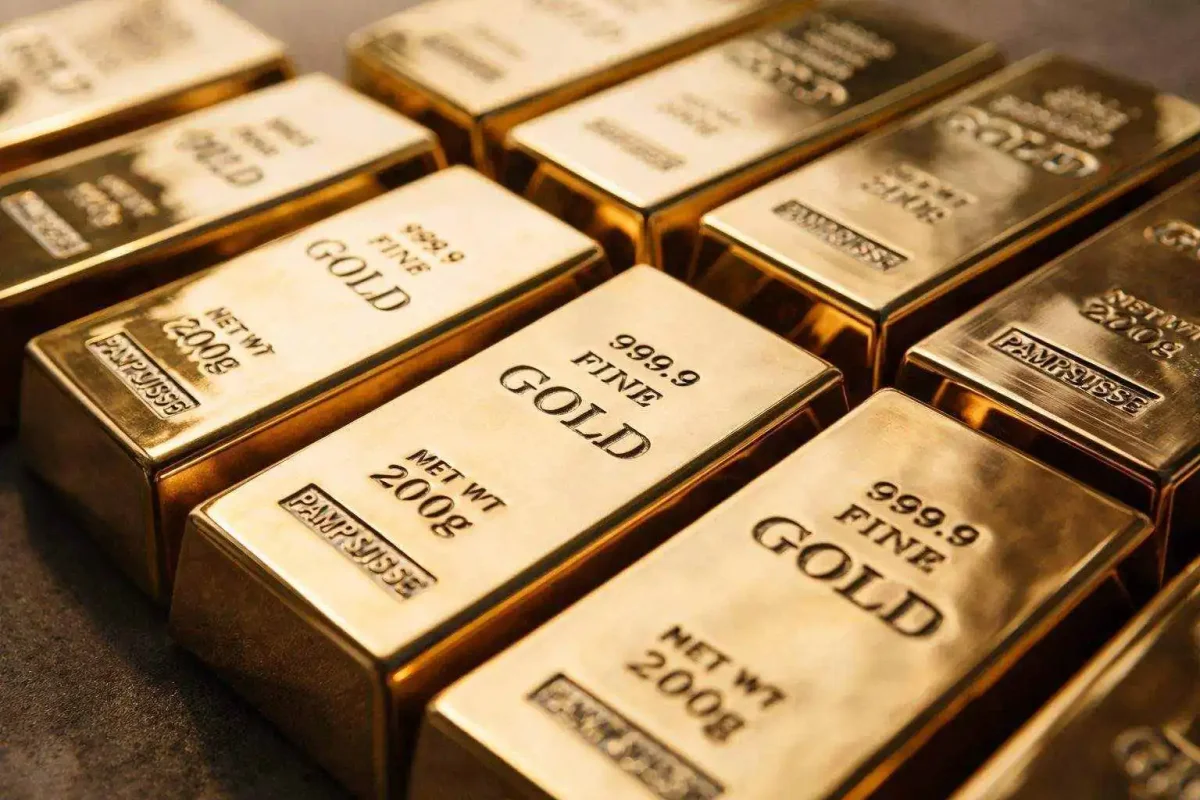
Gold markets experienced a severe downturn on Thursday, with spot prices plunging 3.9% to $4,629.29 per ounce in New York trading. This decline marks the precious metal's lowest valuation since early February and represents its seventh consecutive session of losses. U.S. gold futures for April delivery fared even worse, shedding 5.4% to settle at $4,632.40 per ounce.
Central Bank Policy Shifts Market Expectations
The dramatic reversal in gold's fortune stems from coordinated actions by the world's leading central banks. The Federal Reserve, European Central Bank, Bank of England, Bank of Japan, and Bank of Canada all opted to maintain current interest rates this week. More significantly, these institutions signaled growing concerns about persistent inflation, with the ECB notably raising its 2026 inflation projection to 2.6% from 1.9% in December.
Market participants responded by dramatically revising their expectations for monetary policy easing. According to LSEG data, traders have completely abandoned hopes for Federal Reserve rate cuts in 2026 and now anticipate the first potential reduction won't arrive until mid-2027. This represents a substantial shift from the previous narrative that had supported gold's rally over the past year.
Energy Shock Fuels Stagflation Fears
Compounding the pressure from monetary policy, geopolitical tensions triggered a sharp spike in energy prices. Attacks targeting energy infrastructure sent Brent crude soaring past $110 per barrel, briefly touching $119 at one point. This development has reignited concerns about inflationary pressures just as central banks were gaining confidence in their fight against rising prices.
"What is unsettling markets now is the growing stagflation risk," observed Charu Chanana, chief investment strategist at Saxo in Singapore, referring to the dangerous combination of persistent inflation paired with sluggish economic growth. The International Monetary Fund estimates that a sustained 10% increase in energy prices could add 0.4 percentage points to global inflation while reducing output by 0.1% to 0.2%.
Gold's Fundamental Dilemma
The precious metal finds itself caught in a contradictory dynamic. While historically serving as a hedge against inflation and geopolitical uncertainty, gold generates no yield, making it particularly vulnerable when interest rates remain elevated for extended periods. The current environment presents gold with conflicting signals: persistent inflation typically supports bullion prices, but expectations of higher-for-longer interest rates suppress investor enthusiasm.
Daniel Ghali, commodity strategist at TD Securities, noted that gold's rally was losing momentum as institutional investors reduced their overextended positions. He suggested the metal could decline further while still remaining within its broader bull-market trajectory. This assessment comes after gold reached an all-time high of $5,594.82 on January 29, with JPMorgan maintaining a $6,300 price target for end-2026 as recently as last month.
Broad-Based Commodity and Equity Sell-Off
The downturn extended well beyond gold. Silver prices tumbled 5.9%, while platinum declined 4%. Mining equities suffered particularly severe losses, with Newmont Corporation shares plunging 8.6% on Wall Street. The broader S&P 500 materials sector retreated 2.3%, reflecting widespread risk aversion across commodity-linked investments.
The previous day's trading foreshadowed Thursday's rout. Spot gold had already dropped 2.9% to $4,860.21 following the Federal Reserve's decision to maintain its benchmark rate in the 3.50%-3.75% range. "Not nearly enough," commented independent metals trader Tai Wong regarding Fed Chair Jerome Powell's signals for the gold market.
Uncertain Path Forward
The European Central Bank's own projections indicate that sustained disruptions to oil and gas supplies would push inflation above—while economic growth drifts below—their baseline outlook. This creates a complex environment for gold investors, who must weigh competing factors: potential haven demand if economic growth falters against the headwind of restrictive monetary policy.
Market participants now face a period of heightened uncertainty as they assess whether current conditions represent a temporary correction or a more fundamental shift in the precious metal's trajectory. The interplay between energy prices, central bank policies, and economic growth indicators will likely determine gold's direction in the coming months.