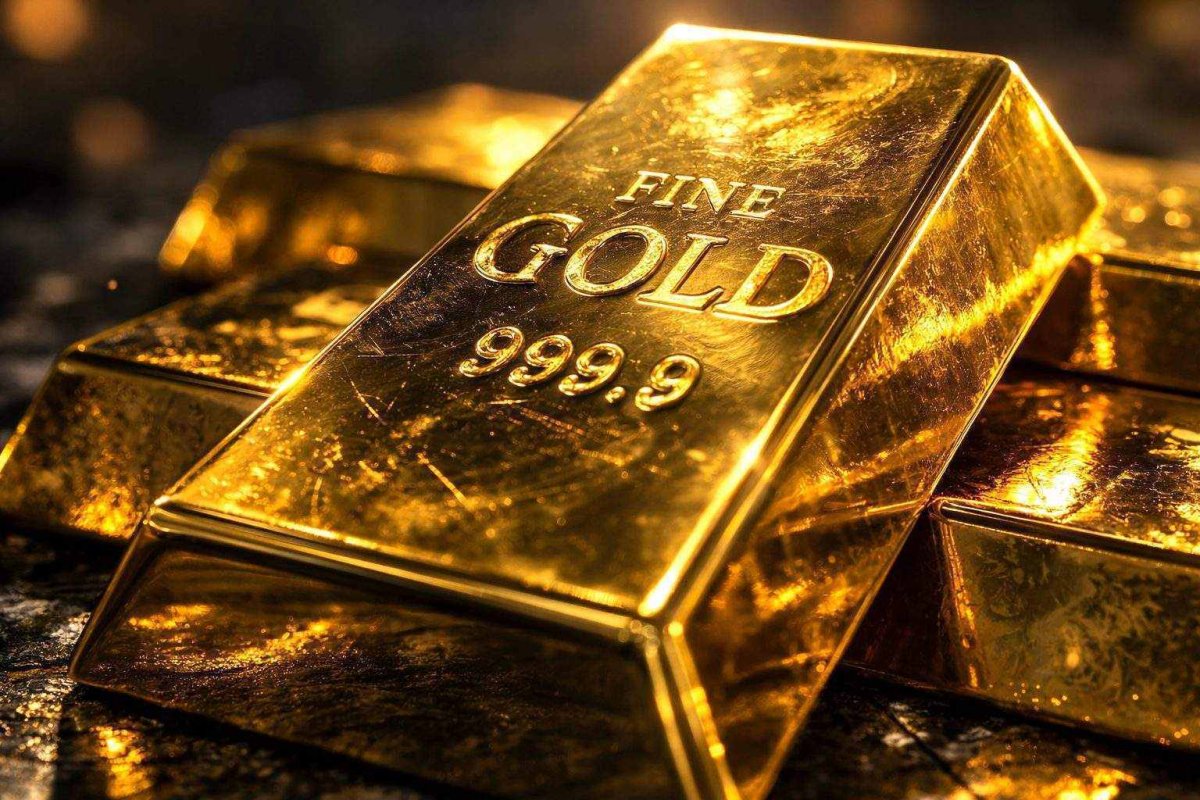
Gold relinquished recent gains on Wednesday, retreating from its highest level in a month as a resurgent U.S. dollar and shifting interest rate expectations prompted a wave of selling. Spot bullion declined 0.9% to settle at $4,798.89 per ounce by the afternoon in New York, erasing a significant portion of Tuesday's 2% surge. U.S. gold futures for near-month delivery closed 0.5% lower at $4,823.60.
The reversal highlights the complex dynamics currently influencing the precious metals market. While traditionally viewed as a safe-haven asset during geopolitical turmoil, gold's price action is now heavily intertwined with currency fluctuations, energy prices, and most critically, the trajectory of U.S. monetary policy. "The direction of the gold market will depend on how the talks go in Pakistan," noted Bob Haberkorn, senior market strategist at RJO Futures, referencing upcoming diplomatic discussions concerning Iran.
Monetary Policy Headwinds Intensify
A key driver behind Wednesday's sell-off was a recalibration of market expectations for Federal Reserve interest rate cuts. Traders have significantly pared back their bets, with the perceived probability of a rate reduction this year plummeting to approximately 32%. This hawkish shift was underscored by commentary from Chicago Fed President Austan Goolsbee, who suggested that if elevated oil prices—linked to Middle East tensions—keep inflation stubbornly high, the central bank might delay cuts until 2027.
This environment of "higher for longer" interest rates presents a direct challenge for non-yielding assets like gold. Rising yields on U.S. Treasury bonds, with the 10-year note climbing to 4.282%, increase the opportunity cost of holding bullion. Simultaneously, the U.S. dollar index held firm around 98.11, making dollar-priced gold more expensive for overseas buyers and further dampening demand.
Dollar Strength and Diverging Metals
Analysts see little immediate relief for gold from a weakening dollar. Joaquín Kritz Lara, chief economist at Numera Analytics, stated his firm does not anticipate a significant dollar decline ahead, as capital is not expected to flow out of U.S. assets. This view was echoed by Paresh Upadhyaya of Pioneer Investments, who noted the greenback continues to price in a substantial geopolitical risk premium, leaving it well-supported.
The precious metals complex exhibited mixed performance. Spot silver gave back 0.2% to $79.40 an ounce, following its sharp 5.2% advance on Tuesday. Palladium edged down 1.1% to $1,570.10. In contrast, platinum managed a 0.8% gain to $2,119.52, building on its previous session's advance.
Market Awaits Catalysts
With gold consolidating near the $4,800 level, analysts describe the recent pullback as routine profit-taking after the metal reached overnight highs. Jim Wyckoff, senior analyst at Kitco Metals, characterized the move as "mild" and noted traders are currently more focused on inflation risks and tighter monetary policy than on gold's traditional safe-haven attributes.
The immediate future for bullion appears contingent on external catalysts. The market is in a holding pattern, awaiting clearer signals on the success of diplomatic efforts in the Middle East or a more dovish pivot from the Federal Reserve. A breakdown in negotiations could trigger a spike in oil prices and renewed safe-haven flows into gold. However, that same scenario would likely reinforce arguments for maintaining elevated interest rates to combat inflation, creating a conflicting dynamic that has historically capped gold's rallies.
For now, traders seem reluctant to commit to pushing bullion decisively beyond its current trading range without a fundamental shift in the macroeconomic or geopolitical landscape. The metal's fate remains tethered to the dual forces of central bank policy and global instability.