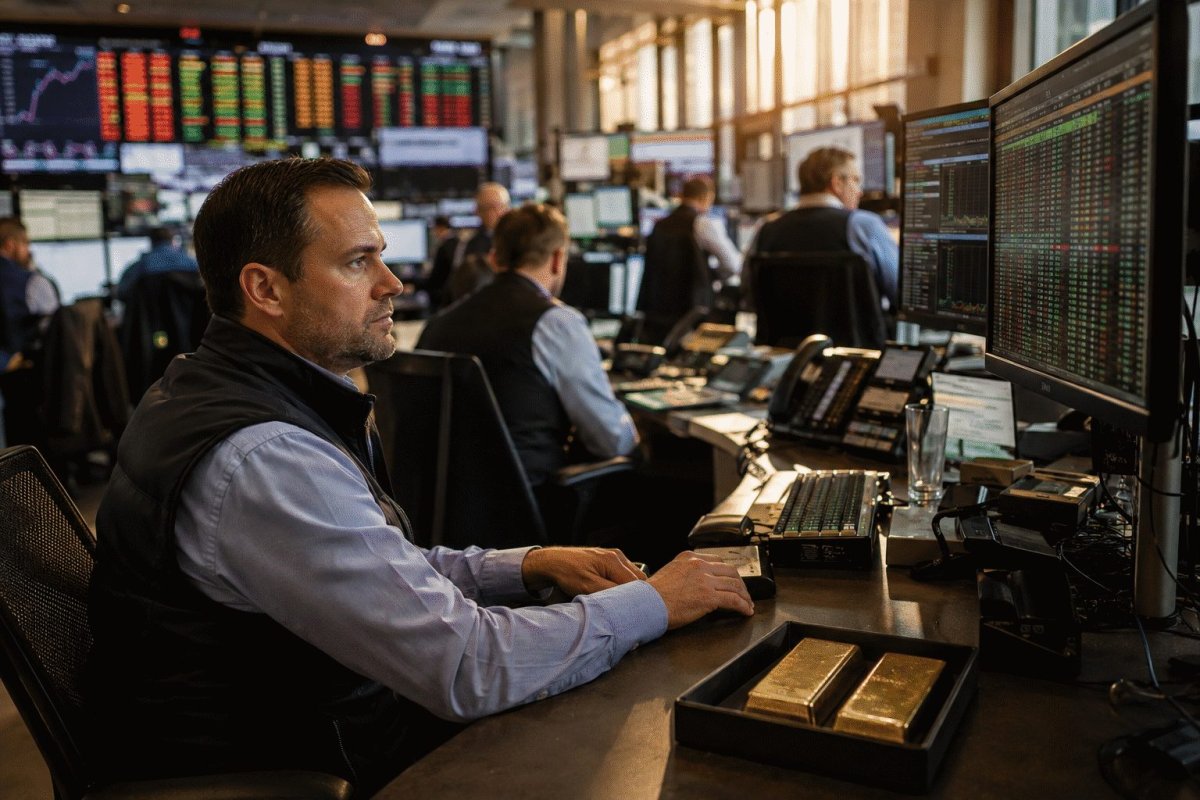
Gold prices continued their upward trajectory on Friday, closing the week at approximately $4,380 per ounce, marking a 0.9% gain. This latest advance extends a recovery that has seen bullion climb nearly 10% from its late-June trough, with the precious metal now trading around $4,379.95. The recent momentum underscores a shift in market dynamics, where official-sector demand, rather than panic-driven buying, is taking center stage.
Central Bank Purchases Hit Record High
The World Gold Council reported that central banks added a staggering 289 tonnes of gold in the second quarter, more than five times the adjusted total from the first quarter and the highest second-quarter figure on record. This surge in official-sector buying, estimated by Deutsche Bank at an unprecedented $45 billion, highlights a strategic move by reserve managers to diversify away from traditional assets. The survey also revealed that 45% of reserve managers intend to increase their gold holdings over the next year, with China alone acquiring 20 tonnes in July.
Market Context and Drivers
The softer U.S. dollar and reduced expectations of a Federal Reserve rate hike provided immediate support to gold. Traders now price in a 33% probability of a September hike, down from 55% the previous week, according to Jim Wyckoff of American Gold Exchange. This shift in monetary policy expectations, combined with a weaker dollar index at 99.65, lent support to dollar-denominated bullion prices.
Elevated real yields remain a key obstacle, with the 10-year Treasury yield climbing 4.7 basis points to 4.688%, increasing the opportunity cost of holding non-yielding assets. However, gold's resilience in the face of these headwinds suggests that investors are seeking cover from pressures in reserves, currencies, and geopolitics, rather than reacting to risk aversion. Equities are near record highs, with the S&P 500 trading just 0.4% below its Thursday record close, yet gold continues to advance.
Demand Composition and Analyst Views
The demand mix in the second quarter reveals robust interest from various channels. Over-the-counter and other investment demand totaled 327 tonnes, while bars and coins saw 307 tonnes, indicating solid physical buying. Jewellery demand reached 278 tonnes, though elevated prices limited buying power. Gold-backed ETFs saw outflows of 45 tonnes, as institutional participation trailed central bank activity.
Analysts remain cautiously optimistic. LGT maintains a neutral stance with structural backing, projecting gold at $4,700 in six months and $5,000 in twelve months, implying potential gains of 7% and 14% from current levels. Commerzbank sees further room for gains, citing the likelihood of the Fed keeping rates steady. BNY analysts are positive on hedging, while International Monetary Fund authors advise caution, noting gold's volatility makes it a poor source of liquidity.
Precious Metals Complex and Outlook
Silver provided a more pronounced cyclical signal, climbing to $64.88 on Friday, while platinum advanced to $1,746.97. Palladium underperformed over the week, reflecting investors' differentiation between monetary hedges and industrial demand. The divergence underscores the nuanced market dynamics at play.
Looking ahead, next week's releases include Fed minutes, international purchasing manager surveys, and new inflation data. A further increase in real yields would weigh on gold, while a declining dollar or weaker economic indicators could support its recovery. Risks remain, with oil prices near $89 potentially boosting inflation and pushing rate outlooks higher, increasing the cost of holding gold. Conversely, a reduction in Gulf tensions could strip away some geopolitical premium.
The investor perspective is specific but significant. Gold can now rise without relying on declining equities, provided that the dollar and real yields remain stable. Continued purchases by official buyers are necessary to absorb supply, cementing gold's role as a strategic reserve asset in an uncertain global landscape.