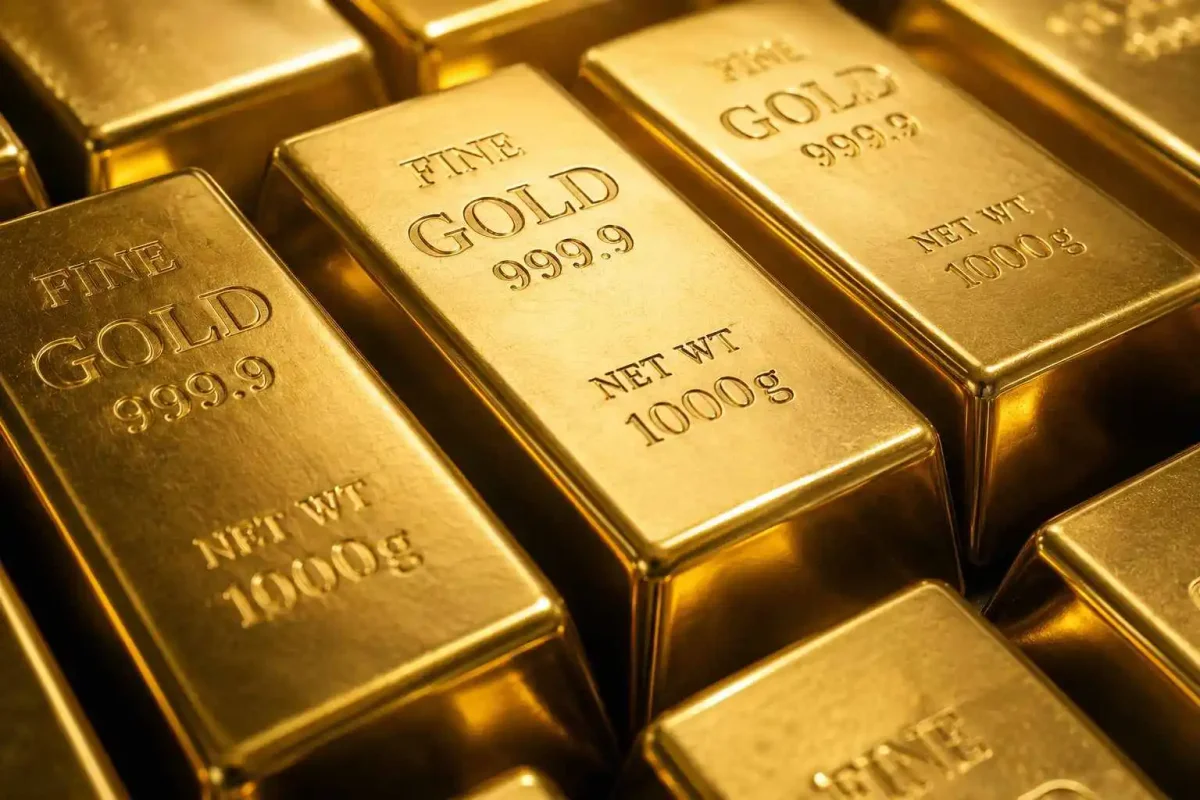
Gold prices broke through the $4,100 mark on Thursday, reaching a new milestone as weaker-than-expected U.S. employment data and significant downward revisions to previous months' payrolls stoked expectations that the Federal Reserve may soon pivot to interest rate cuts. Spot gold surged 2.4% to $4,126.97 per ounce, while U.S. gold futures climbed 1.4% to $4,139.20, as investors recalibrated their monetary policy outlook.
The catalyst for the rally was the June nonfarm payrolls report, which showed an increase of just 57,000 jobs, sharply below the 110,000 gain economists had anticipated in a Reuters poll. More notably, the Bureau of Labor Statistics revised down April and May payrolls by a combined 74,000 jobs, effectively erasing the June additions and painting a picture of a labor market that is cooling faster than previously thought. Initial jobless claims held steady at 215,000, suggesting layoffs remain contained even as hiring slows.
David Meger, director of metals trading at High Ridge Futures, commented that the lower-than-expected jobs number weakens the case for further rate hikes. He noted that gold tends to perform better in lower interest rate environments, as reduced opportunity cost makes the non-yielding asset more attractive. The dollar index fell 0.7% against a basket of currencies, providing additional support for gold prices.
Market expectations for Fed policy shifted dramatically following the data release. According to CME Group's FedWatch tool, the probability of a rate hike at the September meeting dropped to around 60%, down from roughly 75% before the payrolls report. Traders increasingly see the central bank moving toward rate cuts as the economy shows signs of deceleration, though some analysts urge caution. Fawad Razaqzada, a market analyst at FOREX.com, warned against reading too much into a single month's data, emphasizing that the Fed's primary focus remains on inflation.
Further evidence of labor market softening came from ADP's June payrolls report, which indicated that U.S. private companies added only 98,000 workers, with annual pay growth slowing to 4.4%. Dr. Nela Richardson, chief economist at ADP, described the hiring pace as reflecting both supply and demand dynamics, with the net effect being a slowdown in job creation.
The gold rally was also underpinned by ongoing central bank buying. The World Gold Council reported that central banks added a net 41 tonnes of gold to their reserves in May, valued at approximately $5.4 billion. Poland led the purchases with 18 tonnes, followed by China, which added 10 tonnes for its 20th consecutive month of increases. Uzbekistan and Kazakhstan also boosted their holdings, while Russia and Turkey continued to sell. This sustained official-sector demand provides a solid floor under gold prices.
Meanwhile, oil prices slipped, easing some inflation concerns. Brent crude fell 1.3% to $70.66 per barrel, and U.S. West Texas Intermediate declined 1.5% to $67.54, after Qatar indicated progress in U.S.-Iran talks regarding the Strait of Hormuz. Both contracts touched their lowest levels since late February. Ole Hansen, head of commodity strategy at Saxo Bank, noted that oil prices drifted lower amid ongoing talks and suggested further downside could be possible.
Eric Merlis, co-head of global markets at Citizens, pointed out that while hiring is slowing, the labor market is still adding jobs and wage growth shows few signs of accelerating. This mixed picture leaves the recession call ambiguous, but for gold traders, the combination of a weaker dollar, lower rate hike odds, and central bank buying creates a favorable environment for further gains.