Shares of Grab Holdings Ltd. traded higher in Friday's session, recovering a portion of the previous day's decline after the Southeast Asian ride-hailing and delivery giant unveiled a new support package for its driver partners in the Philippines. The stock moved up approximately 0.9% to $3.79 on the Nasdaq, partially offsetting a 3.6% drop from Thursday.
Addressing Driver Viability in a Key Market
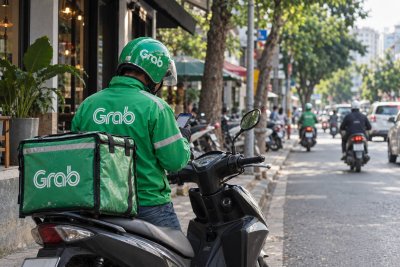
The company's initiative, detailed by Grab Philippines Managing Director Ronald Roda, is designed to help drivers "earn viably and fairly" while maintaining service quality. The support measures include fuel rebates of up to 4 Philippine pesos per liter, with nearly 20,000 driver-partners eligible for a 3-peso-per-liter rebate. Additionally, GrabCar drivers will receive commission rebates, and GrabFood motorcycle delivery partners will earn a 3-peso bonus for every completed order.
This intervention responds directly to surging gasoline prices in the Philippines, a critical market for Grab's operations. The move underscores the ongoing tension between maintaining a reliable driver supply, keeping consumer fares affordable, and protecting corporate profitability metrics.
Financial Context and Investor Scrutiny
The driver support announcement arrives against a backdrop of heightened investor focus on Grab's financial trajectory. In February, the company reported a 19% year-over-year increase in fourth-quarter revenue, reaching $906 million, and declared 2025 as its first full calendar year of net profitability. However, it also disclosed that on-demand incentives rose to 10.4% of gross merchandise value (GMV) for the quarter, a higher proportion than in prior periods.
Furthermore, management's guidance for 2026 has given some analysts pause. The company projects revenue in the range of $4.04 billion to $4.10 billion and adjusted EBITDA between $700 million and $720 million. Both figures trail analyst consensus projections compiled by LSEG. Grab's Chief Financial Officer, Peter Oey, emphasized the company's commitment to keeping rides affordable in a recent interview, noting that its grocery delivery segment is growing 1.7 times faster than its food delivery business.
Governance and Strategic Milestones
Several key corporate events are on the horizon for Grab. The company filed its 2025 annual report on March 6. An extraordinary general meeting is scheduled for March 24, according to a February 20 filing. The same document noted that President and Chief Operating Officer Alex Hungate will join the company's board on May 1, succeeding Peter Oey. Board member Cheryl Goh departed at the end of February.
In a recent interview, Hungate outlined ambitious long-term targets, including aiming for more than 20% annual revenue growth over the next three years and targeting an adjusted EBITDA of $1.5 billion by 2028. He stated that the majority of the company's cash flow would be reinvested into its Southeast Asian operations. When questioned about potential strategic moves in Indonesia, particularly regarding competitor GoTo, Hungate indicated there was "no update" at this time.
Balancing Act Between Support and Spending
The company described Friday's Philippine support package as an initial step, leaving the door open for further assistance if fuel prices continue to climb. This highlights a persistent risk for investors: there is no guarantee that incentive-related spending has peaked. Concurrently, Reuters reported that Philippine authorities are exploring measures to curb rising electricity costs linked to Middle East shipping disruptions and more expensive liquefied natural gas (LNG), signaling that broader household financial stress in one of Grab's largest markets persists.
The board has authorized a $500 million share buyback program, a move typically intended to signal confidence in the company's value. However, the immediate market reaction suggests investors are still seeking clearer evidence that Grab can successfully balance the trifecta of driver supply, consumer pricing, and sustainable profitability.
Friday's modest share price increase recouped only a fraction of the prior session's losses. The overarching narrative remains one of a growth company in a competitive region working to stabilize its core operations while convincing the market of its path to long-term, large-scale earnings. The coming quarters will be crucial in demonstrating whether its strategic investments and cost management can align with its ambitious financial targets.