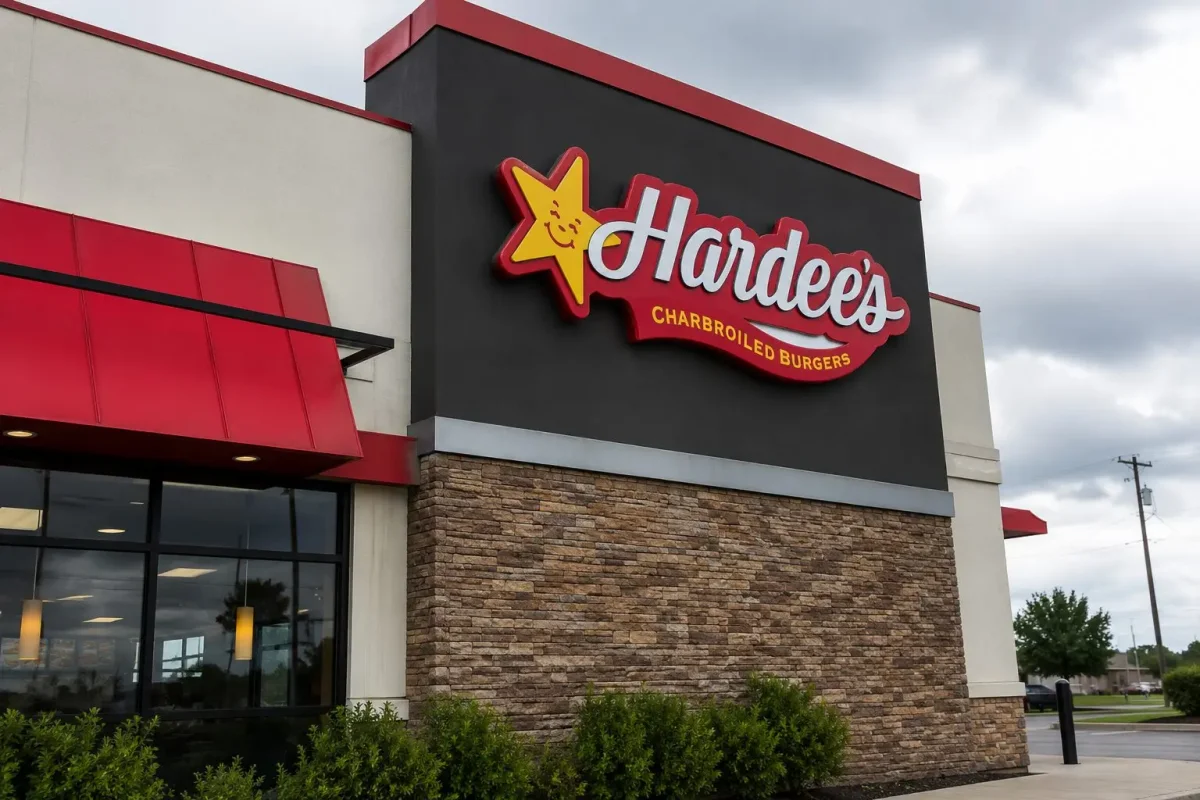
FRANKLIN, Tennessee — The closure of 107 Hardee's restaurants by two franchise operators has laid bare the vulnerability of the chain's asset-light business model, where a handful of large franchisees can dramatically shift the system's total store count. The closures by Superior Star and ARC Burger exactly match Hardee's net decline in franchised outlets over the past two fiscal years, according to a court filing and company disclosures.
Superior Star, which operates 59 Hardee's locations across 10 states, filed for Chapter 11 bankruptcy protection on July 9 in the U.S. Bankruptcy Court for the Western District of Kentucky. The operator closed 30 restaurants in 2025, contributing to a combined total of 107 known closures with ARC Burger, which shuttered 77 locations in December 2025. Superior Star generated approximately $80 million in gross revenue in 2025 and estimates its assets and liabilities between $10 million and $50 million. The company says it intends to reorganize and keep its remaining restaurants operational.
Hardee's franchised outlets accounted for 86.7% of its 1,485 total restaurants at fiscal 2026 year-end, down from 87.2% two years earlier. Over that period, the chain experienced a net decline of 113 total units, with franchised stores representing 107 of those losses, or 94.7%. The data underscores how concentrated risk in a few large franchise portfolios can ripple through the entire system.
Financial Strain and Asset Challenges
Superior Star's financial distress appears linked to both operational challenges and its 2023 acquisition of 93 restaurants from Starcorp. The operator now runs 59 of those locations and is disputing a roughly $7 million seller note. Court documents cite "aged physical facilities" at some sites, along with unexpected repair, maintenance, and tax costs. The operator is seeking court approval to exit leases and other obligations on dark sites — restaurants that have closed but still carry financial burdens.
Hardee's has stated that the bankruptcy filing reflects Superior Star's "own specific financial and business circumstances." The privately held chain, owned by CKE Restaurants, declined to comment on whether more restaurants would close but said it remains focused on strengthening the system. Starcorp did not respond to requests for comment.
Revenue Disparity Highlights Industry Pressure
The closures come amid significant revenue gaps between Hardee's and its larger competitors. Hardee's 2024 average unit volume (AUV) was $1.146 million, compared to $1.639 million at Burger King (owned by Restaurant Brands International, NYSE: QSR), nearly $2.1 million at Wendy's (NASDAQ: WEN), and more than $4 million at McDonald's (NYSE: MCD). While AUV is not a direct measure of profit, it reflects the revenue base available to cover fixed costs such as rent, repairs, and debt service.
The implied annual sales gaps are approximately $493,000 versus Burger King and $954,000 versus Wendy's, while the difference from McDonald's exceeds $2.85 million. These figures give larger chains more financial flexibility to absorb operational costs before store-level issues reach the owner.
Broader Implications for Investors
Hardee's concentration math serves as a cautionary tale for investors in franchised restaurant systems. The situation echoes Restaurant Brands' $1 billion acquisition of its largest Burger King franchisee, Carrols, and its $500 million commitment to remodel those stores — a reminder that deferred renovation costs can shift back to the franchisor's balance sheet.
Investors should monitor unit counts, sales trends, operator debt levels, lease exposure, and required capital spending. The critical question going forward is who will bear the cost of keeping surviving stores modern and competitive. Hardee's has already reopened 25 former ARC locations as company-owned stores and plans to reopen more, but the long-term health of the system depends on the financial stability of its franchisee base.