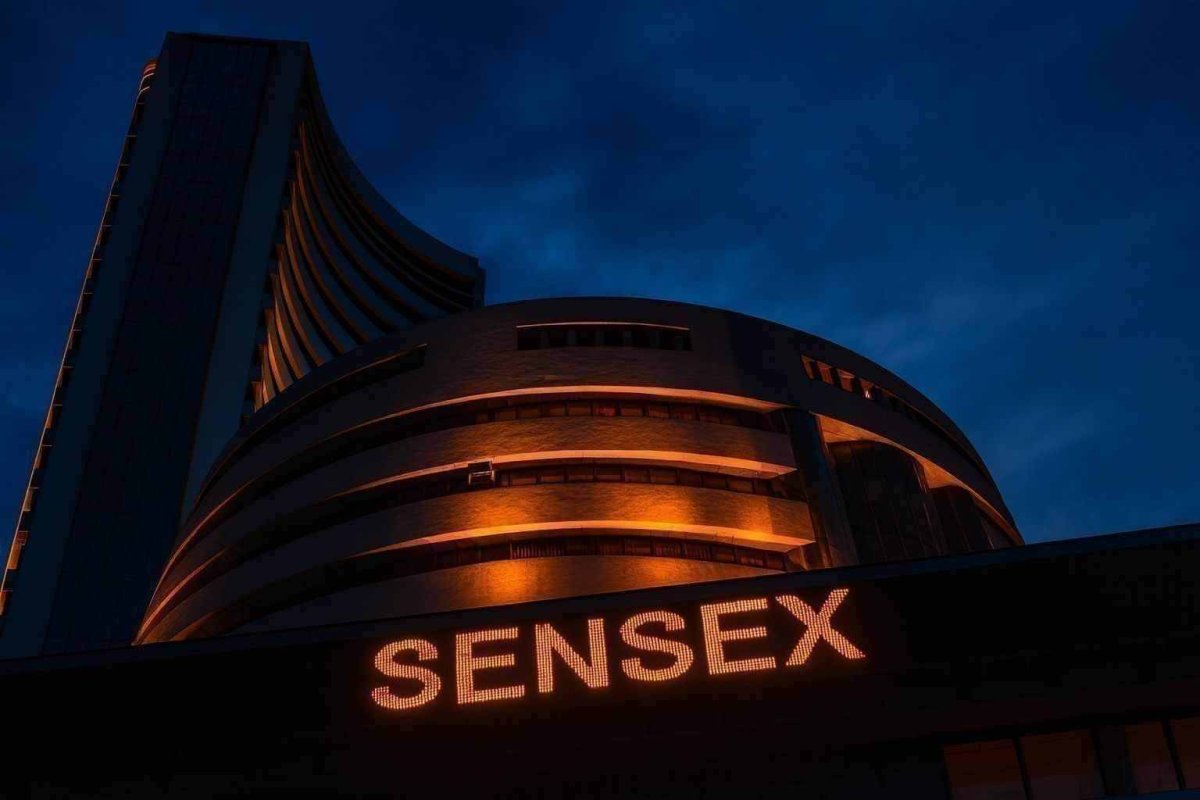
Indian stock markets closed sharply lower on Wednesday, April 22, 2026, ending a three-session advance as a severe downturn in technology shares, led by HCLTech, overwhelmed gains in other sectors. The benchmark Nifty 50 index declined 0.81% to settle at 24,378.10, while the BSE Sensex fell 0.95% to 78,516.49. The selloff refocused investor attention on sector-specific risks within the market's largest benchmarks.
IT Sector in Turmoil After HCLTech Warning
The session's dominant theme was a brutal repricing of technology stocks following a grim business update from HCLTech. The company's shares plummeted 10.7%, their steepest single-day decline in over a decade, after management projected softer revenue growth for fiscal 2027. CEO C. Vijayakumar cited a "highly fluid" business environment, noting project reductions from two key clients in the Americas that could trim annual growth by approximately 0.5%. The warning prompted at least six brokerages to slash price targets, with Jefferies issuing a downgrade.
The contagion spread rapidly across the sector. Infosys fell 3.4%, and Tata Consultancy Services lost 3%, collectively dragging the Nifty IT index down by 3.9%. Even Tech Mahindra, which reported quarterly revenue that surpassed expectations on strength in its manufacturing and banking segments, saw its shares drop roughly 2.5% amid the broad-based negative sentiment.
Market Breadth Holds, But Large-Caps Bear the Brunt
Despite the sharp decline in the major indices, market breadth told a different story, preventing a full-scale capitulation. Nine of the 16 primary sectoral indices ended the day in positive territory. Small-cap stocks jumped 1.1%, and mid-caps edged up 0.2%, indicating that the selling pressure was largely concentrated in the largest index constituents. Shares of ABB India, for instance, climbed 4.6% after its parent company reported a 26% surge in orders from India.
However, financial stocks, which constitute about 35% of the Nifty 50, slipped 0.8%, adding to the downward pressure on the benchmark. This shift places the banking sector squarely in the spotlight as traders assess whether lenders have the strength to provide support and prevent a deeper market correction.
Technical Levels and Bank Support in Focus
Analysts are now closely watching key technical levels. Shrikant Chouhan of Kotak Securities identified 24,500 as an immediate support zone for the Nifty 50 and warned that a close below 24,300 would turn the short-term trend negative. With the index having breached the 24,500 level, attention has shifted to the 24,300 and then the psychologically significant 24,000 marks.
The performance of banking stocks is seen as critical for market stability. Amit Goel of PACE 360 stated that the Bank Nifty "holds the key" for the broader market, suggesting the Nifty 50 is unlikely to break below 24,000 as long as the Bank Nifty remains above the 56,000 level. This interplay between the beleaguered IT sector and the financial heavyweight will likely determine the market's near-term direction.
Geopolitical and Commodity Risks Linger
Beyond corporate earnings, external factors provided a tense backdrop. Asian equity markets slipped 0.5%, and Brent crude oil futures hovered around $99 per barrel as concerns resurfaced regarding the fragile ceasefire between the U.S. and Iran. Approximately 20% of the world's oil and liquefied natural gas transits through the Strait of Hormuz, making the region a persistent flashpoint for energy markets.
A renewed surge in crude prices toward the $100 mark, combined with simultaneous weakness in banking and technology shares, would significantly increase the challenge of defending the Nifty 50's 24,000 support level. Conversely, stability in the banking sector and an absence of fresh geopolitical shocks could offer the market some much-needed breathing room.
Pre-Market Signals and Path Ahead
The negative sentiment was evident before the trading session even began. GIFT Nifty futures, which signal the likely direction for the Nifty 50, were down 0.84% at 24,369 by 6:20 a.m. IST. Wednesday's decline underscores that market risks are not confined to a single company but have not yet escalated into a widespread selloff. The immediate path for Indian equities will be dictated by the banking sector's resilience, global oil price movements, and any further developments in the technology sector's growth outlook.