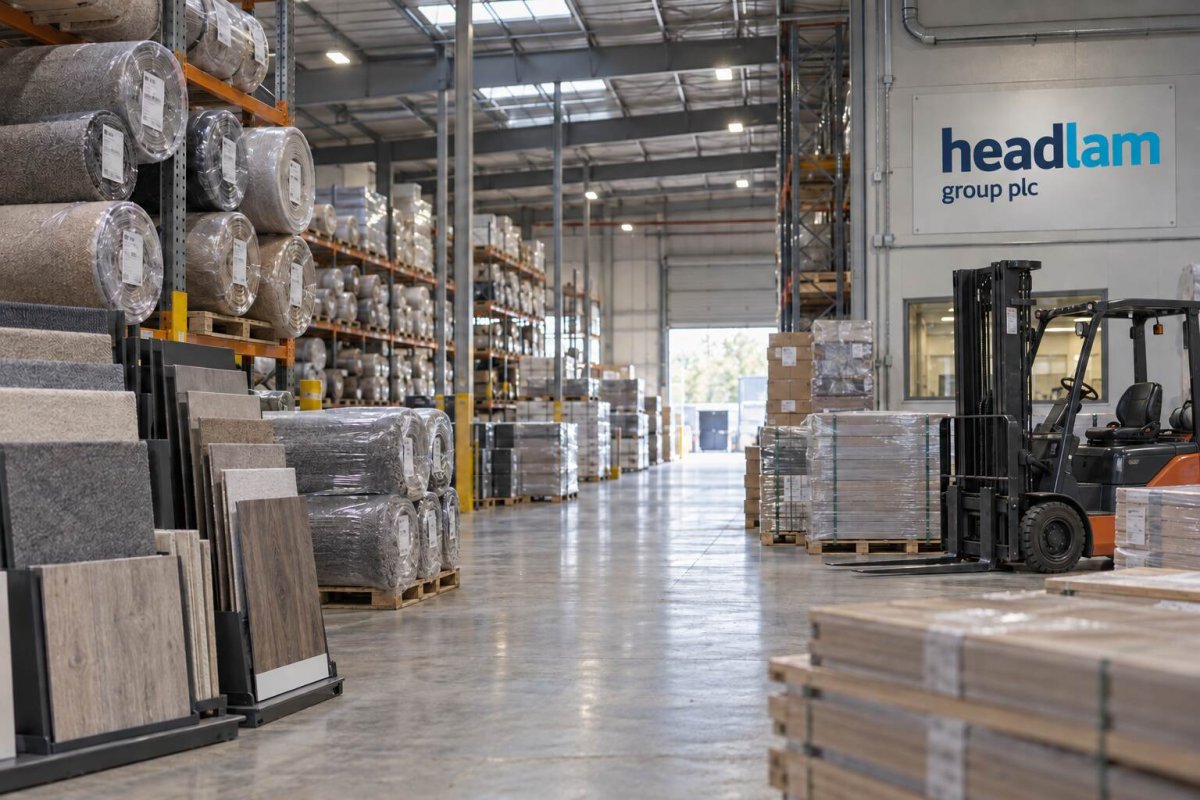
Headlam Group shareholders remain locked out of the market, with the company's rescue plan offering no clarity on the fate of their investment. The UK flooring distributor announced Tuesday that joint administrators are set to be appointed to Headlam Group plc and HFD Limited following court confirmation. Its ordinary shares continue to be suspended at a reference price of 10.5p, a figure that represents a historical valuation rather than a live market quote.
The positive aspect of Headlam's September 8 regulatory statement is the administrators' intention to keep the business trading while they pursue a restructuring. Existing lenders have indicated support, and the proposed strategy combines a Company Voluntary Arrangement (CVA) with debt refinancing and substantial cost reductions. Headlam also expressed a goal of restoring its listing if the process succeeds.
However, the missing details are far more critical for shareholders. The announcement did not disclose the refinancing amount, any creditor haircut or maturity extension, or the treatment of existing shares. Restoration of the listing is an objective, not a commitment that current shareholders will emerge undiluted—or at all.
Why the 10.5p Price Is Not a Live Valuation
Headlam requested a suspension before the London market opened on September 1, after stating it had exhausted liquidity under its facility and breached month-end covenants. The displayed 10.5p price and roughly £8.43 million market capitalization are therefore historical reference points, not executable quotes. There is no bid or offer through which investors can test the market's view of Tuesday's news.
That frozen equity value is small beside the balance-sheet problem. Headlam last reported £40.3 million of net debt at April 30, up from £31.4 million at the end of 2025. The April figure is about 4.8 times the suspended market value. It is not a complete measure of creditor claims—lease liabilities, trade creditors, and administration costs also matter—but it shows why a modest asset sale cannot by itself resolve the equity question.
On Tuesday morning, Headlam separately completed a £3.15 million sale and leaseback of its Bristol distribution centre. The price was 50% above the property's £2.1 million book value and 13.7% above its December 2025 market valuation. That looks favourable in isolation, and the gross proceeds equal about 37% of the suspended equity value.
But the cash is not being distributed to shareholders. Headlam said the net proceeds will repay existing debt after funding one month of upfront leaseback costs, while the site remains leased only through December 31. The transaction turns an owned asset into cash and a short lease obligation; it improves immediate liquidity but does not create £3.15 million of free value for the equity.
The Losses Consumed the Original Turnaround Runway
The speed of the deterioration is visible in Headlam's own numbers. Its 2025 results showed revenue of £498.7 million, an underlying pre-tax loss of £39.5 million, and a statutory pre-tax loss of £69.6 million. Underlying operating cash flow was negative £18.6 million. The company entered 2026 with a new asset-based facility of up to £85 million and still expected a return to profitability in 2027.
By April, continuing-operations revenue was down 21% year on year, the company was still incurring significant underlying operating losses, and net debt had risen by £8.9 million in four months. A July update said that month's revenue was running about 3.5% ahead of June and that financing offers had been received. Yet Headlam warned there was no certainty any option could be completed, and five weeks later it said its available liquidity was exhausted.
This history is the central counterweight to the rescue case. Continued trading preserves customer relationships, inventory value, and a functioning distribution network. It can also produce a better result than an immediate shutdown. But preserving the business is not the same as preserving the current ownership structure.
What the CVA Must Reveal Before the Shares Can Be Judged
Administration transfers control of the company and its assets to the administrators, whose statutory process is focused on rescuing the company or improving recoveries for creditors. UK government guidance says a CVA requires approval from 75% by value of voting creditors; shareholders also vote, but the creditor economics drive whether the plan is viable.
For Headlam investors, four unanswered questions now outrank the suspended quote:
- How much new money will lenders provide, at what cost, and with what security?
- Which debts will be reduced, deferred, or left outside the CVA?
- Will existing shares be diluted, consolidated, or otherwise impaired as part of the refinancing?
- What revenue and cash-cost base will remain after the promised “significant” reductions?
There is a real upside scenario. Lender support reduces the risk of an immediate funding stop, unaffected trading subsidiaries continue to operate, and management is explicitly targeting restoration of the listing rather than cancellation. Asset sales above book value also suggest some of Headlam's property carried hidden value.
There is an equally clear limitation: the September 8 statement does not say that the lenders support a particular recovery for shareholders. A viable CVA may require creditors to accept less or wait longer, while new capital could demand most of the post-restructuring value in return for taking the risk.
The practical conclusion is that 10.5p should not be treated as either a target or a floor. Headlam's shares retain option value only if the administrators can agree a funded restructuring that leaves something for the existing equity. The next decision-useful disclosure is the CVA and refinancing term sheet—not the promise that the warehouses will keep operating while negotiations continue.
