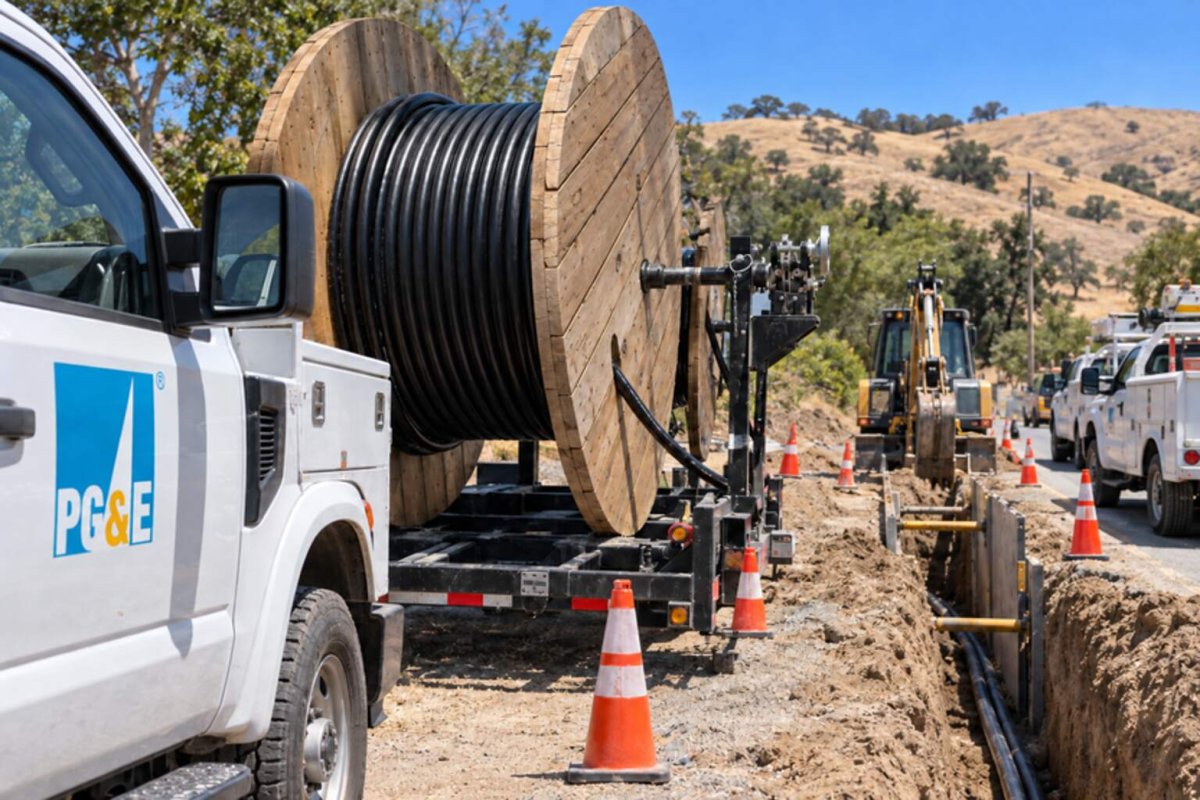
PG&E Corporation (PCG) shares are trading at a valuation that appears attractively low, but the discount now comes with a more cautious growth narrative. The utility has announced a $2 billion deferral of its 2027 capital expenditure program, a strategic move designed to reduce borrowing requirements while the company undertakes a comprehensive review of its organizational and financial structure. This decision follows California's latest wildfire-liability proposal, which fell short of management's expectations.
As of Tuesday's premarket session, PCG shares were indicated at $14.26, down 0.28% from Friday's close of $14.30. Friday's regular session saw a 2.44% gain. The premarket quote is based on light volume and a wide spread, so the final opening price may vary. At this level, the stock trades at approximately 7.9 times the midpoint of its newly issued 2027 non-GAAP core earnings guidance of $1.78 to $1.82 per share. It also trades at roughly 8.6 times the midpoint of reaffirmed 2026 guidance of $1.64 to $1.66. These multiples are low for a regulated utility, but only if the earnings trajectory beyond 2027 remains sustainable.
Strategic Review Drives Billion Capex Cut
The capital expenditure reduction, announced on September 2, trims planned 2027 investment to approximately $11.4 billion, down from the previously disclosed $13.4 billion. This 14.9% reduction is primarily a financing decision. By lowering capital spending, PG&E reduces its need to issue new debt, which in turn lowers interest expenses that must be recovered from customers. Management emphasized that the deferral will slow some projects and program accelerations, but it does not represent a broad cancellation of essential grid maintenance or wildfire mitigation work.
The trade-off is that a regulated utility earns returns on its rate base, which grows through capital investment. By deferring capital today, both debt issuance and the future rate base will grow more slowly. While PG&E has initiated 2027 earnings guidance despite the cut, it will need to re-evaluate its longer-term core EPS growth target and its 2028–2030 capital and rate-base outlook. This marks a shift from the more optimistic case presented with second-quarter results in July, when PG&E targeted at least 9% annual core EPS growth from 2027 through 2030, roughly 9% average annual rate-base growth, and a $73 billion five-year capital program. That plan explicitly assumed constructive wildfire-liability reform, which has not materialized.
Balance Sheet Pressures Underpin the Decision
PG&E is not facing a liquidity crisis; the company and its utility subsidiary reported about $6.5 billion in available liquidity as of June 30. The challenge lies in the cost and scale of continuously financing a capital-intensive system. Consolidated long-term debt stood at $61.8 billion at midyear, up from $57.4 billion at the end of December, with an additional $1.1 billion classified as current. The utility completed $4.4 billion of debt financing in the first half of the year alone.
The second-quarter Form 10-Q revealed that utility interest expense increased by $48 million in the first six months due to additional long-term debt. The filing also noted that capital expenditures, debt maturities, and corporate dividends are generally expected to exceed operating cash flow, making continued access to capital markets a central pillar of the business model. Before the strategic review, PG&E had planned to avoid issuing common equity through 2030, a strategy that would prevent dilution at a depressed share price. However, the filing listed capital spending, interest rates, credit ratings, legislation, and wildfire-related securities claims as variables that could alter that plan. The $2 billion reduction in 2027 funding requirements makes the no-new-equity promise easier to defend, but it does not guarantee it.
Wildfire Policy Remains the Overhang
PG&E initiated the strategic review after stating that California Senate Bill 492 did not adequately reduce the financing risk created by the state's wildfire-liability framework. The company is evaluating regulatory, financial, operational, and strategic alternatives, including how the group is structured and financed. No specific transactions, such as asset sales or a breakup, have been announced.
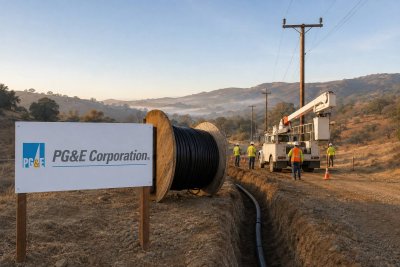
The tension is stark: California needs private capital for wildfire hardening, undergrounding power lines, data-center connections, and reliability work. Yet more capital means more borrowing and higher customer costs, while unresolved liability risk keeps PG&E from achieving the investment-grade profile it seeks. The $2 billion deferral provides balance-sheet relief but does not resolve the policy loop.
Bullish and Bearish Interpretations
From a bullish perspective, the 2026 and 2027 earnings guidance is now anchored, the shares already reflect substantial risk, and lower borrowing could improve credit metrics without a near-term earnings reset. Second-quarter core EPS rose to $0.40 from $0.31 a year earlier, and management still expects $1.80 at the midpoint for next year.
The bearish case argues that a 7.9-times multiple is being applied to the last year with explicit guidance, not to the former 9%+ compound-growth promise. A revised 2028–2030 plan could produce lower rate base, slower earnings growth, or a different financing mix. The strategic review may also require regulatory approvals and stakeholder compromises that the stock cannot yet price in.
Key Disclosures to Watch
Investors should focus on three disclosures that will shape the stock's trajectory: a revised 2028–2030 capital and rate-base plan, confirmation of whether common-equity issuance remains unnecessary, and a credible California policy path that lowers wildfire financing risk. PG&E expects to update investors on regular earnings calls or when the review produces a material development. For now, the $2 billion deferral improves the funding side of the equation but weakens the growth outlook, leaving the stock's valuation discount intact for good reason.